

Every film remake begins with the same question, and it is not the one most people think it is. The commercial and licensing framework around Indian remake rights, option fees, theatrical participation, territory definitions and producer-side advisory, sits at remake rights India.
The question is not “can this story work in a new territory?” Almost any story can be made to work anywhere if you are willing to change enough of it. The real question is more demanding: what is the irreducible core of this story, the thing that made it worth remaking in the first place, and how do you protect that core while rebuilding everything around it for an audience that did not grow up with the original?
Get that question right and you have a remake that stands on its own. Get it wrong and you have a film that satisfies nobody, too unfamiliar for audiences who loved the original, too derivative for audiences encountering the story for the first time.
Celluloid Pact has been working in the remake and adaptation space for long enough to know that the answer lives almost entirely in the production layer. The rights negotiation gets the project started. The script development shapes the story. But the production, the decisions made on the ground, in casting, in location, in the hundred small choices that accumulate into a film’s texture, is where a remake either earns its existence or fails to.
Why Indian Cinema Remakes the Way It Does
India has one of the most active internal remake cultures in the world. Films move between Tamil, Telugu, Malayalam, Hindi, Kannada, and Bengali with a regularity that would be remarkable in any other national cinema. The same story gets made four times in four languages over a decade, each version finding its own audience, each version making distinct creative choices about what to keep and what to rebuild. Film remakes and adaptations sit at the centre of how Indian cinema both exports IP across territories and imports concepts from global markets.
This internal remake culture has two effects that matter for the international adaptation business. First, it produces a large volume of proven story material, films that have already been tested on mass audiences, whose emotional architecture has already been validated, whose commercial viability is not theoretical. Second, it creates a production community that is unusually fluent in the mechanics of adaptation, in the craft of taking a story that works in one context and making it work in another.

Drishyam: A Franchise Built on Adaptation
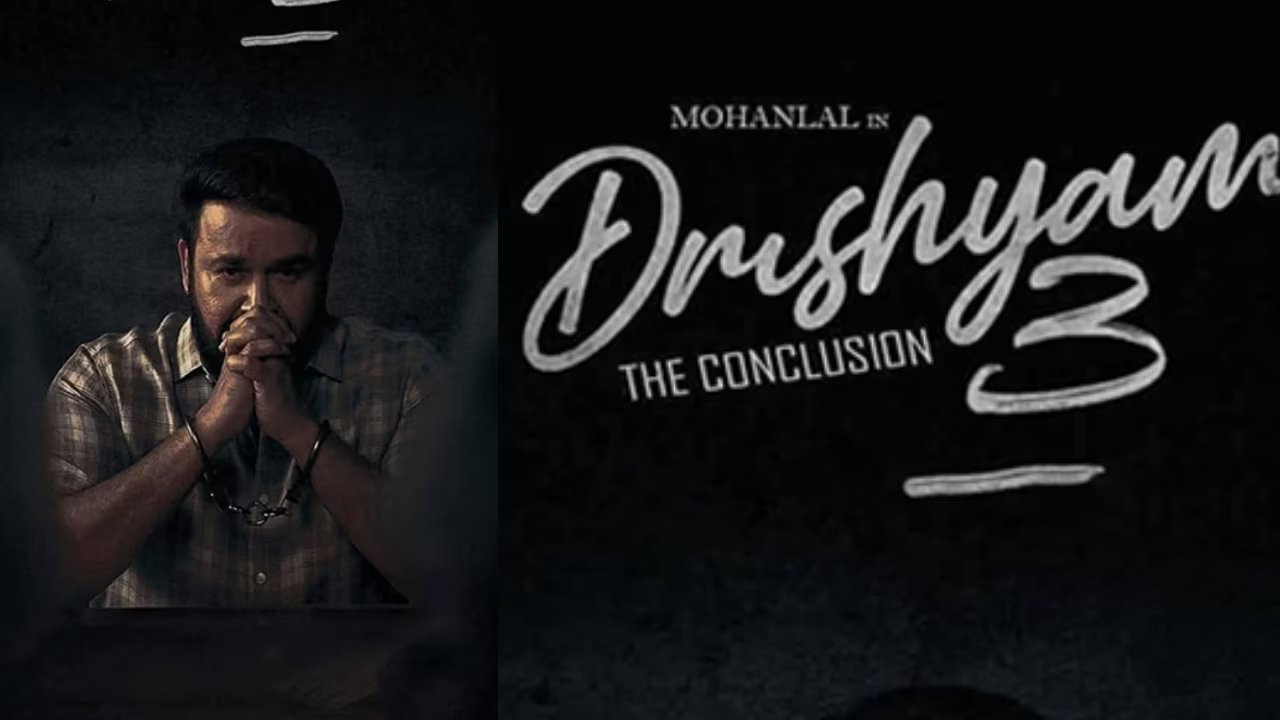
Drishyam is the clearest example of both effects operating simultaneously. The original Malayalam film, directed by Jeethu Joseph and starring Mohanlal, is one of the most tightly constructed thrillers in Indian cinema, a story about a cable TV operator who uses his obsessive knowledge of films to construct an alibi that protects his family from a crime that spirals beyond his control. It was remade in Telugu, Tamil, Kannada, and Hindi. The Hindi version, starring Ajay Devgn, became a franchise that now spans three films, Drishyam, Drishyam 2, and Drishyam 3, each extending the original story in ways that deepen rather than dilute it.
The Indonesian release: Ayah, Aku Mau Cerita
The franchise extends again on August 20, 2026, when Ayah, Aku Mau Cerita, the Indonesian Drishyam adaptation, releases. Produced by Falcon Pictures and directed by Danial Rifki, with Vino G. Bastian as the father-protagonist and Marsha Timothy as the investigating police officer, it is one of the first major Malayalam-origin properties to be remade in the Indonesian language. The production was rebuilt for an Indonesian audience through the same India-Indonesia bridge that produced Buya Hamka and Keluarga Slamet. Ayah, Aku Mau Cerita is the clearest current example of an Indian film property travelling to a new territory not as a dubbed copy but as a properly localised remake, and it slots into our film production portfolio alongside the earlier Indian and Indonesian work.
Hollywood, Korea and Spain on the slate
Indonesia is one stop in a wider expansion. Drishyam is among the highest-profile Indian properties currently moving through the Hollywood adaptation pipeline, an English-language version produced by Panorama Studios in partnership with Gulfstream Pictures and JOAT Films, after Aashirvad Cinemas (Mohanlal’s original Malayalam banner) sold the international rights to Panorama. A Korean adaptation was announced at the Cannes Film Festival in 2023, and additional language adaptations continue to be explored. Drishyam already has Tamil, Hindi, Kannada, Telugu, Sinhala and Chinese versions in release. The Hollywood-Korean-Spanish-Indonesian set, layered on the existing six-language Asian footprint, makes Drishyam one of the most heavily-remade film properties to originate in Indian cinema, and the most useful case study available for how a single story crosses jurisdictions when the structure of the script is strong enough to survive transplantation.
Why the franchise translates
What makes the Drishyam franchise instructive as a case study in adaptation is how little the core of the story changed across its journey from Malayalam to Hindi and across the decade-plus of its franchise life. The setting moved from Kerala to Goa. The specific cultural textures changed. But the engine of the story, a man’s love for his family, his willingness to go to extraordinary lengths to protect them, and the moral complexity of what those lengths actually involve, remained intact across every version. That is not an accident. It is the result of adaptation decisions that were made with clarity about what the story was actually about.
Taking Indian Stories to Indonesia
The Indonesian film market is one of the most dynamic in Southeast Asia, a country of over 270 million people with a growing cinema-going culture, a domestic production industry that has been expanding rapidly, and an audience that has demonstrated a clear appetite for emotionally grounded family and social comedies. Cross-border film remakes and adaptations work best when the source story carries universal emotional architecture but allows the destination culture to rebuild the surface texture in its own register.
It is also a market with a specific relationship to Indian cinema. Indonesian audiences have been watching Bollywood for decades. The emotional register of Indian popular film, the emphasis on family, on community, on the comedy of social embarrassment and intergenerational conflict, translates well to Indonesian cultural contexts, which share enough of those underlying values to make Indian stories feel familiar rather than foreign.
Keluarga Slamet: Rebuilding the Story for a New Audience
Keluarga Slamet, the Indonesian remake of Badhaai Ho, is the project that most directly demonstrates how Celluloid Pact operates in this space. The original Badhaai Ho, a Hindi film starring Ayushmann Khurrana and Sanya Malhotra about an older couple’s unexpected pregnancy and its impact on their adult children, worked because it found the comedy in a genuinely uncomfortable situation without flinching from the discomfort. It was commercially successful and critically respected, which is a combination that makes for a strong adaptation candidate.
Taking that story to Indonesia required a systematic analysis of what was culturally specific and what was universal. The specific comedy of Indian middle-class family dynamics, the particular weight of parental expectation, the social embarrassment of a certain kind of public disclosure, the generational gap between parents who are still romantically alive to each other and children who find that fact mortifying, has clear Indonesian equivalents. But the equivalents are not identical, and the production had to find them rather than assume them.
The casting decisions, the location choices, the specific texture of the family home, the way the community around the family was constructed, all of these were production decisions that determined whether the Indonesian audience would recognise their own experience in the story or watch it at a remove. Getting them right required a production team with genuine cultural fluency in the Indonesian context, not just technical competence imported from India.
The film worked. And the lesson it reinforced was one that Celluloid Pact had already learned from watching the Drishyam remakes from the inside: the remake process is a production discipline, not just a creative one.

The Adaptation Rights Process
Before a remake can be produced, the rights to the original story need to be secured. This sounds straightforward and is frequently not. For the full deal architecture covering Section 14, ROFR, fee bands and outbound vs inbound briefs, see our remake rights in India advisory.
Adaptation transactions often involve complex chains of title, legacy agreements and competing rights claims, which can make deal structuring more complicated than it first appears. For productions exploring the Indian adaptation market, the remake rights framework covers licensing, rights valuation and what international producers need to know before approaching the market. Rights to the same story are sometimes held by multiple parties with competing claims. The relationship between a producer’s underlying rights in a story and a director’s creative ownership of a specific treatment is not always clearly defined. And the process of valuing those rights, establishing what a proven story idea is worth in a new territory, is still being developed in real time as the Indian-Indonesian adaptation market matures.
Celluloid Pact’s position in this space is grounded in the production relationships we have built across both territories. We understand what Indonesian production houses are looking for when they approach the Indian market for adaptation material, and we understand what Indian producers need to see before they are comfortable licensing their properties for foreign remakes. The commercial terms matter. But the relationship terms often matter more, the confidence that the people making the remake understand the original well enough to treat it with the care it deserves.

The Korean Connection
The remake conversation in Indian cinema is not limited to the Indonesian market. The relationship between Indian cinema and Korean storytelling has been one of the more productive creative exchanges of the last decade, running in both directions. Korean cinema has reshaped the global appetite for film remakes and adaptations, the Indian and Hollywood remake markets both track Korean originals as primary source-IP candidates.
Indian remakes of Korean films, drawn to the precision of Korean thriller and drama construction, the emotional intensity that Korean storytelling achieves within tight narrative frameworks, have produced some of the most commercially successful Indian films of recent years. The traffic goes the other way too: Indian story structures, the emotional architecture of Indian social comedy and family drama, have attracted attention from Korean producers and distributors looking for proven material with cross-cultural appeal.
This bilateral exchange is part of a larger pattern in which the boundaries of the Asian adaptation market are expanding, in which a story proven in one territory is increasingly understood to carry transferable value across a much wider geography than it would have a decade ago. Celluloid Pact’s position across India, Southeast Asia, and the broader Asian production landscape puts us in the middle of that expansion.

What Makes a Remake Worth Making
Not every successful film is a good adaptation candidate. The qualities that make a story work in its original context are not always the qualities that travel. A film whose success depends on very specific cultural references, on a particular star’s relationship with their home audience, or on a moment of social commentary that is legible only to people who lived through a specific period, these are properties whose adaptation value is lower than their commercial success in the original territory might suggest.
The stories that travel well are the ones built on emotional architecture that is genuinely universal, on family dynamics, on the comedy of social aspiration and embarrassment, on the thriller mechanics of a character under pressure making increasingly difficult moral choices. Badhaai Ho travelled because the discomfort at its centre, parents who are still in love, children who are not ready to process that, is not an Indian feeling. It is a human one. Drishyam travelled because a parent’s willingness to do anything to protect their children does not need translation.
Identifying that universal core before committing to an adaptation is the first and most important production decision. Everything else follows from it.
Common reasons adaptations fail
The Drishyam-Keluarga Slamet template works because each variable behind it was actively managed. Adaptations that collapse usually fail on one of five recurring patterns, none of which are legal or copyright issues, all of which are creative and execution decisions.
- Casting translation goes wrong. The destination-market star carries different audience expectations than the source-territory lead, a household-anchor role read as paternal in one culture reads as detached in another. The character on the page is identical; the screen reading is not.
- Cultural misreading at the surface. The plot points translate but the texture does not, meal scenes, family hierarchies, religious touchpoints, idioms of authority. The original landed because its surface was specific. The remake drifts because the surface gets generalised.
- Territory mismatch on rights acquisition. The producer acquires remake rights for the wrong language band or the wrong distribution corridor, then discovers post-greenlight that the audience the source was strongest with is not inside the licensed territory.
- Rights acquired before market validation. The source film performed once, in one market, on one platform. The remake commits before the source has demonstrated cross-territory commercial range. Streamer-driven property acquisition has compressed this validation window further.
- Over-faithful remakes. The producer treats the source as canonical text rather than narrative architecture. Line-by-line replication strips out the cultural reinvention that made the original work, and reads as a pale copy rather than a fresh adaptation.
What separates working adaptations from failed ones is rarely the rights paperwork. It is whether the production team treats the source film as a starting point or as a finished blueprint.
The Production as the Bridge
Remake culture sometimes gets discussed as though the creative and commercial questions are all that matter, as though the rights deal and the script are the whole story. In practice, the production is the bridge between a story that worked somewhere else and a film that works here. Our line producer India handles the production-services execution layer underneath the remake-rights deal architecture.
The crew you hire, the locations you choose, the casting decisions you make, the pace at which you shoot and the texture of the world you build on screen, these are the decisions that determine whether an audience receives a remake as their own story or as someone else’s. Celluloid Pact’s role in the adaptation space is to be the production layer that makes that bridge possible, to bring the territory knowledge, the crew relationships, the location expertise, and the cultural fluency that turns an adaptation from a licensing transaction into a film.
That is the work. And it is, in the end, the same work it has always been: figuring out what a story is actually about, and then doing everything in your power to protect it.
