

Celluloid Pact coordinates productions in Turkey through its Istanbul office. The line producer Turkey function holds the budget, schedule and reporting line, while film fixers in Turkey coordinate permits, locations, local crew, equipment and daily execution across Istanbul, Cappadocia, Antalya and wider Anatolia. This page sets out how that office runs a foreign shoot on the ground: the engagement model, the permit chain, the crew, equipment and locations, and how the line producer controls budget and schedule.
Turkey’s up-to-30 percent Foreign Film Production Support can materially change a budget, but eligibility, the qualification test, current spend thresholds and the audit that releases the money are a subject in their own right, set out in full in our Turkey film incentive guide. This page stays on the execution layer: the permits, crew, equipment, locations and schedule control that a film fixer and line producer in Turkey own on the ground.
Film Fixers in Turkey: What the Local Team Handles
A film fixer in Turkey is the production’s single point of contact on the ground: the person who knows which authority signs off which location, which municipal office holds the permit for a given street or heritage site, and which local crew and vendors deliver at the standard an international production expects. On a Celluloid Pact job the fixer and line producer work as one desk, so permits, scouting, crew and logistics move in parallel rather than waiting on each other.

Filming permits and authority coordination
Foreign productions apply through the Directorate General of Cinema (Sinema Genel Müdürlüğü) under the Ministry of Culture and Tourism and must engage at least one Turkish-citizen host during filming. The fixer assembles that application, coordinates the national approval with the relevant provincial, municipal and site authorities across Istanbul, Nevşehir/Cappadocia and Antalya, and keeps the national and local approvals moving together. Incentive eligibility, customs clearance and drone approval are separate processes on their own timelines, run in parallel rather than folded into one filing.
Location access and scouting
Location access in Türkiye runs from open public streets through to heavily protected UNESCO and heritage sites, each with its own consent chain. The fixer scouts to the brief, confirms what a given site will and will not permit, whether exterior only, lighting limits, personnel caps or shooting hours, and secures the municipal and site-management sign-offs before the unit arrives. Recceing early is what keeps a heritage-heavy schedule from stalling on a permission a location will not grant.
Crew, equipment and production logistics
Beyond paperwork, the local team books the Turkish crew, sources camera, grip and lighting packages from Istanbul rental houses, and runs transport, accommodation and cross-region movement between shoot bands. Istanbul carries the deepest equipment and crew market in the country; regional legs in Cappadocia or on the coast typically fly heads of department in and hire local support crew, drivers and daily-hire lighting on the ground.
Line Producer Turkey: Budget, Schedule and Production Control
Where the fixer owns access, the line producer owns production control. The line producer builds and holds the budget, runs the shoot schedule across multiple regions, and is the international producer’s single accountable contact for cost, cash flow and delivery on the ground.
The line producer prices the shoot in Turkish Lira against a reference date, holds the vendor and crew contracts, and manages the cash-flow gap that Lira movement and any post-wrap incentive audit create. Rates quoted in Lira are best pinned to a reference date with a written escalation clause when a shoot can slide, so the budget the producer signs off holds through to wrap.
A Turkey schedule often spans Istanbul, a Cappadocia leg and a coastal leg, with domestic flights and long road moves between them. The line producer sequences the permit windows, crew and equipment moves and travel so the unit is never waiting on a clearance or a vehicle. Travel is workable: Istanbul to Cappadocia is a short domestic flight via Kayseri or Nevşehir, and Istanbul to Antalya about the same, but only when the moves are built into the call sheet from the start.
Through prep and shoot the line producer reports to the overseas production office in the format it needs: cost tracking against the approved budget, permit and delivery status, and the audit trail any incentive claim will later depend on. That reporting discipline is what lets a producer based in London, Mumbai, the Gulf or elsewhere run a Turkey shoot without living on-site, flying the core team in for principal photography only.
The Celluloid Pact Istanbul Office
The Istanbul office coordinates the Directorate General of Cinema application, the required Turkish host and the separate municipal, heritage, aviation and location approvals (official filming-permit guidance). Where a project pursues Foreign Film Production Support, the application is made through an eligible Turkish co-producer or production-service company, subject to the Ministry’s applicant, track-record, expenditure and qualification-test requirements (official Foreign Film Production Support conditions).
The line-producer and fixer work is coordinated through the Istanbul office as one desk: scouting and permit coordination, local crew and vendor booking, budget control and reporting to the overseas production office, under one accountable line producer for the shoot. That keeps access and logistics coordinated in-country, with the office working across the Istanbul equipment and crew market and the provincial, municipal and site authorities in the regions productions actually shoot.
Filming Permits in Turkey
Filming permits in Turkey run on a national-plus-local model: a national approval through the Directorate General of Cinema, layered with provincial and municipal permissions and, for protected sites, separate heritage sign-offs. Customs and drone clearance sit outside the film permit entirely.

Directorate General of Cinema application
The Directorate General of Cinema issues the master filming permit for foreign productions. The application lists personnel, locations, dates and equipment and must engage at least one Turkish-citizen host during filming; the fixer or line producer prepares the file and coordinates the application for the foreign production. Public streets, coastal locations and non-restricted areas fall under this route, with municipal coordination through the local belediye for closures, parking suspensions and night work.
Heritage and municipal permissions
Protected sites carry their own consent chains on top of the national permit. Hagia Sophia, Topkapı Palace, Süleymaniye, Göreme and Uçhisar are controlled by different authorities and site managers, with site-specific rules covering hours, lighting, equipment and crew numbers; some permit exterior work only. The relevant provincial, municipal and site authorities across Istanbul, Nevşehir/Cappadocia and Antalya hold their own location-fee schedules and protocols.
Separate drone and customs processes
Drone filming is not part of the Ministry film permit. Foreign operators follow a separate civil-aviation process through the Directorate General of Civil Aviation, which currently requires an advance application submitted through diplomatic channels and runs on its own lead time. Equipment brought in on an ATA Carnet clears through Turkish Customs as a separate process again; camera and lighting packages are also widely available from Istanbul rental houses without carnet shipment.
Film Crew and Equipment in Istanbul
Istanbul is the crew and equipment base for foreign productions in Turkey: deep across camera, grip, lighting, sound and coordination, with bilingual English-Turkish heads of department and a rental market that covers the major cinema systems.

Local Crew and Rental Inventory
Istanbul crews staff full camera, grip, lighting, sound, art and production-coordination departments, with English-Turkish DPs and heads of department available at working scale. Regional legs draw Istanbul HODs plus local support crew; Ankara, Antalya, Bursa and İzmir carry smaller functional markets for second-unit and interview work.
Istanbul rental houses carry Arri Alexa, Sony Venice and Red camera packages with full grip and lighting, and cine lens sets from the main manufacturers. Post infrastructure in the city handles dailies, rough-cut and grade. Indicative day rates and crew banding for budgeting, and the qualifying-spend detail that sits beside them, are covered on the incentive page rather than duplicated here.
International equipment entry
International equipment can enter under an ATA Carnet where appropriate, subject to the current customs route and broker confirmation. The local team pre-briefs the customs broker and holds the inventory list, and for most shoots the Istanbul rental base removes the need to ship a full package at all.
Turkey Production by Format
How the office resources a shoot depends on the format, because the permit load, crew size and access problems differ sharply between a commercial, a documentary and a feature.
Commercial and branded shoots
Advertising and branded work runs on compressed timelines and tight control. The office concentrates on fast municipal and location permissions, traffic and pedestrian management for street and Bosphorus set-ups, and a lean local crew scaled to the board rather than a full feature unit. Istanbul supplies most of what a commercial needs inside the metropolitan area, with the office coordinating the belediye closures, parking suspensions and night-work permissions that keep a short schedule on the day.
Documentary and factual crews
Documentary and factual crews are usually smaller, but they still follow the national filming-permit process and any site-specific approval routes. Their additional workload often lies in contributor access, research, translation and sensitive-location coordination.
Features and series
Features and episodic series are where the office runs at full scale: a larger Turkish crew built around Istanbul heads of department, multi-region scheduling across an Istanbul base plus Cappadocia and coastal legs, and the delivery and reporting discipline a studio or streamer expects. The office coordinates the national permit application, sequences the heritage and site approvals that gate a period schedule, and manages cash flow across a longer shoot and any post-wrap incentive audit.
Stills and small factual units
For stills campaigns and small factual or corporate units, one operator often combines the fixer and line-producer roles, handling permissions, a compact local crew and logistics on a single accountable line. That keeps the overhead proportionate to a shoot that does not need a full department structure, while still clearing the same municipal and site permissions a larger unit would.
Filming Locations: Istanbul, Cappadocia and Antalya
Turkey’s filmable geography spans several distinct operating environments inside one national jurisdiction: Istanbul’s Old City and Bosphorus, Cappadocia’s volcanic plateau, the Mediterranean coast around Antalya, and the wider Anatolian and Black Sea bands. The regional picture, and how Turkey sits in the wider corridor, is covered in our Film Fixers in Middle East hub.
| Base | Best used for | Crew source | Main planning issue |
|---|---|---|---|
| Istanbul | Urban, Ottoman, Bosphorus, studios | Full local departments | Municipal and heritage layers |
| Cappadocia | Volcanic terrain, caves, balloon sequences | Istanbul HODs plus local support | Weather, heritage and aerial approvals |
| Antalya/Aegean | Coast, resorts, Greco-Roman locations | Regional support plus Istanbul specialists | Seasonal demand and protected sites |
| Mardin/Eastern Anatolia | Stone cities, highlands, period registers | Imported specialist layer | Distance and equipment movement |
| Black Sea | Forest, coast and mountain towns | Regional support | Weather and road movement |
Istanbul: Sultanahmet, the Bosphorus and Beyoğlu
Istanbul carries the bulk of foreign filming. Sultanahmet’s UNESCO core (Hagia Sophia, the Blue Mosque, Topkapı, the Hippodrome) drives the heritage band; Eminönü brings the Spice Bazaar, the Yeni Cami and the Galata Bridge; the Bosphorus holds the European- and Asian-side palaces and ferry sequences; Galata and Beyoğlu give the late-Ottoman and early-Republic streets around İstiklal and the Galata Tower. Bosphorus traffic and ferry-pier logistics belong in the call sheet.
Cappadocia: Göreme, Uçhisar and the fairy chimneys
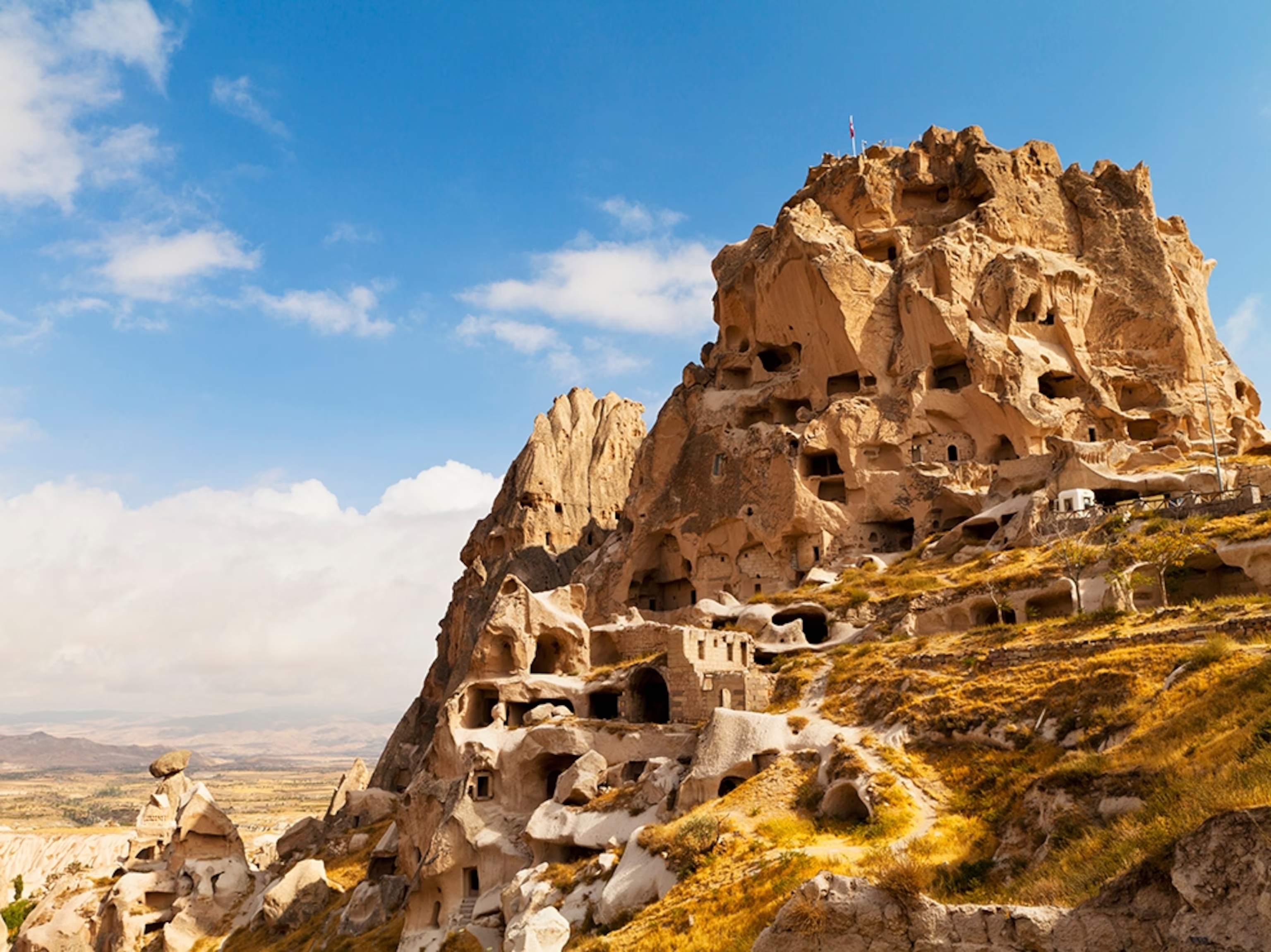
Cappadocia’s volcanic landscape in central Anatolia holds the fairy-chimney formations, cave dwellings and the sunrise hot-air-balloon corridor. Göreme is the base (the Open-Air Museum, the rock-cut churches, the Pigeon Valley overlook), with Uçhisar Castle and the surrounding valleys extending the panorama. Balloon and aerial work needs its own civil-aviation clearance alongside the Ministry permit, and productions book consecutive sunrise windows against weather.
Antalya, the Mediterranean coast and wider Anatolia
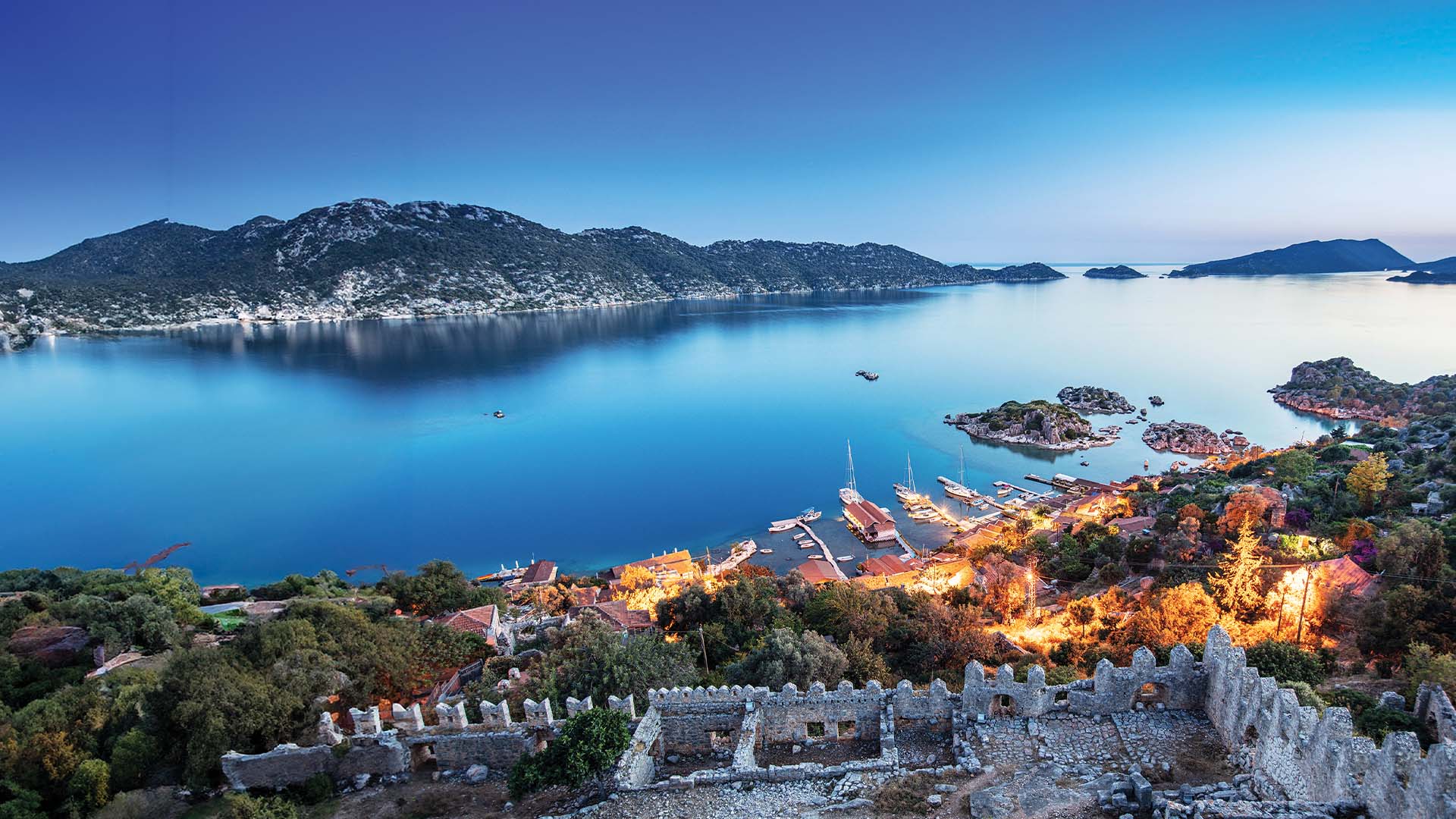
Antalya opens the Mediterranean corridor: Kekova and Kale (Simena) for the Lycian coastline, Side and Aspendos for Greco-Roman archaeology, and the run west through Kaş, Fethiye and Bodrum for the Aegean cruise band. Beyond the coast, Mardin’s honey-stone architecture above the Mesopotamian plain, Amasra and the Black Sea harbour towns, and the eastern terrain around Lake Van and Ararat give Turkey a broader visual range than most single-country Mediterranean briefs require.

International Productions Filmed in Turkey
Turkey has anchored major international productions, including Skyfall (2012) across Eminönü and the Grand Bazaar, Inferno (2016) at Hagia Sophia and the Basilica Cistern, Taken 2 (2012) through Istanbul, Argo (2012) using the Grand Bazaar to stand in for 1979 Tehran, and The Water Diviner (2014). It has also drawn a long Indian-feature track including Guru (2007), Ek Tha Tiger (2012) and Race 2 (2013). That history, and the deep local drama industry behind series such as Diriliş: Ertuğrul, is why the Turkish crew and vendor base supports international-scale crew, equipment and schedule requirements.

Engaging the Turkey Production Team
To scope a shoot, the office needs the shoot window, the proposed locations or visual references, the production format and scale, and whether the production intends to claim the Foreign Film Production Support. From that, the initial response sets out the permit route and realistic lead times, an outline crew and equipment plan, the location approvals each site will require, and an indicative budget banding in Turkish Lira against a reference date.
Contracting is coordinated through the Celluloid Pact Istanbul office; where the incentive is claimed, the application is made through an eligible Turkish co-producer or production-service company. The line producer controls the budget, cash flow and cost reporting to the overseas production office through prep, shoot and wrap, so the international producer keeps a single accountable contact in-country without basing a team on-site.
Istanbul office
Quick Tower, İçerenköy Mahallesi
Topçu İbrahim Sokak, No. 8–10D
34752 Ataşehir, İstanbul, Türkiye
Turkey shoot FAQ
Do we need a Turkish company to shoot in Turkey? For the filming permit, foreign productions apply through the Directorate General of Cinema and must engage at least one Turkish-citizen host during filming. The Foreign Film Production Support incentive is applied for separately, on its own track, through an eligible Turkish co-producer or production-service company; our Istanbul office coordinates the project with the eligible Turkish applicant required for that support route.
How far ahead should permits start? Standard locations need lead time for the national and municipal approvals; heritage sites and any drone or aerial work need considerably more, because those clearances run on separate, longer timelines. We open them as early as the schedule allows rather than to a fixed turnaround.
Can we bring our own camera and lighting? Yes, on an ATA Carnet cleared through Istanbul customs, though the Istanbul rental base covers most cinema packages without shipping. Customs clearance is a separate process from the filming permit.
What about the incentive? Turkey’s Foreign Film Production Support can return up to 30 percent of qualifying local spend, subject to a qualification test and current thresholds. The full mechanics are in our Turkey film incentive guide; the line producer builds and maintains the supporting cost file required for the incentive audit.
Send the shoot window, proposed locations and production scope for an initial Turkey plan covering permits, crew, equipment and schedule.
