

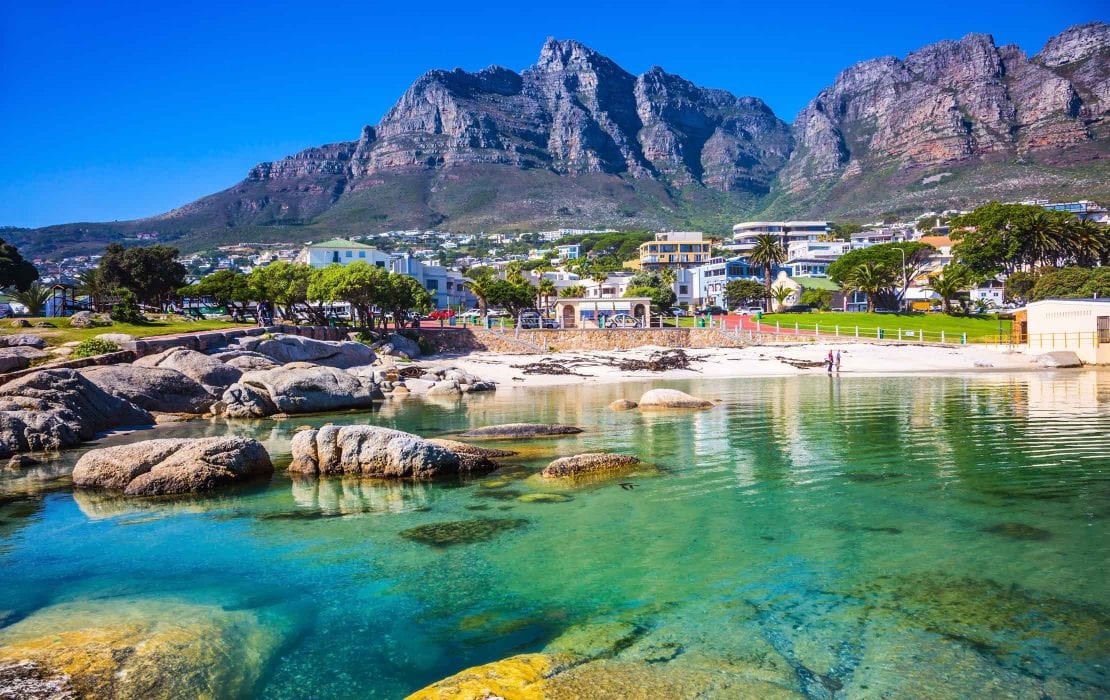
Cape Town has been the busiest foreign-production market in South Africa for over two decades — Cape Town Film Studios in Faure is the largest purpose-built film complex on the continent, the city runs a mature crew pool that swings between Amazon-scale features (The Wheel of Time Season 3 in early 2024, One Piece across multiple seasons) and international TVC campaigns in the October-to-March commercial peak, and the City of Cape Town operates a filming permit office that turns most shoots around inside a week. This covers the three subjects that budget conversations in Cape Town actually turn on: the DTIC Foreign Film and Television Production Incentive (FFTIP) mechanics and its 2024-2026 operational reality, the Cape Town crew day-rate structure via the CallaCrew and CPA rate cards, and the City of Cape Town, SANParks and Western Cape permit chain.
The full execution model — line producer coverage, on-the-ground crew coordination and permit sequencing across the Studios, Peninsula, CBD and Atlantic Seaboard zones — sits at Line Producer Cape Town. This page is the Cape Town film incentives, Cape Town production rates and Cape Town filming permits reference that budget conversations sit against — one operational covering the DTIC rebate mechanics, CallaCrew day-rate structure and multi-authority permit chain.
All figures below are Celluloid Pact indicative supplier estimates dated July 2026, quoted in ZAR with USD reference at approximately 18 ZAR to 1 USD; the rand carries meaningful FX volatility, so USD-denominated budgets need a currency-corridor buffer built in. These are not published market tariffs and are subject to change with the specific brief, shoot scale and DTIC scheme status at the time of application.

FFTIP and the DTIC rebate — published mechanics and the 2024-2026 operational reality
The Cape Town film incentives conversation runs through the South African Foreign Film and Television Production and Post-Production Incentive (FFTIP) is administered by the Department of Trade, Industry and Competition (DTIC). The scheme is nominally live — the September 2023 revised guidelines remain the governing document and DTIC still logs Form A/B applications — but any Cape Town shoot in mid-2026 needs to size FFTIP against a specific operational fact: the DTIC adjudication panel has not issued a Letter of Approval since March 2024.
Zero foreign projects were approved in FY 2024/25 or FY 2025/26. The scheme is functionally frozen while DTIC settles a contingent-liability backlog cited between R473 million and R1 billion, and while government-industry consultations in May and June 2026 draft a new blended tax-credit model to replace the current framework. Producers modelling a Cape Town shoot around FFTIP need to build a working budget that does not assume rebate cash-in and treat FFTIP as upside once the new scheme is gazetted.
Published FFTIP parameters (September 2023 revision)
The rebate rate is 25 percent of Qualifying South African Production Expenditure (QSAPE). A separate 5 percent BEE uplift stacks on top when the production runs post-production in South Africa and engages a Black-owned service company at B-BBEE Level 2 or better with more than 50 percent Black ownership. Minimum QSAPE spend is 15 million ZAR (approximately USD 833,000 at 18:1); the minimum drops to 12 million ZAR when the Special Purpose Corporate Vehicle service company is at B-BBEE Level 1. The rebate cap is 25 million ZAR per project (approximately USD 1.39 million) — the historical 50 million ZAR ceiling was halved in the September 2023 revision, so outdated summaries citing R50 million are inaccurate. A separate post-production-only track (QSAPPE) runs a 1.5 million ZAR minimum for productions bringing edit, sound mix, grading or VFX to South Africa without a live-action shoot.
Eligible and non-eligible QSAPE
Eligible QSAPE covers local cast and crew wages, South African vendor invoices net of VAT, South African location fees, equipment rental from South African suppliers, accommodation, transport and per-diems, post-production (editing, sound mix, grading, VFX and roto, animation), Dolby and music licence fees, sets and props (net of resale), and South African producer fees capped at the lesser of 10 percent of total production expenditure or 1 million ZAR.
Non-eligible expenditure includes financing and interest costs, executive-producer fees, general overheads (capped at 2 percent of total production expenditure or 200,000 ZAR), deferments and profit participations, publicity and marketing, equipment purchase rather than rental, fees to foreign entertainers, land and buildings, depreciation, errors-and-omissions insurance, distribution prints and advertising, festival costs, VAT itself, and any services where more than 50 percent of the work was performed offshore (which specifically excludes foreign-crew salaries from QSAPE).
Application process and the SPCV mandate
A Special Purpose Corporate Vehicle (SPCV) incorporated in South Africa via CIPC is mandatory. The SPCV is wholly owned by the foreign applicant, solely dedicated to the production, and must achieve B-BBEE Level 4 minimum (the parent holding company must sit at Level 3). QSAPE has to be paid from the SPCV’s primary South African bank account. Applications are submitted no earlier than 45 calendar days before principal photography, and provisional approval must issue before the shoot starts anywhere in the world. Post-shoot, an audited expenditure statement by an IRBA-registered auditor is filed. The official payout window is “over the subsequent two financial years” — up to 24 months from claim. Real-world payouts on already-approved claims have been running 18 to 36 months, and no fresh approvals have flowed since March 2024.
Recent reform track — where FFTIP is heading
In February 2026 the DTIC committed 473 million ZAR to settle the FFTIP backlog and promised an automated tracking system. May and June 2026 industry consultations have drafted a new blended tax-credit model to replace the current cash-rebate structure — details are ungazetted at press time but the direction is toward a more predictable tax-credit mechanism with a shorter payout envelope. Minister Mpho Parks Tau (ANC, DTIC since 3 July 2024) and Deputy Minister Zuko Godlimpi hold the film brief. Cape Town shoots being planned for a mid-to-late 2026 start date should build the working budget without FFTIP baked in and treat any incentive access as a working-capital-lift upside once the new scheme is live.

Cape Town crew day rates — CallaCrew December 2025 + CPA Working Guidelines
Cape Town production rates and the broader South African crew day-rate structure are day-rated, not weekly-tariffed, and the industry works to a strict 10-hour standard day. The CallaCrew national rate card (updated December 2025) plus the CPA Crew Working Guidelines (effective 1 November 2022, inflation-adjusted 1 September annually) are the two public references producers benchmark against. Cape Town sits at the top of each band during the October-to-March commercial peak — international TVC spend crowds a finite heads-of-department pool and drives premium rates 5 to 15 percent above the Johannesburg baseline at the top of card. Off-peak (April to September), Cape Town rates track the national card without a premium. Table Mountain National Park closures in the mid-December to mid-January window compress the shoot calendar into a narrow late-October-to-December window at premium rates.
Day-rate ranges by department (10-hour standard day)
The table below indexes CallaCrew’s published December 2025 ranges to USD equivalents at 18 ZAR to 1 USD. These are labour rates only — kit and equipment rental is invoiced separately (universal South African practice, treated under SARS code 3714 as hire-contract). Heads of department on cinema features and A-list commercials frequently collapse the daily band into an all-in project fee that runs materially above the top-of-card daily.
| Role | ZAR/day range | USD/day range (~18 ZAR/USD) | Notes |
|---|---|---|---|
| Director of Photography | 6,500 to 20,000 | ~360 to 1,110 | Top-of-card for A-list features/TVCs; camera package invoiced separately |
| Focus Puller (1st AC) | 2,800 to 4,000 | ~155 to 222 | Feature 1st ACs cluster at top of range |
| 2nd AC / Loader | 1,800 to 3,800 | ~100 to 211 | |
| DIT | 3,000 to 4,000 | ~167 to 222 | DIT/VT combined 3,500 to 5,750 ZAR |
| Gaffer | 3,500 to 4,300 | ~194 to 239 | Lighting package invoiced separately |
| Best Boy Electric | 2,400 to 3,000 | ~133 to 167 | |
| Key Grip | 3,500 to 4,000 | ~194 to 222 | Grip kit invoiced separately |
| Sound Recordist | 3,000 to 5,350 | ~167 to 297 | Sound package invoiced separately |
| Boom Operator | 2,250 to 3,850 | ~125 to 214 | |
| Art Director | 4,000 to 9,000 | ~222 to 500 | Production Designer typically project-fee (60,000-900,000 ZAR) |
| Costume Designer | 4,000 to 6,500 | ~222 to 361 | Feature CDs often project-fee 60,000 to 180,000 ZAR |
| Wardrobe Supervisor | 3,500 to 4,000 | ~194 to 222 | |
| HMU Lead | 2,400 to 5,500 | ~133 to 306 | |
| Line Producer | 3,000 to 6,000 | ~167 to 333 | Features project-fee 500,000 ZAR to 1.2M+ |
| Production Manager | 2,800 to 4,500 | ~155 to 250 | |
| 1st AD | 3,500 to 10,000 | ~194 to 555 | Top-of-range for A-list features/TVCs |
| 2nd AD | 2,250 to 4,500 | ~125 to 250 | |
| Location Manager | 4,000 to 5,250 | ~222 to 292 | |
| Transport Captain | 2,800 to 4,000 | ~155 to 222 |

Overtime, turnaround and premium-day structure (CPA Guidelines)
The CPA Crew Working Guidelines set a 10-hour standard day with overtime stacking as follows: hours 10 to 14 at 1.5 times pro-rata; beyond hour 14 at 2 times; after midnight at 3 times. Turnaround is a 10-hour minimum between wrap and next call; the first 2 hours short trigger 1 times pro-rata, the next 2 hours 2 times, and beyond that 3 times. Sunday, public holiday and first-night-of-a-night-shoot days pay at 1.5 times the standard day. Meals must sit at a maximum 6-hour gap with 30-minute minimum breaks; breakfast is required if call sits at or before 07:30.
Kit invoicing and the project-fee vs day-rate mix
The universal Cape Town practice: the DOP invoices the camera package, the sound mixer invoices the sound package, the gaffer invoices the lighting package, the key grip invoices the grip package — all on top of the day rate. Producers arriving with a labour-only day-rate spreadsheet routinely under-scope by 20 to 40 percent because they missed the kit-hire line. The project-fee cluster on features is: Line Producer, Production Designer, Costume Designer, Production Manager on long-form, Location Manager on multi-week shoots. Everything else typically stays on the daily card with overtime billed separately.

The Cape Town filming permit chain — CTFPO, SANParks, Wesgro and beyond
Cape Town filming permits run through a multi-authority chain that changes depending on where the camera actually points. The City of Cape Town Film Permit Office (CTFPO) handles City-owned property and public streets. SANParks handles Table Mountain National Park and Cape Point. Western Cape Mobility Department handles provincial roads. Wesgro (the Cape Film Commission) is advisory and cannot issue permits itself. Purpose-built studios sit outside the City permit regime under the 2024 By-law. Producers routing a schedule through the Peninsula, Table Mountain and studio zones will touch three or four permit authorities on the same shoot week.
City of Cape Town Film Permit Office (CTFPO)
The CTFPO sits inside the Events and Film Department under Safety and Security. The new Filming By-law came into force 1 November 2025, replacing the 2005 By-law — it streamlines permitting, exempts purpose-built facilities, and codifies noise and impact conditions. Standard shoots turn around in about a week from complete application. Road closures, multi-lane closures and SFX shoots require a minimum 4 days’ notice for traffic services to be dispatched. The City has frozen filming tariffs for the fourth consecutive year and zero-rates most film permits and location bookings on City-owned property — deployment of metro police and traffic services for road closures is included in the permit rather than billed separately. Student productions and productions marketing Cape Town qualify for a 50 to 100 percent additional rebate. The permit portal is web1.capetown.gov.za/web1/filmpermitsonline; the office phone is +27 21 417 4022.

SANParks — Table Mountain National Park and Cape Point
Table Mountain National Park and Cape Point sit under SANParks, not the City. The TMNP Film and Event Office in Tokai runs a separate permit track with a published fee schedule. Application fee is 451 ZAR flat. Commercial/feature permits scale by production size: Micro 5,502 ZAR, Small 8,875 ZAR, Medium 16,154 ZAR, Large 26,801 ZAR, Very Large 35,496 ZAR, Extra Large 40,700 ZAR. Stills permits run 2,133 to 9,050 ZAR. Drone/RPAS is 2,957 ZAR per day plus SACAA approvals (see below). Helicopter is 6,568 ZAR per day plus 7,395 ZAR per landing. Lead times: stills 5 working days, commercials 6 working days. The park is closed to all filming from 15 December to 15 January. Crews larger than 5 people at Cape Point must be off-location by 09:00. Public liability insurance minimum is 5 million ZAR. An Environmental Control Officer and/or Baboon Monitor is required at extra cost.
Wesgro (Cape Film Commission) — advisory, not statutory
Wesgro is the statutory tourism-trade-investment agency for Cape Town and the Western Cape. Its Film & Media Unit runs an advisory and location-scouting-support role but has no power to issue visas or filming permits — Wesgro’s own wording. The public portal is filmcapetown.com. Producers routing incentive queries or location introductions through Wesgro get orientation but not permits; the permit filings still route through CTFPO, SANParks or the Western Cape Mobility Department depending on the shoot location.
Western Cape provincial and reserve permits
Provincial roads outside City limits are the Western Cape Mobility Department’s authority — 80 ZAR admin fee plus 4,400 ZAR filming or 1,100 ZAR stills. Municipal permits for Stellenbosch, Drakenstein/Paarl, Overstrand/Hermanus and Garden Route DM run separately from City of Cape Town filings. CapeNature reserves — Cederberg, Kogelberg, De Hoop — are booked via the outsourced Permitz platform (permitz.co.za), not directly. This layered permit landscape is worth a broader look for producers routing an Africa-wide brief: the comparative operational detail sits at filming in Africa, which covers permit chains across the SA cluster and adjacent African markets.

Studios exemption, drone permits and specialised zones
Cape Town Film Studios in Faure and Atlantic Film Studios in Milnerton are purpose-built facilities exempt from City permits under the 2024 By-law — the studios self-permit lot and interior work unless activity spills outside the erf or requires City services. Beach filming at Camps Bay, Clifton, Muizenberg and Llandudno routes through CTFPO. Boulders Beach (penguin colony) falls under SANParks.
Whale season from June to November triggers False Bay marine restrictions. Drone permits require SACAA approvals — a Remote Operator Certificate (ROC), a Remote Pilot Licence (RPL) and a per-shoot Letter of Approval on a registered aircraft. Foreign drone operators cannot obtain an ROC directly; they must partner with a South African ROC-holder. SACAA base fees start at 4,210 ZAR for ROC issuance, with all-in industry cost above 100,000 ZAR and an ROC timeline of 12 to 24 months. Minimum third-party liability is 500,000 ZAR per aircraft. Blanket no-fly zones apply over Table Mountain National Park, the Cape Town International Airport CTR and Simonstown naval base.

Cape Town vs Morocco, Portugal and Jordan — the regional rebate comparison
Foreign producers weighing Cape Town against the wider regional rebate corridor typically look at Morocco (CCM 30% cash rebate, uncapped per project), the two Portugal schemes (ICA cash rebate at 25 to 30 percent and PIC cash refund at 30 percent on the first EUR 2 million), and Jordan (Royal Film Commission tiered 25 to 45 percent). Cape Town’s SA FFTIP structure differs on rate ceiling, payout timing and — critically in mid-2026 — active-approval status.
| Country | Rate | Minimum spend | Cap | Approval status (mid-2026) |
|---|---|---|---|---|
| South Africa (FFTIP) | 25% + 5% BEE uplift | ZAR 15M (~USD 833K) | ZAR 25M/project (~USD 1.4M) | Panel dormant since March 2024 — new scheme in consultation |
| Morocco (CCM) | 30% flat | MAD 10M (~USD 1M) | Uncapped per project | Active; 6-month typical payout under new DG |
| Portugal FATC (ICA) | 25 to 30% | EUR 500K | EUR 14M annual envelope | Active |
| Portugal PIC (2024) | 30% first EUR 2M / 25% surplus | EUR 2.5M | EUR 20M annual | Active |
| Jordan (RFC) | 25 to 45% tiered | USD 250K | USD 5.25M/project | Active |
The producer decision on Cape Town in mid-2026 is not primarily an incentive decision — the operational strengths (Cape Town Film Studios scale, deep crew pool, City permit turnaround, English-language production culture, mature TVC infrastructure) work regardless of FFTIP status. Producers cross-shopping Cape Town with Morocco specifically for the incentive angle should model both budgets: Cape Town without incentive plus Morocco with 30 percent cash rebate on eligible spend, then decide on operational fit rather than rebate arithmetic. Full tax incentive and rebate consulting across territories is where the multi-jurisdiction structuring sits.

Practical gotchas and the 2024-2026 DTIC reset
Beyond the FFTIP dormancy, Cape Town shoots in mid-2026 run into three recurring operational traps that shape the working budget more than headline rate numbers do.
Kit-rental invoicing gap
A producer arriving with a Los Angeles or London day-rate spreadsheet routinely models labour without the parallel kit-hire lines. Cape Town DOPs bill the camera package, sound mixers bill the sound package, gaffers bill the lighting, key grips bill the grip. These are separate invoices treated under SARS code 3714 as hire-contract income. Failing to build the kit lines into the working budget under-scopes a Cape Town shoot by 20 to 40 percent. Local counterpart intake sheets normalise this; imported spreadsheets do not.
Table Mountain closure and December compression
SANParks closes Table Mountain National Park to all filming from 15 December to 15 January every year. Any shoot depending on TMNP, Cape Point or the Peninsula for hero locations has to sit outside that window. The commercial peak runs October through March, so productions targeting the Table Mountain visual pack effectively compress into late October through mid-December, then March. The city rate premium band (5 to 15 percent above Johannesburg at the top of card) hits hardest inside that window. Off-peak shoots (April to September) get calmer pricing but colder weather and shorter daylight.
Drone permits — foreign operators cannot self-file
SACAA rules require any commercial drone shoot to hold an ROC, an RPL and a per-shoot Letter of Approval on a registered aircraft. Foreign operators cannot hold an ROC directly. Every drone shoot in Cape Town routes through a South African ROC-holder (Drone Crew was the first film-industry ROC holder in the country) as the operator of record. Getting an ROC issued takes 12 to 24 months, so the workaround is always the local partner, not the paperwork.
Where this scheme sits inside our broader incentive practice
Cape Town is one of several territories where we run incentive-side structuring alongside line-production execution. The multi-jurisdiction picture — how a producer chooses between South Africa, Morocco, Jordan, Portugal, Turkey and Tunisia on a treaty-and-rebate basis — is covered in the Line Producer South Africa regional hub for the SA-cluster operational picture. Cape Town remains the SA-cluster’s largest working market by foreign-production volume, and the shoot decision in 2026 is being made on operational fit and Cape Town Film Studios scale, with FFTIP treated as future upside rather than baked-in working capital.
