

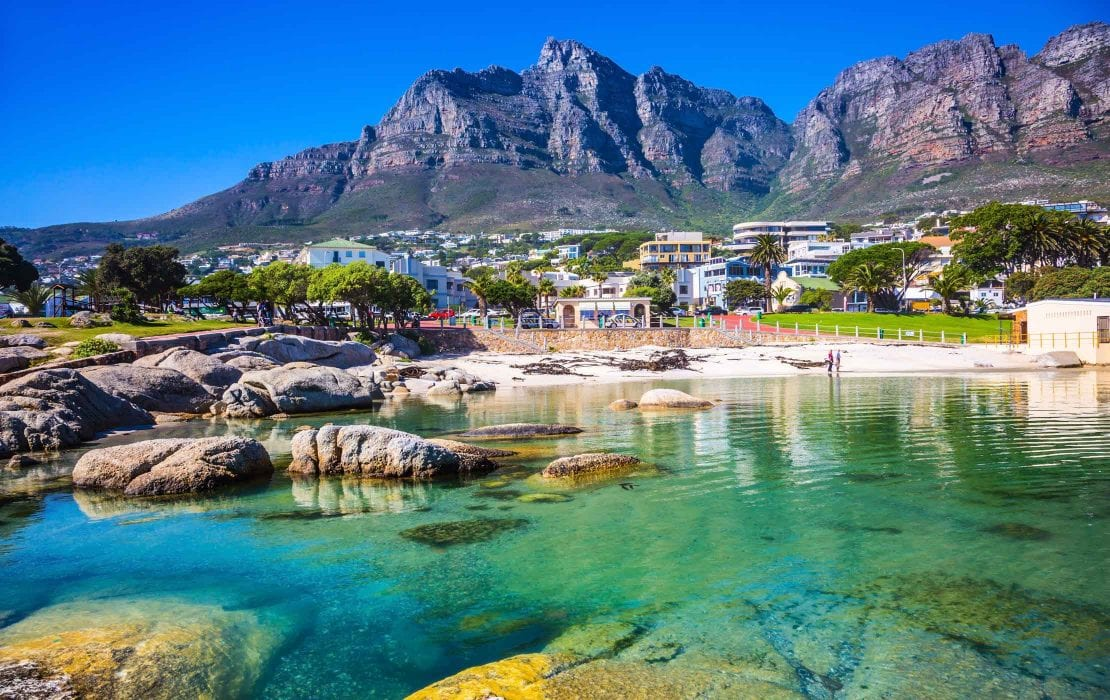
Film fixers in Cape Town and a local line producer coordinate municipal film permits, Cape Town Film Studios bookings, Table Mountain National Park access, local crew, temporary equipment import and schedules across the CBD, Cape Peninsula and Winelands. Road closures, crowd management, protected land and aerial work follow separate authority routes that must be confirmed against the final location list.
Cape Town forms the Western Cape production base within our line producer South Africa network, with the Cape Town team holding the local budget and schedule while the national layer coordinates any additional South African legs.
How Cape Town’s production layer operates
Cape Town’s role in the international production economy is structural. The Cape Town technical workforce is one of the deepest on the African continent, English-fluent, internationally trained and accustomed to studio-tier shoots.
Cape Town’s production economy runs on one of the more established production bases on the continent. The City of Cape Town Film Permit Office processes several thousand permits annually across feature, series, ad-film and stills work and operates a structured turnaround pipeline. Cape Town Film Studios at Faure provides major purpose-built studio capacity. The crew bench services Joburg-rotated and international HODs alongside Cape Town-local crew across feature, OTT and ad-film work simultaneously. The City of Cape Town Film Permit Office coordinates municipal filming permissions, including applications involving road closures and public-space use. Table Mountain National Park locations follow a separate SANParks process, while police, traffic, heritage and private-property approvals apply where required by the final location plan.
Cape Town Fixers: City Permits and SANParks Coordination
The City of Cape Town Film Permit Office provides one entry point for municipal approvals, though it does not cover SANParks or every private and national authority. Lead time depends on the shoot category, location, road or public-space impact and whether another authority must approve the activity, so the current City and SANParks application periods should be checked against the completed location list (Film Cape Town permit guidance). A Cape Town fixer keeps the shoot on schedule by submitting clean, correctly documented applications on the first attempt.
SANParks Table Mountain and location-specific clearance layers
The Cape Town authority stack the fixer holds is specific and dense: City of Cape Town Film Permit Office for municipal public space, SANParks for Table Mountain National Park and Cape Point access, the V&A Waterfront private estate film office for the harbour and waterfront properties, Table Mountain Cableway for any cable-car or upper-table sequence, Robben Island Museum for Robben Island access, the Bo-Kaap community counterpart for filming inside the Cape Malay heritage quarter, and CapeNature for non-SANParks provincial reserves in the Cape Peninsula. That is several separate approval tracks on a typical multi-location Cape Town schedule, which is why the fixer-and-line-producer pairing is central to keeping a Cape Town shoot on schedule.
A film fixer in Cape Town coordinates local crew sourcing and the production-services interfaces required by the brief, with additional Joburg or international HODs brought in where the creative specification requires them.
FFTIP Applicant Structure and Cape Town Production Services
Features that claim the incentive often base their production in Cape Town, where the studio economics at Cape Town Film Studios at Faure set the qualifying-spend baseline. The incentive is claimed by the qualifying South African applicant established for the project rather than by the foreign producer directly, with a Cape Town production-services company supporting the budgeting, procurement and administration around it. Confirming that structure at budget-lock stage keeps the qualifying-spend and audit timelines aligned.
The Cape Town economics differ from our Line Producer Joburg base or Durban in one specific way: eligible studio expenditure may form part of the project’s QSAPE for ocean-feature work. A Cape Town Film Studios slot can bring the water tank, the stage capacity and the on-lot crew bench into qualifying spend, which is why feature productions weighing Cape Town against Atlanta or Sydney often run the incentive math on the studio booking first and the location days second. For ad films and smaller projects, the Cape Town production service company often runs a leaner structure with a single operator covering line-producer, fixer and PSC functions; for larger feature work, those functions separate, with the incentive claim held by the qualifying applicant and day-to-day production cash flow held by the line producer.
Cape Town’s production zones, Studios, Peninsula, CBD and Atlantic Seaboard
Cape Town’s filming geography clusters around four operational zones. Cape Town Film Studios at Faure anchors studio-tier feature and series work. The Cape Peninsula runs the coastal and mountain register from Table Mountain through to Cape Point. The Cape Town CBD, Bo-Kaap and V&A Waterfront carry contemporary urban and heritage. The Atlantic Seaboard suburbs from Camps Bay through Clifton to Llandudno deliver the beach and luxury register that anchors the California stand-in role. These zones can be managed from a Cape Town base, although travel time to Faure, Cape Point and the Winelands varies materially with traffic, unit size and the final route.
Cape Town Film Studios at Faure, the African studio base
Cape Town Film Studios sits 25 kilometres east of the CBD at Faure on the N2 highway, a purpose-built complex with five sound stages, workshops, production offices, backlots and a deep-water tank designed for maritime and underwater work (Wesgro studio profile). Booking lead times for the main stages can run several months ahead on the most active calendar windows, with last-minute availability rare during the November-to-April peak production window. Backlot capacity supports period builds and stand-by sets between principal stages.

The Cape Peninsula, Table Mountain to Cape Point

The Cape Peninsula runs 60 kilometres south from Cape Town CBD to Cape Point, with Table Mountain anchoring the northern end and the Atlantic seaboard and False Bay coasts framing the peninsula. Camps Bay, Llandudno and Bakoven supply the Atlantic Seaboard beach register. Hout Bay carries the working harbour and Chapman’s Peak Drive supplies the cliff-edge coastal drive that has anchored automotive commercial work for decades. Noordhoek, Kommetjie and Scarborough deliver the Long Beach and surf register. Boulders Beach near Simon’s Town is the penguin colony with restricted access through SANParks. Cape Point and Cape of Good Hope sit inside Table Mountain National Park with separate permit conditions. The Cape Peninsula stands in convincingly for California’s Big Sur, the Mediterranean coast and the Pacific Northwest, with the California stand-in being the most commercially valuable.
Cape Town CBD, Bo-Kaap, V&A Waterfront and the City Bowl

The Cape Town CBD sits in the City Bowl beneath Table Mountain. Long Street, Bree Street, Loop Street and Kloof Street anchor the contemporary urban register. Bo-Kaap, the historic Cape Malay quarter on the slopes of Signal Hill, carries the pastel-painted houses and cobbled lanes that form one of the most photographed urban locations in southern Africa. Larger Bo-Kaap shoots may require location-specific community consultation alongside the City permit, and the current City framework notes that additional property or authority approval may be required before the City application. The applicable contacts and conditions should be confirmed through the Film Permit Office and local counterpart for the final brief (Cape Town filming guidance). The V&A Waterfront, a privately managed precinct, runs its own film office for the harbour, Two Oceans Aquarium, Zeitz MOCAA Museum and the Silo District. Greenmarket Square, Company’s Garden, the Castle of Good Hope and District Six round out the heritage register inside the City Bowl.
The Faure Water Tank and Ocean-Feature Infrastructure
Cape Town Film Studios at Faure carries a purpose-built deep-water tank with depth and wave-generation capacity that lets foreign productions stage maritime sequences without leaving Cape Town. The commercial significance is that ocean-feature work which would otherwise route to Pinewood, Warner Bros Leavesden or Australia’s Village Roadshow can sit inside the Cape Town incentive filing, with the tank booking forming part of the qualifying-spend register. For any feature with a sea-vessel, shipwreck, naval-action or open-water survival narrative, the water tank changes the commercial math against the alternatives.
The booking lead-time on the tank can run several months for principal photography, and the Cape Town production service company holding the applicant role manages the slot reservation alongside the rebate filing. International features carrying ocean-effects requirements should confirm water-tank availability early because it may constrain the wider schedule, with the Studios at Faure stage availability shaping the rest of the production calendar. The film fixer in Cape Town working a tank-led feature carries the parallel coordination between the Studios booking team, the City Film Permit Office for any associated location days, and the FFTIP applicant’s qualifying-spend register.
Cape Town as California, Mediterranean and global-coast stand-in
| Cape Town doubles for | Typical zones used |
|---|---|
| California / Pacific Coast | Camps Bay, Llandudno, Hout Bay Atlantic beaches; Chapman’s Peak drive |
| Mediterranean | Bo-Kaap, V&A Waterfront, CBD historical districts, Camps Bay corniche |
| Australia / New Zealand outdoors | Cape Peninsula wilderness, Silvermine, Constantia forests, Cape Point |
| Latin American / Caribbean urban | District Six, Bo-Kaap coloured streetscapes, harbour-side CBD blocks |
| Contemporary global metropolis | Cape Town CBD glass towers, MyCiTi transit corridor, V&A Waterfront redevelopment |
| Period European / London | Cape Town CBD Victorian and Edwardian buildings, Company’s Garden precinct |
Cape Town’s commercial stand-in role across multiple international registers makes it one of Africa’s busiest international production bases. The Cape Peninsula coastline reads as California coast at feature-film scale. Camps Bay and Llandudno pass for Pacific Coast Highway California beach work. The Cape Winelands an hour east deliver Mediterranean Europe for period and luxury commercial briefs. Atlantic Seaboard apartment architecture passes as contemporary global-coast metropolitan. Even Bo-Kaap, when shot at the right angle, has been used as Marrakech and Latin American colourful-urban backdrop. The combination of that stand-in capability, the Foreign Film incentive, an English-language workflow and a deep crew bench is what sustains Cape Town’s international service work. Where a brief needs the subtropical, Indian Ocean coastline the Cape’s Atlantic register cannot supply, those looks route to our Film Fixers In Durban coverage in KwaZulu-Natal.

Permits, FFTIP and the operational framework
Cape Town runs the most mature municipal film permit system in Africa. The City of Cape Town Film Permit Office is the central entry point for City permit applications inside the metropolitan area. SANParks, heritage bodies, private properties and other external authorities retain their own approval routes. The Foreign Film incentive administered by the dtic layers on top for qualifying foreign productions that meet the programme’s minimum qualifying spend of R15 million. The Western Cape Film and Media Promotion office runs additional provincial coordination across the broader Cape region.
City of Cape Town Film Permit Office

The City of Cape Town Film Permit Office processes a large volume of film permits across feature, series, ad-film and stills work. Lead time depends on the shoot category, location, road or public-space impact and whether another authority must approve the activity, so the current City and SANParks application periods should be checked against the completed location list (Cape Town Filming By-law, SANParks filming guidance). Restricted-area work such as Table Mountain National Park, Robben Island, Cape Point within Table Mountain National Park or the Castle of Good Hope runs on its own approval track, and Bo-Kaap community consultation runs in parallel to the City permit. Beach permits at Camps Bay, Clifton and Llandudno may need Atlantic Seaboard coordination during the peak season (October to April) when public beach access compresses available shoot windows.
Foreign Film Incentive: Current Position

South Africa’s current Foreign Film and Television Production Incentive calculates qualifying location-production support at 25% of QSAPE, subject to the programme’s eligibility conditions and cap (dtic Foreign Film Incentive). A possible additional 5% applies only when the published production, post-production and black-owned service-company conditions are met. Detailed thresholds, applicant structure and claim mechanics sit in the Cape Town film production incentives, rates and permits guide. The programme remains open, but approval timing must be confirmed before expenditure is committed (dtic programme-status notice).
Temporary equipment import and ATA Carnet

Qualifying professional equipment may enter South Africa under an ATA Carnet or another applicable temporary-admission procedure. The production’s customs broker should confirm the entry point, document set, inspection arrangements and re-export procedure before dispatch. Processing time depends on the freight method, documentation and customs handling at the selected point of entry. South Africa accepts Carnets for qualifying professional equipment, but the actual admission conditions remain shipment-specific (SARS ATA Carnet policy).
Cape Town as the production gateway to the Western Cape
Cape Town is the operational centre of the Western Cape production economy. Our Cape Winelands team operates from Stellenbosch and Franschhoek, sitting 45 minutes east of Cape Town CBD via the N1 highway and anchoring the European-period and Mediterranean stand-in register that no other African region delivers at the same density. The Garden Route runs from Mossel Bay through Knysna and Plettenberg Bay along the southern Cape coast, supplying the temperate-coast and indigenous-forest register for productions that need the southern hemisphere equivalent of the Pacific Northwest or the Tasmanian coast.
Hermanus, 90 minutes east of Cape Town, supplies the southern right whale season (June through November) and the cliff-edge coastal register that anchors documentary and wildlife work. Our line producer Karoo team operates from Beaufort West, Oudtshoorn, Cradock and Graaff-Reinet, accessible via the N1 from Cape Town through Beaufort West (4.5 hours) and delivering the semi-arid open-land Outback and American West stand-in register at FFTIP-eligible cost. Saldanha and the Cape West Coast carry working-port and rugged-coast registers two hours north of Cape Town. The wider South Africa line producer network coordinates these adjacent zones when a brief extends beyond Cape Town proper.
Cape Town International Airport (CPT) is the regional aviation hub for the Western Cape, with direct international connections to London, Frankfurt, Amsterdam, Doha, Istanbul and Atlanta, alongside the two-hour domestic shuttle to OR Tambo (JNB) for Joburg routing. The Cape Town production base supports productions whose schedule covers any combination of Winelands, Garden Route, Hermanus, Karoo or West Coast work without re-clearing customs or re-staging crew.
Line Producer Cape Town, engagement models, film production services and procurement
International producers approaching Cape Town usually think about the country in two procurement shapes: an individual Cape Town line-producer engagement, or a full-service film production services contract with a Cape Town production service company that handles the FFTIP application, City of Cape Town Film Permit Office coordination, and end-to-end shoot execution. Both routes work operationally. The choice depends on how much of the pre-production, on-set and wrap infrastructure the international company wants to hold in-house versus outsource, and whether the schedule involves a Foreign Film Incentive claim, which is filed by the qualifying South African applicant established for the project rather than by the foreign producer or an individual line producer directly. A Cape Town production-services company can support the budgeting, procurement and administration around that claim.
What a Cape Town line-producer engagement typically covers
A Cape Town line-producer engagement covers City of Cape Town Film Permit Office filing and SANParks Table Mountain National Park liaison, FFTIP eligibility scoping and application through a paired Cape Town production service company where the international brief qualifies, Cape Town Film Studios at Faure booking and rate negotiation, crew day-rate benchmarks with Cape Town HODs, equipment vendor coordination through the Cape Town rental base, temporary-equipment import through the customs entry point confirmed by the production’s broker, and on-set production supervision through wrap. The line producer holds fiduciary and scheduling accountability across the full shoot; production coordinators, ADs and location fixers report into the line producer’s structure.
Day rates for a line producer in Cape Town on international feature and streamer briefs sit materially below equivalent day rates in London, Sydney or Los Angeles for comparable seniority. Cape Town line producers who work primarily on Cape Town Film Studios anchored features operate on a different rate structure than those anchored on Peninsula-heavy location work or CBD-only commercial briefs, with the studio-anchored operators typically billing higher day rates reflecting the volume of concurrent international activity in the Faure ecosystem and familiarity with Studios-adjacent vendors.
Line producers in Cape Town versus film production service companies, the FFTIP-anchored procurement split
Line producers in Cape Town are individuals, experienced production managers with local CIPC-registered company structures behind them or contracted through a service-company employer. Film production service companies in Cape Town are the corporate entities that employ multiple line producers, coordinators, fixers and administrators across parallel international projects, and that support the qualifying South African applicant established for a foreign production’s incentive claim. When international producers reach out for a Cape Town engagement, they typically get a line producer assigned to the specific project from a service company’s roster, with the qualifying applicant filing the claim on behalf of the foreign production.
For a Cape Town brief that qualifies for the incentive (foreign production, minimum spend thresholds, qualifying spend inside Cape Town and the Western Cape), the claim is filed through the qualifying South African applicant rather than by an individual line producer, who cannot apply for the incentive directly. For briefs that do not claim FFTIP (below spend thresholds, or where the international company opts out of rebate for schedule reasons), a single Cape Town line-producer engagement is workable and often simpler operationally.
Film production services in Cape Town, Studios, Peninsula, CBD and multi-zone briefs
Film production services in Cape Town are typically quoted as a package rate combining line-producer day rate, production coordinator and PA support, FFTIP application administration where applicable, City Film Permit Office filing and follow-through, per-diem overhead management, and a production-service margin. Within that package, film fixers in Cape Town run the location, permit and field-execution layer while the line producer holds the budget and schedule. Studios-anchored briefs (features and streamer originals shot primarily at Cape Town Film Studios at Faure) run through service companies familiar with the Studios booking process and with established crew rosters. Peninsula and coastal briefs (Cape Point, Chapman’s Peak, Camps Bay, Atlantic Seaboard) run through service companies experienced with SANParks and City coastal permits. CBD and Bo-Kaap commercial briefs run through service companies with a lighter overhead model tuned to shorter-schedule advertising work.
Cross-region briefs that touch Cape Town + Cape Winelands + Karoo require a service company (or line producer) with corridor experience across the Western Cape. International shoots evaluating full-service film production services in Cape Town should confirm the company’s scope covers both the specific FFTIP application track (if the rebate is being claimed) and the specific zones the schedule requires; if either doesn’t fit, the line producer needs to explicitly build the additional coverage into the pre-production budget rather than discovering it as a mid-shoot expansion.
Engaging a line producer in Cape Town
Most Cape Town schedules become workable or unworkable at the briefing stage. The variables that matter are which zones the script implies, whether Cape Town Film Studios stage capacity is needed and when, the City Film Office permit lead time against the shoot start date, Table Mountain National Park access through SANParks where the Cape Point and Cape of Good Hope sequences sit, Bo-Kaap community coordination, FFTIP eligibility and rebate filing path, temporary-import route and customs documentation, Section 11(2) visa stack by nationality, and the wider Joburg-Cape Town corridor logistics when the schedule extends beyond Cape Town.

The Cape Town crew bench and international feature credits
Cape Town has one of Africa’s deeper established crew pools, with a large concentration of department heads, key technicians and specialist crew. Cape Town crews have contributed to productions directed by Christopher Nolan, Ridley Scott, Marc Forster, Steven Caple Jr., Neill Blomkamp, Edward Zwick and Andrew Niccol on projects filmed in South Africa across the past two decades. International feature and series credits routed through Cape Town over the past two decades include Long Walk to Freedom, Invictus, Blood Diamond, Lord of War, the Resident Evil franchise and a continuous stream of streamer originals and premium ad-film work from European and US clients. The specialist departments scale from one-camera commercial through to multi-stage simultaneous feature production.
The Cape Town line producer and fixer pairing model
The pairing model on a Cape Town shoot runs as a regional production head holding the contract, the schedule, the budget and the rebate filing, with a line producer in Cape Town owning day-to-day execution across the City Film Office, Cape Town Film Studios, SANParks, Bo-Kaap community coordination, the V&A Waterfront private estate, and any police coordination required for road closures and crowd management. Film fixers below the line producer layer handle sub-zone access, including Atlantic Seaboard beach permits, Table Mountain Cableway scheduling, Hout Bay harbour coordination and Chapman’s Peak Drive road permits. Cape Town’s studio infrastructure and international-tier crew bench let a compact line-producer-and-fixer team carry a multi-zone international feature, scaling up with additional coordinators and fixers as the schedule requires. For how Cape Town compares with other African bases on permits, crew and cost, see our filming in Africa guide.
