

Film fixers in Vietnam coordinate location access, local crew, equipment and daily logistics across Hanoi, Halong Bay, central Vietnam and Ho Chi Minh City. A line producer in Vietnam holds the budget, schedule, contracts and reporting, then sequences the national filming-service approval with the relevant provincial, heritage, marine and site-specific requirements.
The work concentrates on Hanoi, Ho Chi Minh City, central Vietnam through Da Nang, Hue and Hoi An, and the Halong Bay marine corridor, with Sapa and the Mekong Delta run as schedule extensions from the northern and southern bases. Hanoi anchors the Northern production base with the Old Quarter heritage band, French colonial Indochinese architecture and contemporary urban work. Ho Chi Minh City carries the Southern commercial hub with District 1 contemporary urban work and the Mekong Delta gateway. The central coast through Da Nang, Hue and Hoi An delivers imperial heritage, UNESCO Old Town routing and beach-coastal infrastructure. Halong Bay and the Quang Ninh provincial corridor anchor the marine register with a distinctive large-scale limestone-karst seascape.
Detailed filming costs and permit timelines in Vietnam are maintained in the separate operational guide, which carries the current HCMC, Hanoi and Da Nang crew day rates, equipment rental bands, application windows and script-evaluation timing.
Film Fixers in Vietnam: Locations, Crew and Local Coordination
Film fixer Vietnam work is built around location access, local crew and the daily ground coordination that keeps a unit moving. International interest in the territory grew after Kong: Skull Island (Legendary Pictures, 2017), filmed across Trang An, Quang Ninh and the Northern Vietnamese karst corridor.
Since then international series, feature, high-end commercial and European feature work extending the Indochine generation has continued to route through the country. The filming-service permit is issued by the Ministry of Culture, Sports and Tourism, with the Cinema Department identified as the competent authority, and the published processing period is 20 working days after receipt of a complete and valid file (official Vietnamese public-service procedure). Because that national approval sits above a further layer of provincial, heritage, marine and site-specific requirements, productions benefit from engaging film fixers in Vietnam at script breakdown to map the full stack against the schedule.
Vietnam’s Production Regions and Their Working Characteristics
| Region | Visual identity | Planning complexity | Operational base |
|---|---|---|---|
| Hanoi metropolitan | Old Quarter heritage, French colonial, contemporary urban | National review + city coordination | Hanoi (Hoan Kiem district) |
| Halong Bay / Quang Ninh | Limestone karst marine, island corridor | National + provincial + heritage and marine layers | Halong city / Hanoi (2-3hr drive) |
| Hue / Hoi An / Da Nang | Imperial heritage, UNESCO Old Town, central coastal | National + provincial + heritage layers | Da Nang (regional airport) |
| Ho Chi Minh City | Contemporary urban, French colonial, Mekong gateway | National review + city coordination | HCMC (District 1) |
| Sapa / Northern mountains | Ethnic-minority village, terraced rice paddy, mountain | National + provincial + community coordination | Lao Cai / Hanoi base |
| Mekong Delta | River delta, floating market, tropical rural | National + provincial coordination | HCMC (2-3hr drive) |
Zone selection typically follows the visual brief first and the permit calendar second. Northern shoots pair Hanoi with Halong Bay marine days; central-coast schedules cover Hue imperial heritage, Hoi An UNESCO Old Town and Da Nang in a single block, typically four to six days as an office planning estimate; Southern shoots anchor in HCMC with optional Mekong Delta or Phu Quoc extension.

Hanoi: Northern production base and the Old Quarter heritage band
Hanoi anchors Vietnam’s Northern production routing. The Old Quarter, the 36-street historic centre running between Hoan Kiem Lake and the Long Bien Bridge, concentrates the heritage visual identity that productions covering Indochinese-colonial, French-period and pre-1954 Vietnam routing anchor on. The French Quarter immediately south of Hoan Kiem delivers the Indochinese-colonial architecture, broad boulevards, colonial-period administrative buildings (Hanoi Opera House, the State Bank, the President’s Palace) and the French-colonial residential band. Tay Ho district to the northwest covers contemporary urban work alongside the West Lake corridor.
Hanoi Crew Base and Location-Access Coordination
The Hanoi crew base, alongside Ho Chi Minh City, has experience supporting international shoots from the Kong: Skull Island generation through recent series and high-end commercial work. The national filming-service permit is issued by the Ministry of Culture, Sports and Tourism with the Cinema Department as the competent authority; location-specific access in Hanoi then runs through the relevant city authority or site custodian. English-language capacity at the HoD layer is confirmed crew by crew at booking; international productions typically import director, lead actors and key creative collaborators while sourcing the rest of the crew locally.

Old Quarter heritage, Hoan Kiem Lake and the colonial corridor
The Old Quarter delivers the core Vietnamese heritage location set; narrow streets, traditional shophouse architecture, the Indochinese vernacular building style and the street-life dynamic that anchors most period and contemporary Vietnamese productions. Hoan Kiem Lake at the centre of the Old Quarter delivers the Turtle Tower setting; the Long Bien Bridge to the north covers French-period industrial-archaeology setting. The Hanoi Citadel (Thang Long Imperial Citadel, UNESCO World Heritage) provides the imperial-Vietnamese pre-French heritage layer. Shoots covering Indochina (the 1992 Catherine Deneuve feature), French colonial-era briefs or contemporary Hanoi urban work all route through the Old Quarter and adjacent French Quarter corridors.
Halong Bay, Quang Ninh and the Northern marine corridor
Halong Bay is Vietnam’s most widely used international location; the UNESCO World Heritage limestone-karst seascape that anchored the Kong: Skull Island marine sequences and feature, series and high-end commercial work since. Film fixers in Vietnam handle coordination with the relevant Quang Ninh authorities, site managers and licensed marine operators the Halong shoot day depends on. The 1,600-island bay running from Halong city southeast to the Cat Ba archipelago delivers a marine-shoot register where the fixer team coordinates boat-based unit logistics, weather-window scheduling with Quang Ninh authorities, and the specialist marine crew that limestone-karst shoots require. The location delivers the Northern marine setting at scale, with Lan Ha Bay (the southern extension into Cat Ba waters) providing the less-touristed parallel corridor for productions wanting visual freshness alongside the established UNESCO recognition.

Quang Ninh provincial coordination and UNESCO heritage protocols
Halong Bay filming runs through a layered permit framework. The relevant Quang Ninh provincial authority handles provincial-level coordination alongside the national film-authority review; UNESCO heritage-zone protocols add a further layer for productions filming inside the protected karst-island core. Cat Ba island work (within Cat Ba National Park) runs through additional National Park coordination. Productions covering Halong as a primary or paired location should sequence the application timing at script-breakdown given the multi-layer review. Marine logistics across the bay run through licensed local operators with the local fleet of traditional Vietnamese junks providing platform options for floating shoot work.
Trang An, Tam Coc and the inland karst corridor
Beyond Halong Bay itself, the inland karst corridor running through Ninh Binh province extends the limestone-karst register into inland river-landscape work. Trang An (UNESCO World Heritage); used as a primary Kong: Skull Island filming location, covers the karst-cave-and-river setting. Tam Coc and the surrounding Hoa Lu corridor deliver a strong rice-paddy-and-karst setting. The inland routing reduces the marine-logistics complexity of Halong while preserving the limestone-karst visual identity, making it a common choice for productions covering Northern Vietnamese landscape work without dedicated marine days.

Hue, Hoi An and Da Nang: central Vietnam imperial heritage and coastal
Central Vietnam delivers the imperial-heritage band that distinguishes Vietnam’s location library from the broader Southeast Asia cluster. A line producer Vietnam engagement typically handles the central-belt schedule as a single block, typically four to six days as an office planning estimate, moving units between the Hue Citadel, the Hoi An Old Town and the Da Nang beach corridor without a Hanoi or HCMC transit. Hue, the former Nguyen Dynasty imperial capital, carries the Imperial City (Hoang Thanh) and the Forbidden Purple City (Tu Cam Thanh) at the centre of the Citadel complex; the Hue corridor extends through the Royal Tombs (Tu Duc, Minh Mang, Khai Dinh) along the Perfume River. Foreign producers covering imperial-Vietnamese, Nguyen Dynasty or pre-French heritage briefs route Hue as the primary base with the Da Nang regional airport providing the logistics gateway.
Hoi An: UNESCO Old Town and the central trading-port heritage
Hoi An (UNESCO World Heritage) delivers the central trading-port heritage layer; the 15th-to-19th-century Old Town with its Japanese Covered Bridge, the Chinese assembly halls (Phuc Kien, Quang Trieu, Trieu Chau), the broader heritage shophouse architecture and the lantern-lit evening setting that has anchored international production work covering colonial-Asian trading-port briefs. The UNESCO heritage-zone status carries parallel monument-clearance protocols alongside the relevant Quang Nam provincial authority and site custodians. Hoi An is typically paired with Da Nang or Hue for the multi-zone central Vietnamese schedule.
Da Nang, My Khe beach and the central coastal corridor
Da Nang anchors the central Vietnamese production base; the fixer handling the Da Nang leg carries the airport-to-hotel-to-set logistics that keep the central-belt shoot tight. The Da Nang International Airport provides the regional logistics gateway with direct international connections; the city itself delivers contemporary-urban work alongside the My Khe beach corridor running south of the urban centre. The Marble Mountains and the surrounding Son Tra peninsula extend the central coastal corridor with mountain-and-coast registers. Multi-zone central Vietnamese schedules typically anchor through Da Nang (office planning estimates: around an hour to Hoi An south, around three hours to Hue north) with the central coastal corridor running through Nha Trang to the south for productions extending into Southern Vietnam.

Ho Chi Minh City: the Southern commercial hub and Mekong Delta gateway
Ho Chi Minh City is Vietnam’s Southern production hub and a common base for cross-corridor briefs pairing with Cambodia, Thailand or the Mekong routing, a multi-territory cost and permit scope covered in Southeast Asia filming cost and permits. HCMC, or Saigon, carries Vietnam’s Southern commercial hub case. District 1 concentrates the contemporary-urban routing with the Bitexco Financial Tower skyline, the Notre-Dame Cathedral Basilica, the Saigon Central Post Office (colonial-period) and the French-colonial central district. Cho Lon (Chinatown) delivers the Sino-Vietnamese trading-quarter setting distinct from anything in Hanoi. The HCMC metropolitan corridor extends through District 2 and Thu Duc for contemporary high-rise work, with the surrounding Saigon River corridor covering riverside locations.
Mekong Delta: river-and-floating-market routing south of HCMC
The Mekong Delta running southwest of HCMC opens an extensive river-and-floating-market production corridor. For line production in Vietnam, Delta work typically requires boat logistics, tide-and-current planning and coordination for locations such as the Cai Rang floating market. Can Tho operates as the Delta’s regional capital with the Cai Rang floating market providing the principal setting; the Delta corridor running through Ben Tre, Vinh Long, Tra Vinh and Soc Trang covers tropical-rural, coconut-palm-and-river setting and the Southern Vietnamese agricultural band. The Mekong Delta is usually scheduled from an HCMC base with day-trip schedules into the Delta or extended multi-day schedules with overnight accommodation in Can Tho.
Phu Quoc and the Southern island corridor
Phu Quoc, the island province in the Gulf of Thailand off Vietnam’s southwestern coast, extends the Southern Vietnamese register with tropical-beach and island-resort routing. The Long Beach corridor running down the western coast delivers the contemporary beach-resort setting; the Suoi Tranh and Phu Quoc National Park interior covers the tropical-jungle band. Phu Quoc International Airport provides direct connections from HCMC, Hanoi and selected international gateways. Tropical-island briefs in Vietnam commonly route through Phu Quoc with the Con Dao archipelago providing an alternative remote-island option for productions wanting visual freshness alongside the established infrastructure.
HCMC crew base and the Southern production layer
The HCMC crew base carries deep commercial and advertising experience, with English-language capacity at the HoD layer confirmed crew by crew, and a line producer Vietnam engagement routed through HCMC typically pulls Southern-belt HoDs alongside a Hanoi camera-and-lighting bench when both zones sit on the schedule. The city carries a large commercial and advertising production pipeline within Vietnam; international brand campaigns and high-end series production frequently anchor through HCMC even when principal photography happens elsewhere. Location-specific access in HCMC runs through the relevant city authority or site custodian alongside the national filming-service permit; cross-province routing (HCMC base with Da Nang or Hanoi shoot days) requires application coordination across multiple provincial-level authorities, which the line-production layer maps at script-breakdown.
Sapa, the Northern mountains and ethnic-minority village settings
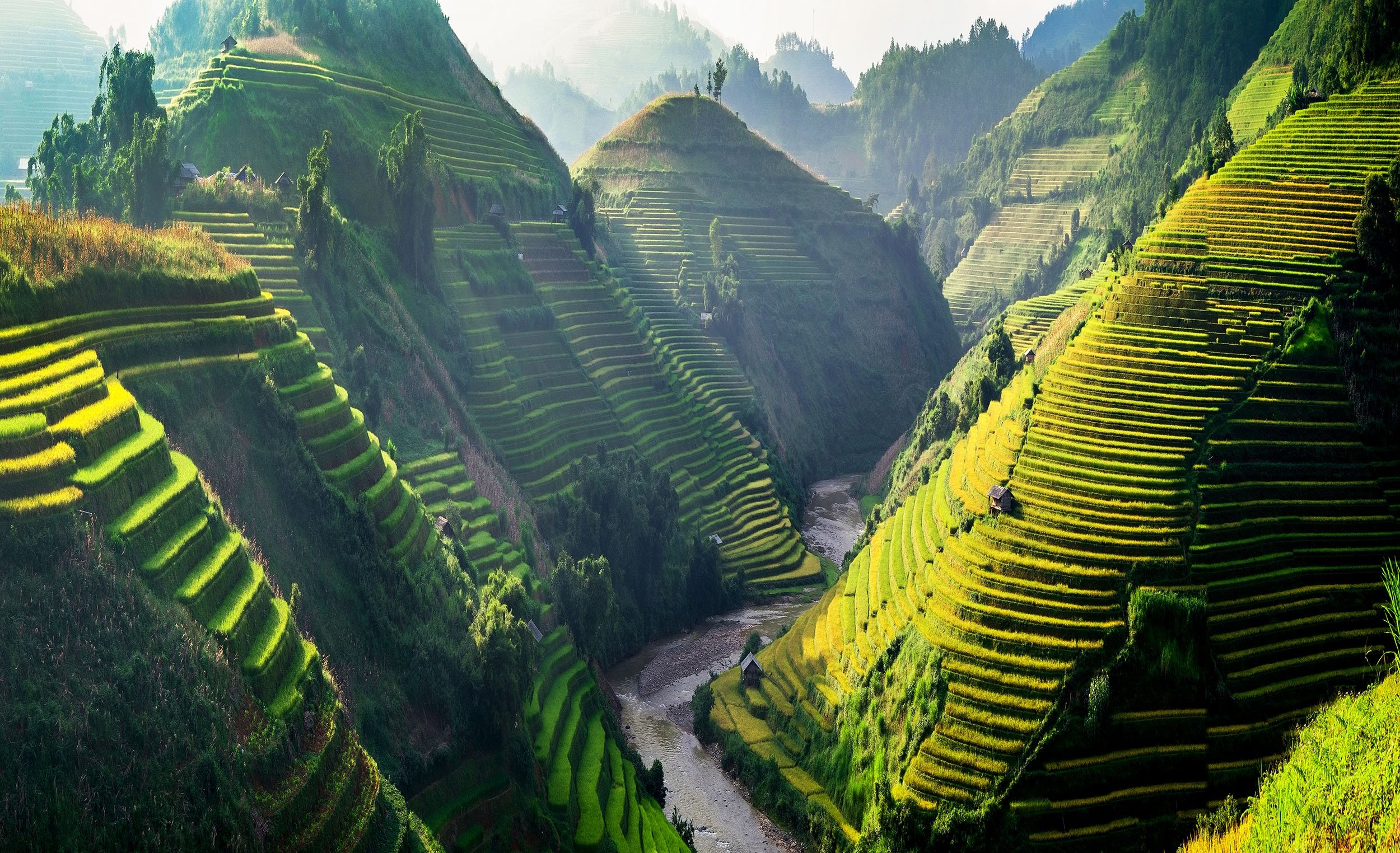
Sapa in Lao Cai province anchors Vietnam’s Northern mountain corridor; a film fixer in Vietnam with Sapa track record holds the Muong Hoa Valley community relationships that turn a village location scout into a shootable schedule. The Sapa town sits at the centre of the Hoang Lien Son mountain range with Fansipan (3,143m, the highest peak in Indochina) at its core. The terraced rice paddies of the Muong Hoa Valley provide the signature Vietnamese mountain setting, with the Hmong, Dao and Tay villages across the valley delivering the ethnic-minority filming setting that productions covering Northern Vietnamese highland briefs route through. The Sapa region permits run through additional minority-area protocols alongside the relevant Lao Cai provincial authority and site custodians. Productions filming in ethnic-minority communities should engage local community liaison early to avoid sensitivity issues. Film production services in Vietnam include this community coordination.

Line Producer Vietnam and Film Fixers: Budget, Permits and Delivery
Cross-corridor briefs pairing Vietnam with Thailand, Cambodia or the Mekong routing run through Southeast Asia line producer coverage. Bringing the fixer team in at script-breakdown stage allows the national filming-service application and the separate provincial, heritage, marine and site-specific requirements to be mapped against the production schedule. A line producer Vietnam team coordinates those tracks with the relevant authorities and records any dependencies before travel and principal photography.
The line-production engagement continues through wrap, coordinating the national review with the relevant provincial, heritage, marine and location authorities. For a compact multi-region schedule, continuity across the filing team reduces duplicated documents, missed queries and conflicting production dates without changing the formal approval requirements.
Vietnam production runs cleanest when the film fixer and line producer engagement happens at script-breakdown. The reasons: the national film office script evaluation timeline (a parallel track that runs alongside location permits and can shift the schedule materially), the multi-province permit coordination (most international shoots cover Hanoi or HCMC plus at least one secondary zone; Halong, Hoi An or Sapa, requiring coordination with the relevant provincial authority, protected-area manager or site custodian in each), the UNESCO heritage-zone protocols at Halong, Hoi An, Trang An and the Citadel of Thang Long, and the ethnic-minority community protocols in Sapa and the Northern mountain corridor.
Visa framework, work permits and ATA Carnet for Vietnamese productions
Foreign cast and crew must confirm the visa and work-authorisation route for their nationality, role and duration before travel. Temporary equipment import should be planned with the Vietnamese production partner and customs broker against the final serialised equipment list; the official ICC ATA Carnet directory currently lists Vietnam, and the applicable Carnet or temporary-import procedure and port handling must be confirmed before dispatch.
