

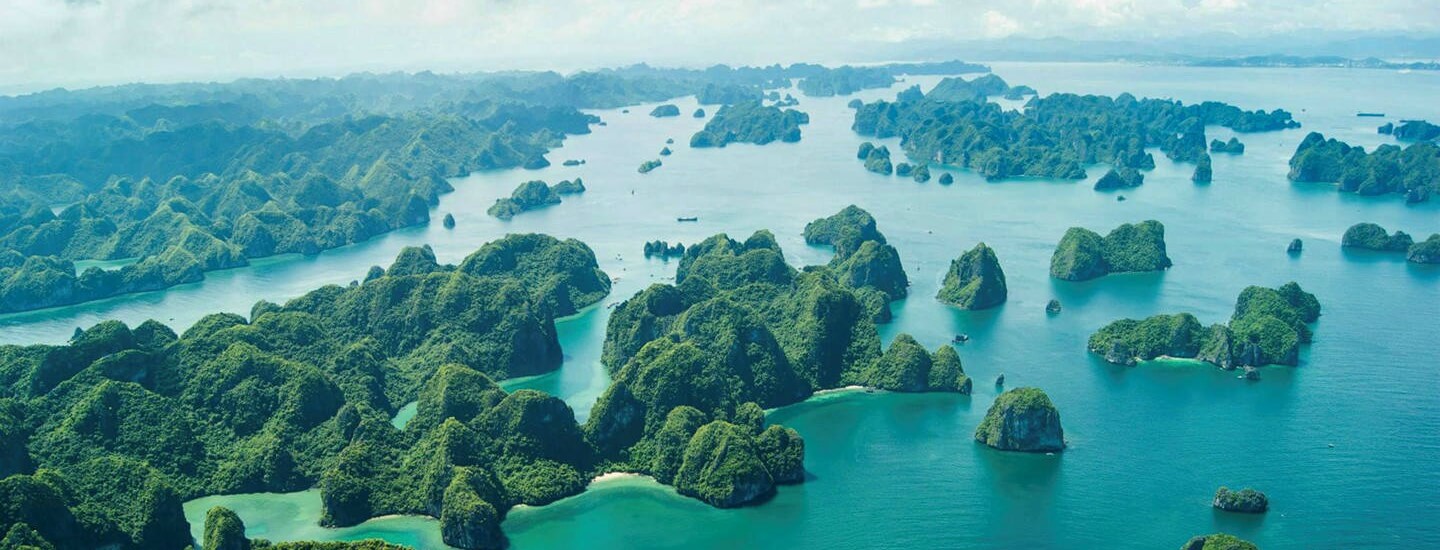
The cost of filming in Vietnam has become one of Southeast Asia and the broader East Asia production corridor’s most competitive, with international feature, streamer and documentary productions consistently routing through Ho Chi Minh City, Hanoi and the central coast. The combination of Department of Cinema permit predictability, aggregate crew cost running at meaningful discount to Bangkok, and a location range spanning French-colonial architecture, UNESCO heritage zones, war-history sites, alpine highlands and the Halong Bay marine corridor makes Vietnam the natural cost-arbitrage entry point to the Mekong corridor and the wider region.
The cost of filming in Vietnam spans wage rates by crew role, equipment package pricing, hotel and per-diem tables, and post-production rates, plus the permit-timeline and cost-arbitrage decisions those rates feed into. The fixer and line-producer execution layer sits at Film Fixers In Vietnam; producers cost-benchmarking Vietnam against Cambodia, Thailand or Indonesia typically read this page alongside Cambodia film production crew rates and permits before locking corridor decisions.
The projects that route through Vietnam are covered in three brief categories. International features and feature-tier streamer service shoots, Kong: Skull Island anchored multiple Vietnamese locations including Trang An, Phong Nha-Ke Bang and Halong Bay, subsequent international episodic and feature work has continued to absorb the production-services layer. Documentary and non-fiction units, a sustained pipeline of travel, cultural and conservation-focused production. Brand campaigns, TVCs and luxury / lifestyle work, Vietnam’s location range and cost economics align particularly well with this brief category.
Why Vietnam now, cost arbitrage, permit predictability and the production track record
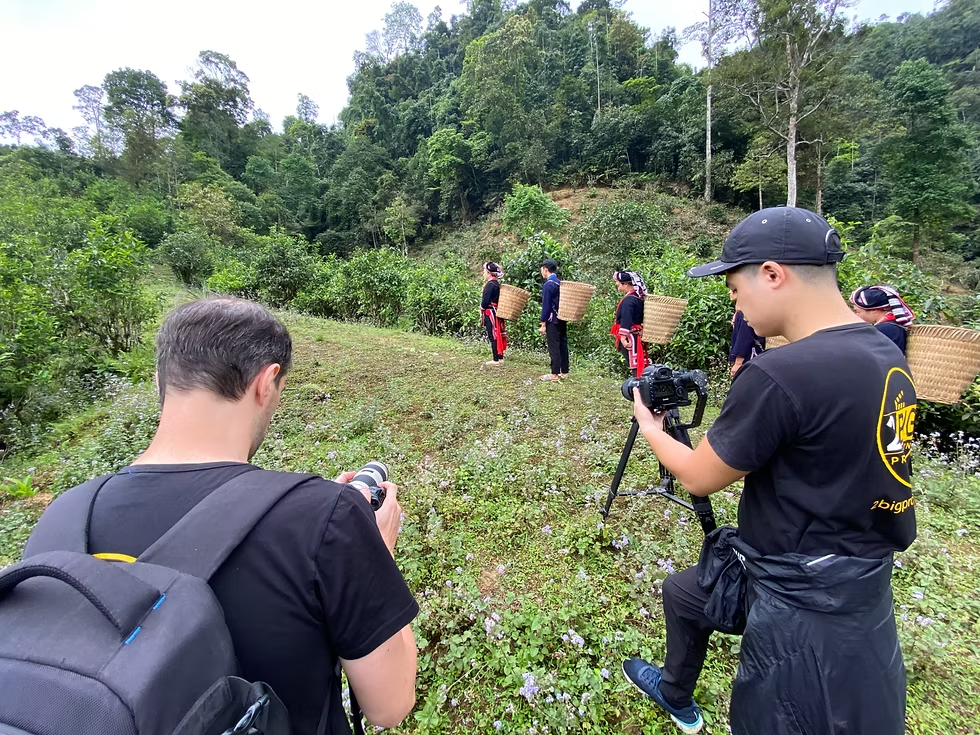
Three structural realities anchor filming in Vietnam within the regional production-routing decision. The cost of filming in Vietnam runs 20-30% below Bangkok on aggregate crew cost, DPs, gaffers, key grip, sound and art-department leads on principal photography on equivalent specifications, with the gap narrowing on the most senior international-grade roles where Vietnam draws from the regional pool. Department of Cinema permit clearance is documented, English-accessible and predictable, standard urban shoots clear in three to four weeks, UNESCO and protected-zone briefs in six to eight. And the production track record since Kong: Skull Island (2017) has accumulated to the point where Vietnamese crew depth has expanded significantly across feature, documentary and commercial production.
What Kong: Skull Island unlocked for Vietnamese production
Kong: Skull Island was the landmark international production that mainstreamed Vietnam as a feature-tier service-shoot destination. The shoot anchored at Trang An in Ninh Binh Province (UNESCO mixed-natural-cultural site), Phong Nha-Ke Bang National Park in Quang Binh (UNESCO World Heritage cave system) and Halong Bay in Quang Ninh, three of Vietnam’s most recognisable visual environments. The production scaled local crew to feature-unit specifications, established the customs-and-permit broker relationships that subsequent international productions inherited, and opened the operational pattern that streamer and documentary units have followed since.

National support, location-driven rather than rebate-driven
Vietnam does not currently operate a national cash rebate scheme comparable to Thailand or Indonesia. National support remains more location- and province-driven, provincial People’s Committees coordinate location access and any region-specific facilitation, and the Department of Cinema handles the national permit framework. This affects cost-stack modelling in a specific way: the Vietnamese position is built on day-rate and operational-cost arbitrage rather than on a post-shoot rebate disbursement. For productions cash-flow-sensitive on rebate timing, Vietnam’s structure can be operationally simpler than rebate-anchored territories despite the absence of a headline rebate percentage.
Vietnam permit framework, Department of Cinema, provincial layers and the UNESCO chain
The permit chain governing filming in Vietnam runs in three layers, national-level Department of Cinema clearance, provincial People’s Committee coordination, and (where applicable) UNESCO heritage-zone or protected-environment clearances. Standard briefs filming in Vietnam route through all three layers in parallel; the line-producer interface files concurrently rather than sequentially to compress cumulative lead time.

Department of Cinema, national permit framework
The Vietnamese permit authority (under the Ministry of Culture, Sports and Tourism) administers the national film permit framework. Applications route through registered Vietnamese production-services entities and require submission of the production plan, the location list, the proposed crew, and any content elements requiring sensitivity review. Standard urban briefs clear inside three to four weeks; sensitive-content or political-history briefs require longer review windows. Documentary and journalistic briefs may require additional coordination, media accreditation, journalist permits where applicable, and documentary-specific approvals route through the relevant ministry layer in parallel with the the Ministry of Culture film office permit.
Provincial People’s Committees and city-level layers
Each Vietnamese province operates a People’s Committee that coordinates local filming approvals on top of the the national film authority national permit. HCMC (Ho Chi Minh City People’s Committee), Hanoi (Hanoi People’s Committee), Da Nang, Quang Ninh (Halong), Quang Binh (Phong Nha), Ninh Binh (Trang An), Lao Cai (Sapa) each have their own coordination protocols. The provincial layer determines location access, road or zone closures, traffic-control bookings, and any heritage-monument fees. Lead times vary by province and by location category, standard urban locations clear quickly, restricted-zone or protected-environment locations require more lead time.
UNESCO heritage zones, Halong, Hoi An, Phong Nha, Trang An
Vietnam holds five UNESCO World Heritage Sites that international productions routinely target: Halong Bay (natural), Hoi An ancient town (cultural), the My Son sanctuary, Phong Nha-Ke Bang National Park (natural), Trang An Landscape Complex (mixed). Each operates its own permit layer alongside the provincial People’s Committee and Cinematography Department framework. UNESCO-tier briefs commonly run six to eight weeks of lead time and require additional cultural-heritage or environmental-impact review. Drone work inside UNESCO zones requires Civil Aviation Authority of Vietnam clearance plus zone-specific approvals.
Vietnamese production zones: cost and permit implications by zone
Filming in Vietnam splits across four operational zones by location range, each supplying distinct visual environments and operational specifics. International productions running multi-zone filming in Vietnam schedules route through HCMC as the southern base, Hanoi as the northern base, with Da Nang or central-coast staging for the Hoi An / Phong Nha / Hue corridor, and Quang Ninh staging for Halong Bay and the marine corridor.
Ho Chi Minh City and the southern production base
HCMC anchors most international productions filming in Vietnam. The location range covers French colonial architecture (Saigon Notre-Dame Cathedral Basilica, Central Post Office, Le Loi and Dong Khoi civic core), the District 1 modern skyline, the Saigon River corridor, the District 5 Cho LonChinatown, and the Cu Chi Tunnels war-history site outside the city. The Mekong Delta southwest of HCMC supplies the rural-Vietnam-river register that productions targeting period or war-era settings route to. Tan Son Nhat International (SGN) handles direct flights from most international gateways and the ATA Carnet customs interface.
Hanoi and the northern production layer
Hanoi runs the northern production base. The Old Quarter (Hanoi Hoan Kiem area) supplies French colonial and pre-colonial heritage at scale. The government quarter around the Ho Chi Minh Mausoleum and Ba Dinh Square covers civic and political settings. The northern highlands extending west into Sapa (Lao Cai Province), Mu Cang Chai (Yen Bai) rice terraces, and Ha Giang loop supply the high-altitude and ethnic-minority brief registers. Noi Bai International Airport (HAN) handles the Carnet interface for northern shoots.

Da Nang, Hoi An and the central coast
Da Nang anchors the central-coast production base, with Hoi An (UNESCO ancient town) thirty minutes south, the Marble Mountains within the city, Hue imperial city two hours north, and Phong Nha-Ke Bang four to five hours north via Dong Hoi. Hoi An’s UNESCO old-town permit chain runs through the Hoi An People’s Committee plus the Ministry of Culture cultural-heritage layer; lead times are similar to other UNESCO Vietnamese sites at six to eight weeks. The central coast extends the location range materially without leaving the country.
Halong Bay, Quang Ninh and the northern marine corridor
Halong Bay is covered in Quang Ninh Province on Vietnam’s northeastern coast, the iconic limestone-karst marine register that productions targeting Asian-coastal or generic-Pacific-Asian briefs route to. The UNESCO permit chain commonly runs six to eight weeks depending on location scope and environmental review requirements; the the Vietnamese film licensing body, Quang Ninh People’s Committee and Halong Bay Management Department each have their own coordination layers. Cat Ba island and the Bai Tu Long Bay extension northward absorb productions targeting Halong-tier visual range with shorter permit lead times.

Vietnam wage rates by crew role
The cost of filming in Vietnam starts with wage rates. Vietnamese-national crew day rates for a working HCMC production (2026 reference, pinned to current VND-USD movement) run: senior DPs USD 400 to 900 per day, mid-tier camera operators USD 200 to 500, focus pullers and DIT USD 150 to 300, gaffers and key grips USD 180 to 350, sound recordists USD 200 to 400, production assistants USD 40 to 90. A full commercial camera and lighting crew for a working shoot day (DP, 1st AC, DIT, sound, gaffer, key grip, 2 spark, 2 PA) lands in the USD 2,000 to 3,500 range including basic equipment amortisation. Documentary reduced crews with lighter kit land USD 500 to 1,000 per day.
Feature-film day rates run 20 to 30 percent higher than commercial benchmarks for the same personnel, since feature schedules run longer, night hours are common, and turnaround is a formal negotiation rather than an informal courtesy. Weekly-flat feature deals in HCMC settle at 5.5 to 6 day equivalents on a 6-day shoot week. On 8 to 12 week feature schedules, negotiate weekly-flat with turnaround clauses rather than accept day-rate compounding, which meaningfully overshoots on longer runs. Engaging a Vietnamese line-producer team at script-breakdown typically brings the crew blend in at 40 to 60 percent Vietnamese heads, 25 to 35 percent Vietnamese HODs, and 15 to 25 percent imported HODs where the brief requires specific international credits, pushing the blended day rate toward 65 to 75 percent of a fully imported crew equivalent.
Hanoi crew rates run 10 to 15 percent below HCMC across roles, narrowing to near-parity on top-tier DPs and specialist HODs whose rates set nationally. Da Nang published day rates: local DPs 3 to 8 million VND (USD 120 to 320), camera operators 1.5 to 4 million VND (USD 60 to 160), production assistants 500,000 to 1 million VND (USD 20 to 40). A basic 5-person Da Nang crew lands in the 10 to 20 million VND range (USD 400 to 800). Rate cards more than 60 days old should be treated as indicative rather than fixed, and productions budgeting from a USD or EUR frame commonly hedge the peak-spend window through a forward contract on the local producer partner side.

Vietnam equipment rental rates: camera, lighting, grip and specialist rigs
Equipment sits second in the cost of filming in Vietnam stack. Vietnamese rental houses in HCMC carry professional camera packages including Arri Alexa Mini LF, Alexa 35, Sony Venice 2, Red Komodo, Red Raptor and DSMC2, with cine lens sets from Zeiss, Cooke, Angénieux and Sigma Cine. HCMC has the deepest inventory, Hanoi and Da Nang carry working subsets. Arri Alexa Mini LF plus prime lens set (Cooke S4 or Zeiss Ultra Prime) runs USD 400 to 700 per day, Alexa 35 with equivalent glass USD 500 to 850, Sony Venice 2 packages USD 350 to 600, Red Komodo including cage and monitor USD 250 to 450. Weekly deals settle at 3.5 to 4 day-equivalents. Multi-day discounts published by Da Nang houses run up to 35 percent off for 10-plus day rentals; HCMC houses match this on longer commitments though the discount is not always advertised. Line-producer engagement holds the standing vendor relationships that unlock the deeper multi-day tiers.
Specialist camera adds a separate line to the equipment budget. Ronin 2 gimbal packages with operator and remote focus puller run USD 500 to 800 per day. MoVI Pro packages sit slightly lower. DJI Inspire 3 drone packages with certified pilot and spotter land USD 400 to 700 per day, DJI Mavic 3 Cine with pilot lower at USD 250 to 400. Underwater housing rentals for camera bodies are available in HCMC at USD 300 to 500 per day plus underwater DOP if required. Steadicam operator packages including full rig and vest sit USD 500 to 900 per day inclusive of operator fee. Motion control rigs and technocrane packages route through specialist Bangkok firms for high-end feature work, though Vietnamese houses handle standard jib and dolly work at USD 300 to 600 per day, and technocrane 30-foot rigs at USD 800 to 1,400 per day.
Full HMI lighting package covering 6K, 4K and 2.5K units plus tungsten Fresnel banks lands USD 500 to 900 per day for a working feature crew. LED panel packages (Aputure 300X, Nova P600C, Litegear ballast) sit USD 200 to 400 per day. Sound recordist with Sound Devices 833 or Zaxcom Nova, boom operators and lavalier packages sits USD 300 to 500 per day.

Vietnam post-production rates: DIT, colour and mix
Post-production closes the cost of filming in Vietnam picture. Vietnam runs a real post-production infrastructure in HCMC covering DIT and dailies, edit rooms, colour grade suites, VFX and sound design. Hanoi carries a smaller post market focused on television and commercial finish. Post pricing falls in a similar cost-position band as production spend, roughly 40 to 60 percent below Bangkok or Singapore for equivalent facility class.
On-set DIT with LTO backup and colour prep runs USD 300 to 500 per day in HCMC. Post-day dailies review at HCMC facility pricing land USD 400 to 700 per day for a working feature setup. Data transfer and cloud-mirror archival costs sit on top, typically USD 50 to 150 per day for standard feature-scale rushes. Turnaround on daily review is typically same-day for local facilities and next-day for cross-city transfers.
DaVinci Resolve grading suites with senior colourist in HCMC run USD 800 to 1,400 per day, with 2-week feature-grade windows commonly negotiated on flat deals. Baselight and Autodesk Lustre facilities are available at premium tiers typically USD 1,500 to 2,200 per day. Foley and ADR work at HCMC facilities runs USD 400 to 800 per day for a working feature session. Studio time at HCMC re-recording stages sits USD 600 to 1,200 per day for 5.1 mix or Dolby Atmos-capable rooms. VFX shot pricing depends on complexity, with local Vietnamese houses handling wire removal, cleanup and moderate compositing at pricing roughly 40 to 55 percent of Bangkok equivalents; complex VFX and heavy CG routes to Bangkok, Manila or overseas. Music composition typically routes to Bangkok or Singapore for higher-end scoring work, with Vietnamese facilities handling the final mix pass. The blended post-production budget for a mid-scale Vietnam-shot feature commonly lands 45 to 60 percent below the equivalent Bangkok facility bill.

Vietnam as the cost-arbitrage entry point to the Mekong corridor
Filming in Vietnam routes well as a standalone production destination, the four-zone filming-in-Vietnam model covers most location-brief categories without leaving the country. It also routes well as the cost-arbitrage entry point for a Mekong-corridor brief that extends into Cambodia and Thailand on the same production schedule. On working benchmark comparison for a 6-week feature shoot with a mid-scale international crew (25 to 35 person crew), Vietnam lands 40 to 60 percent below Thailand and roughly 30 to 40 percent below Malaysia and Indonesia on pre-rebate cost. After rebates, Thailand can close the gap significantly for productions that qualify for the 20 to 30 percent rebate ceiling. Cambodia sits below Vietnam on headline pricing but the crew market is narrower and specialist HOD availability is thinner.
Practical routing scenarios: a 6-week international feature with a mid-scale crew shooting Southeast-Asian visual grammar without specifically Thai or Balinese registers routes cheapest through Vietnam. A shoot list requiring Buddhist-monastery temple sequences with production values that need specialist heritage-clearance experience routes through Thailand at higher cost but faster permit clearance. A production combining Balinese cultural specifics with cost efficiency routes through Indonesia. A production combining Angkor-era temple visuals with cost efficiency routes through Cambodia. Vietnam wins the cost-per-shot-day metric across most Southeast-Asian generic-register briefs, and the differential compounds over longer schedules.
Standalone Vietnam shoots, when the four-zone model is enough
Productions targeting urban-Asian, French-colonial, Vietnam-specific-history, alpine highland, central-coast heritage, marine UNESCO or Mekong-delta visuals can complete their location-list inside Vietnam alone. The HCMC ↔ Hanoi ↔ Da Nang flight network supports two- or three-zone schedules within reasonable internal-travel windows. For productions where Vietnamese-specific visual or narrative authenticity matters, the standalone routing is the right call.
Mekong corridor routing, Vietnam plus Cambodia and Thailand
For productions running multi-country briefs across the wider Mekong corridor, Vietnam typically anchors the cost-arbitrage end of the schedule. HCMC to Phnom Penh is a 50-minute flight or a road crossing at Moc Bai (with customs and temporary-import arrangements pre-cleared through local broker partners). HCMC to Bangkok is one hour twenty-five. The cross-border crew rotation, equipment movement and permit-chain coordination are what make the corridor routing operationally viable, and the production-services team that holds the multi-country layer end-to-end is what makes it predictable rather than improvised. The Cambodia leg of that multi-country routing runs on its own crew rates and permit chain.
The Mekong corridor works because scheduling can chain a Vietnam production week into a Cambodia or Laos week without dismantling and re-assembling the crew base. HCMC-based line producers regularly quote combined workflow contracts that keep the same DP, gaffer, sound recordist and camera assistant across the corridor, with local Cambodian or Laotian production coordinators plugging in at each border. Equipment moves via truck under regional temporary import agreements, a bond posted at Moc Bai for a Cambodia leg, or at Bo Y for a Laos leg, releases the same cases on the return without duplicating customs paperwork. The single scheduling win here is that a fifteen-day corridor shoot pays for one crew mobilisation instead of three.
Weather windows differ across the corridor and shape the schedule spine. HCMC and the Mekong Delta run dry December through April; Siem Reap and Phnom Penh are covered in the same window; Luang Prabang holds dry weather slightly later into May. A location scout that respects this cascade, Delta first, Angkor Wat mid-block, Luang Prabang closing, lets a single lighting kit and single crew work through the region without lost days to monsoon rain. Line producers who have run the corridor before hold this scheduling logic in muscle memory; producers new to Southeast Asia typically discover the sequence only after losing a week to unexpected pre-monsoon showers in April.
Insurance and completion bonds also benefit from the corridor structure. A Vietnam-primary contract with Cambodia and Laos as scheduled extensions typically holds under a single production insurance policy, verified with the underwriter at prep, where three separate country contracts would demand three separate policies with country-specific riders. The corridor structure also compresses per-diem inflation: crew booked as a continuous fifteen-day assignment quotes at a lower daily than three separate five-day mobilisations. Local Cambodian and Laotian production coordinators, when booked as scheduled sub-contractors under a Vietnamese prime, work at rates set inside their own currency without USD conversion premium. All of this compounds into an arbitrage window worth six to nine per cent versus running each country as a standalone shoot.
Post-production also stays inside the Vietnamese base for corridor shoots. HCMC houses full-service DI suites, sound design rooms and Dolby Atmos mixing facilities at pricing that undercuts Bangkok and Singapore by twenty to thirty per cent, with output masters delivered in DCP, IMF or streamer-ready packages. Locking picture in HCMC before dispatching to a home country’s post pipeline shortens the total production calendar by two to three weeks. Colour grading in Vietnam has caught up over the last five years, recent international theatrical features and Netflix originals have finished DI in HCMC and delivered to international standards without a home-country regrade.
The Vietnam scope Celluloid Pact runs end-to-end covers the Ministry review body interface, ATA Carnet customs at Noi Bai and Tan Son Nhat, crew sourcing across HCMC and Hanoi bases, and foreign-producer-facing contracts. When a Vietnam brief pairs with Thailand, Cambodia or the wider Mekong corridor, cross-territory routing decisions are documented in filming Southeast Asia cost and permits.

Vietnam production planning: script-breakdown to Ministry review timeline
Filming in Vietnam runs cleanest with a single point of contact across HCMC, Hanoi, the central coast and Halong Bay for foreign or Indian producers running Vietnam-anchored briefs. The line-producer Vietnam interface holds the the national permit body permit chain, provincial People’s Committee coordination, ATA Carnet customs at Noi Bai and Tan Son Nhat, crew sourcing across the southern and northern bases, and the foreign-producer-facing contract layer end-to-end.
What our Vietnam production-services team handles
Single point of contact across the operational stack for the shoot. The local fixer interface, the line-production execution, the customs and visa coordination, and the cross-zone scheduling all sit under one entity so the foreign producer signs one contract.
- the state film authority permit application and journalist-permit coordination where applicable
- Provincial People’s Committee coordination across HCMC, Hanoi, Da Nang, Quang Ninh, Quang Binh, Ninh Binh
- UNESCO heritage permits, Halong Bay, Hoi An, Phong Nha-Ke Bang, Trang An, My Son
- ATA Carnet customs coordination via Noi Bai (HAN) and Tan Son Nhat (SGN) airports
- Drone clearance via Civil Aviation Authority of Vietnam plus zone-specific authorities
- Crew work permits via Vietnamese consulate-of-origin routes
- Local crew sourcing across HCMC, Hanoi and Da Nang production circuits
- Cross-border Mekong-corridor crew rotation and equipment movement logistics
- Transport, accommodation, unit-base and security across all Vietnamese shoot zones
Request a Vietnam production feasibility assessment
To engage our Vietnam production-services team for a specific shoot brief, single-zone or multi-zone Vietnam, standalone or as part of a wider Mekong-corridor schedule, reach out via the contact form with shoot dates, location bands, expected crew size and the brief register. We respond within twenty-four working hours with a feasibility assessment covering Vietnamese permit authority and provincial permit timelines, ATA Carnet customs handling, crew plan across HCMC and Hanoi bases, and the estimated budget range against equivalent SEA routing alternatives. Productions evaluating the Kerala-vs-Vietnam choice for tropical river-delta and backwater work, when MIB rebate timing or India crew-base preference shifts the balance, should reference ourfilming in India stand-in registerscoverage for the Kerala stand-in case alongside the Vietnam direct-routing analysis above.
