

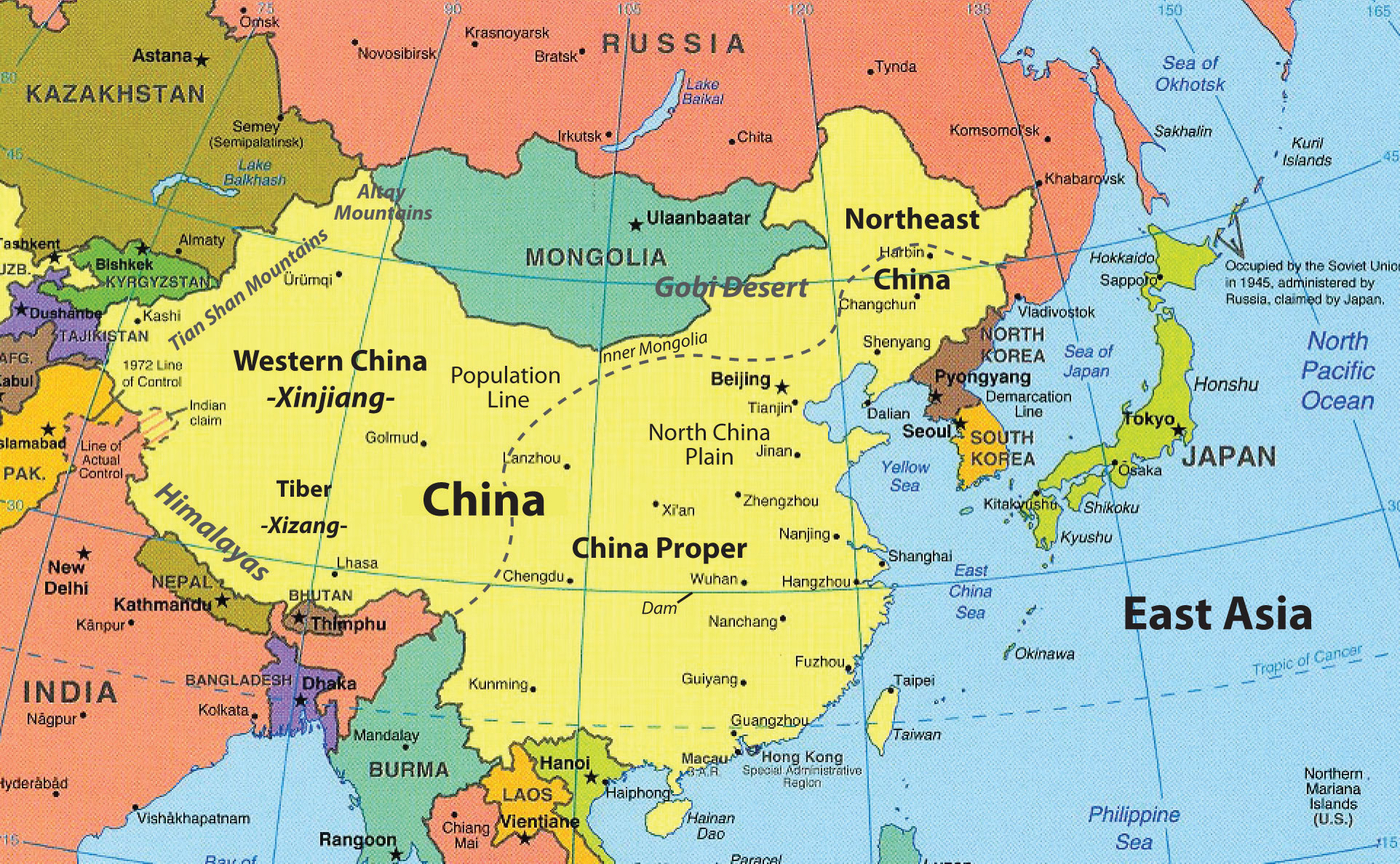
The East Asia production landscape — incentive spread and permit reality
East Asia carries an unusually wide range of production incentives, selective funding programmes and regulatory systems. Japan has offered support of up to 50% of eligible Japanese expenditure through VIPO/METI programme cycles, with availability, application rounds and funding limits set by the live annual guidelines. Korea’s KOFIC Location Incentive provides a 25% cash rebate on qualifying Korean production expenditure, with a reduced 15% applying to projects submitted after filming (post-production only).
Mongolia offers potential cumulative support of up to 45%, subject to separate location, cultural and foreign-crew provisions and their respective qualifying-cost bases. Hong Kong’s Film Production Financing Scheme 2.0 is selective government financing for eligible projects — up to 40% of an approved budget, capped at HKD10 million — rather than a general location rebate. Taiwan’s TAICCA runs selective co-funding and separate production-support routes with project-specific eligibility, not an automatic rebate. China has no national location rebate for foreign productions; access depends primarily on its licensed-entity and content-approval framework rather than a general inbound-production incentive.
The approval spectrum extends from Japan’s distributed local and venue permissions to China’s licensed-entity and content-approval system. A line producer and film fixer running an East Asia brief must balance funding eligibility, permit friction and creative fit—not simply location.
East Asia Regional Comparison — Support, Permit Lead Time and Best-Fit Brief
| Territory | Support mechanism | Permit lead time | English fluency | Cost band | Best-fit brief |
|---|---|---|---|---|---|
| Japan | Up to 50% subsidy of eligible spend (VIPO/METI cycles; check live guidelines) | Ward + prefectural, 4–8 weeks | Moderate senior, thin mid-crew | Upper (subsidy may offset eligible spend) | Feature, prestige series, urban + heritage |
| Korea | 25% KOFIC cash rebate (15% if submitted post-shoot) | City and location approvals, commonly 4–6 weeks; incentive timing separate | Strong across seniors | Upper-mid | K-content, OTT series, commercial, VFX |
| China | No national cash rebate | Format-dependent licensed-entity approval; allow 1–3 months | Strong in Shanghai; variable elsewhere | Mid to upper-mid | Period, backlot, VFX-adjacent |
| Hong Kong | Selective film financing: up to 40% of approved budget, capped at HKD10 million; not a general location rebate | City permits, 3–5 weeks | Very strong | Upper | Urban-density, commercial, Pearl-River-Delta |
| Taiwan | Selective TAICCA co-funding and separate production-support routes; project-specific eligibility | Ministry of Culture, 4–6 weeks | Strong senior tier | Mid | Co-production, creative-freedom shoots |
| Mongolia | Potential cumulative support up to 45%, subject to separate provisions and qualifying-cost bases | Indicative 10–15 days after a complete submission; specialist approvals may take longer | Thin, English-fluent leads | Lower-mid | Steppe, Gobi, Central Asian stand-in |
What a line producer and film fixer does in East Asia
The line producer in East Asia carries the multi-territory contract, schedule and budget while coordinating the relevant film agencies, production partners, location authorities and regional film commissions. Local film fixers manage location access, crew, equipment, language coordination and on-ground execution within each territory.
In Korea and Japan, the line producer relationship absorbs the incentive filing calendar and the qualifying-spend register alongside the shoot. In China, the licensed Chinese entity is the applicant of record for every permit — foreign producers cannot file directly, and the film fixer layer is the operational bridge to that entity. In Hong Kong and Taiwan, the compressed distances and English-fluent senior bench mean a single line producer often runs the whole brief with a small fixer team; on Mongolia and other remote-location work, the fixer layer expands to absorb the wider logistical range across steppe, Gobi and high-altitude terrain.
Productions weighing the East Asia region against alternatives inside the wider Asian corridor should reference our Line Producer Southeast Asia coverage for Vietnam, Thailand, Indonesia and Cambodia. For east-facing thematic comparisons — including Korea and Japan stand-in territories and Tibet and Bhutan as adjacent high-altitude alternatives — see our East Asia filming alternatives guide.

Line Producer Korea, KOFIC and film fixers in the Seoul-Busan corridor
Korea sits at the commercial centre of East Asian production because the crew depth, post-production infrastructure and OTT industry connectivity meet in Seoul, with a working secondary bench in Busan and a specialist tier in Jeju. The KOFIC Location Incentive provides a 25% cash rebate on qualifying Korean production expenditure (a reduced 15% applies to projects submitted in post after filming), subject to eligibility, review, annual funding and the applicable project cap. KOFIC pays on qualifying spend at Korean vendors, crew and locations inside Korea; international labour brought in does not qualify, and the qualifying-spend audit is built from the first production day.
Seoul studios, film fixers and the KOFIC + Seoul Film Commission stack
A Seoul fixer and the wider South Korea fixer bench handle the day-to-day logistics that sit beneath the incentive filing layer — location scouting across Gangnam, Hongdae, Bukchon Hanok Village and the Han River corridor, ward-level permit coordination, equipment routing between Seoul rental houses and the day’s shoot site, and cultural-protocol coordination with Korean crew and location owners. The line producer sits above that layer, holding the KOFIC application while coordinating Seoul Film Commission support, location-owner permissions and the qualifying-spend register, the audit submission that follows wrap, and the cross-department clearance a location sometimes requires. For KOFIC eligibility, city permits, crew, costs and cross-region execution, see our guide to Seoul-based film fixers in Korea.

Busan and Jeju — coastal, cinematic and regional Korea shoots
For Busan work, foreign producers coordinate with local production service companies to secure Haeundae, Gwangalli and the Busan Cinema Center access, with the local production company coordinating the Busan Film Commission, relevant authorities and location owners. Jeju schedules typically route through local production service companies handling volcanic-terrain locations, Seongsan Ilchulbong sunrise permits, and the tropical-adjacent look that Jeju holds inside the broader Korean visual grammar. Both regions run English-fluent senior tiers with Korean-language mid-bench, so the line producer typically bases the core team in Seoul and brings supporting crew aboard at Busan and Jeju regional bases.
Equipment access, K-content industry and post-production
Arri Alexa (Mini LF, 35), Sony Venice and Red packages route through Seoul rental houses including CJ ENM affiliates and specialist independents. Grip and lighting cover most production scales; specialist crane, underwater and large-scale SFX leads typically stay local. Post-production has expanded sharply with the OTT-driven K-content industry — Seoul now carries multiple DI theatres, VFX shops sized for episodic and feature work, and colourist benches that international productions increasingly finish through rather than routing back to Los Angeles or London. Netflix, Disney+ and Coupang Play investment through 2023-2025 has anchored a working post-production ecosystem that sits alongside the shoot infrastructure.
Line Producer Japan, the VIPO production subsidy and film fixers in Tokyo-Kyoto
Japan has become an active consideration for international productions through the Visual Industry Promotion Organization (VIPO) and Ministry of Economy, Trade and Industry (METI) programme cycles, which have offered support of up to 50% of eligible Japanese production and post-production expenditure. This is a subsidy administered against a fixed annual budget cap rather than a permanent cash rebate: availability, application rounds, eligible-cost periods and funding limits are set by the live annual guidelines and must be confirmed before the subsidy is built into a budget. Applications route through VIPO and are reviewed against qualifying-spend criteria that favour meaningful Japanese vendor, crew and location engagement.

Tokyo-Osaka corridor, Japan Film Commission Promotion Council and the prefecture-level coordination
Tokyo Metropolitan Film Office (TMFO) coordinates city-wide shoots at policy level, and each of Tokyo’s 23 wards issues its own filming permits with distinct approval workflows. The Japan Film Commission Promotion Council (JFCPC) is the umbrella body coordinating between regional film commissions across Kanto, Kansai, Kyushu and Hokkaido — the four-region production map that structures multi-region Japan briefs. Osaka Film Council handles Kansai-region permits, with Kyoto Film and Media Commission running heritage-district clearance for Gion, temple exteriors and the Edo-period setting that Kyoto holds inside Japan’s visual grammar.
Kyoto heritage, Edo-period setting and Kansai regional productions
Kyoto anchors the pre-modern Japanese visual grammar — the Edo period backlot at Toei Kyoto Studio, the Fushimi Inari torii corridor, the Kinkaku-ji temple exteriors, and the Gion district geisha setting all sit within a compressed regional footprint. The Kyoto Film and Media Commission coordinates with the Buddhist heritage authorities, temple boards and Gion district associations to clear the location layer that heritage-fiction and prestige-drama briefs increasingly demand. For international productions running combined Tokyo-Kyoto-Osaka briefs, the Shinkansen network provides the reliable inter-city routing that keeps schedule risk within manageable range.
The VIPO production subsidy and Japanese grant programmes
Japan has offered support of up to 50% of eligible Japanese expenditure through VIPO/METI programme cycles. Availability, application rounds, eligible-cost periods and funding limits must be checked against the live annual guidelines before the subsidy is included in a production budget, and any stacking with prefectural or Tokyo Metropolitan grants should be confirmed the same way rather than treated as automatic. Our Line Producer Japan page carries the VIPO application detail, the Tokyo Metropolitan grant filing threshold and the ward-level permit calendar that a Japan brief has to clear before the shoot dates lock.
Osaka, Hiroshima, Hokkaido and Okinawa — the wider Japan production spread
Beyond the Tokyo-Kyoto corridor, Japan’s four-region production map extends across Kyushu, Hokkaido and Okinawa. Osaka carries the Kansai commercial-production centre with its own equipment houses and post facilities. Hiroshima Film Commission coordinates permits across the Peace Park memorial layer and the wider commercial city, with Miyajima Island tide-table permits for the Itsukushima Shrine torii shoot. Hokkaido carries the northern landscape look — Sapporo urban base, Furano and Biei rural, Shiretoko peninsula wilderness — and runs through Hokkaido Film Commission with prefectural coordination. Okinawa handles tropical and beach settings through Okinawa Film Office, with SOFA (Status of Forces Agreement) coordination required for any shooting near US military installations, and typhoon-season scheduling that compresses the June-October window unpredictably.
Line Producer China, NRTA permit chain and film fixers in Beijing-Shanghai
China occupies a distinct position in the East Asia production landscape. There is no national cash rebate for foreign productions — the operational access question is regulatory, not financial. The National Radio and Television Administration (NRTA), which absorbed the older SAPPRFT structure in the 2018 government reorganisation, sits under the Central Propaganda Department of the Chinese Communist Party and administers the permit and content-approval framework. The China Film Administration (CFA) handles film-specific script review. Foreign productions cannot file permits directly — the application must route through a licensed Chinese production entity that acts as the applicant of record. The minimum lead time is 60 days; standard planning is one to three months, with major features running three to six months of pre-production against permit regulations that change continually.
NRTA, Sino-Foreign Co-Production Rules and the licensed-entity requirement
The Sino-Foreign Co-Production Rules (originally 2004, amended draft circulated 2023) define three procurement shapes for foreign productions: joint productions, assisted productions and entrusted productions. Joint productions involve shared creative and financial contribution between the Chinese and foreign entities; assisted productions have the Chinese entity providing on-ground services against a foreign lead; entrusted productions run under Chinese contractual authority with foreign delivery. Whichever shape the production takes, the licensed Chinese entity carries the applicant role — filing the script, storyboard, crew list and shooting plan with NRTA. Script review runs against the Film Industry Promotion Law 2016 Article 16 content prohibitions covering national unity, sovereignty, ethnic and religious matters, and the broader socialist-values framework.
Beijing production infrastructure — China Film Group, Forbidden City and the capital’s heritage setting
Beijing carries the political-authority centre of Chinese production. The state-owned China Film Group Corporation is the traditional lead entity for international co-productions, with its studio complex, distribution arm and permit relationships providing the standard partnership route for foreign productions. The location range spans the Forbidden City, the Temple of Heaven, the Great Wall corridor at Badaling, Mutianyu and Jinshanling, the hutong lanes and the CBD contemporary skyline. Restricted-location clearance for the Forbidden City, Great Wall protected sections and state-heritage sites requires additional permits beyond the standard shooting authorisation.

Shanghai production infrastructure — Shanghai Film Group, VFX/post-production and English-speaking crew network
Shanghai carries the commercial-production centre. Shanghai Film Group owns five large film-production entities and fourteen television-series production companies, with purpose-built soundstages, VFX studios, post-production houses and equipment rental infrastructure that matches international standards. The English-fluent producer, fixer and camera crew network in Shanghai is the deepest in mainland China, letting international productions scale up quickly without flying in complete teams. Shanghai has also positioned itself as the mainland’s immersive-media hub — VR, AR and volume-stage work is expanding here faster than in Beijing. Shanghai Film Commission carries the city-level permit layer.
Hengdian World Studios — Zhejiang backlot and the world’s largest live-action shooting base
Hengdian World Studios in Zhejiang Province is the world’s largest live-action shooting base — 330 hectares across 30 outdoor sets and 130 indoor stages, including a 100-acre scale replica of the Forbidden City and 12 dedicated shooting sites spanning distinct periods of Chinese history. Since its founding in 1996, Hengdian has hosted more than 2,000 crews and produced over 50,000 films and television series, with approximately 50 productions running through the complex each year including international titles. For period productions requiring imperial-era, Ming or Qing-dynasty backlot access, Hengdian is the operational standard — no Western studio complex of comparable specialist scale exists.
Provincial Permits, Tax and Crew-Entry Framework
Each Chinese province issues its own filming permit through the provincial branch of NRTA — Beijing, Shanghai, Zhejiang (Hengdian), Guangdong, Sichuan and Yunnan each run separate approval workflows. Multi-province productions require parallel permit filings, and cross-region moves need lead-time planning against separate provincial calendars. Tax treatment varies across goods, services, imports and the contracting structure used by the licensed Chinese production entity; it is not a single flat rate. Crew-entry and work-authorisation requirements should be confirmed role by role rather than inferred from ordinary business or visitor visa categories. Each application is sponsored by the licensed Chinese production entity — the same entity that files the permit.
The commercial reality: Hollywood market share in China dropped from 31% of box office in 2019 to approximately 15% in 2024, and the volume of international productions physically shooting inside China has fallen accordingly. For productions where a China stand-in works, Ladakh, Bhutan and northern Vietnam can provide alternative high-altitude or regionally adjacent environments where the script does not require a specific Chinese landmark. Where China’s specific locations are script-critical (Forbidden City, Great Wall, Yangtze, Hengdian imperial backlot), the licensed-entity permit route remains the only path. Productions weighing the location alternative can reference our East Asia stand-in alternatives thematic for the Tibet-Myanmar, Bhutan and Nepal Himalayan routing options.

Adjacent Comparison: Tibet Access and Current Myanmar Constraints
Tibet and Myanmar appear here only as adjacent visual comparisons, not as equivalent East Asian production territories. Tibet is addressed within the China production framework, while Myanmar belongs geographically within Southeast Asia. Current conflict, insurance restrictions and official travel advisories make Myanmar unsuitable for routine production recommendations, so any future feasibility would require fresh security, legal and access assessment rather than reliance on historical permit guidance (see the current advisories from the U.S. State Department and the UK FCDO).

Tibet Autonomous Region access, high-altitude production reality and Lhasa routing
Tibet Autonomous Region access sits inside mainland China’s licensed-partner and content-approval framework rather than a standalone fixer-permit system. Foreign feature and co-production projects route through a licensed Chinese production partner and the CFCC/Chinese film-authority process, with an additional TAR Foreign Affairs Office and location-specific approval layer. Our Tibet film permits and China co-production framework guide carries the complete permit chain. Altitude planning is the binding operational constraint — Lhasa sits at approximately 3,650 metres, with high-altitude sequences reaching 4,500-5,000 metres in the Yamdrok Lake and Namtso Lake corridors. Foreign crews typically require 48-72 hours of acclimatisation in Lhasa before ascending, with oxygen supplementation planning built into schedule risk. Bhutan sits as the practical proximity stand-in for productions where TAR permit clearance does not resolve — our Line Producer Bhutan coverage carries the Paro-Thimphu-Punakha operational detail.
Mongolia — Ulaanbaatar, steppe and Gobi landscape (potential cumulative support up to 45%)
Mongolia offers one of the region’s most aggressive support structures — potential cumulative support of up to 45%, subject to separate location, cultural and foreign-crew provisions and their respective qualifying-cost bases — administered through the Mongolian National Film Council. Standard permit processing may fall within an indicative 10-15-day window after a complete submission, but production-specific and protected-location approvals can take longer. Ulaanbaatar carries the capital’s production infrastructure — professional photography and film studios, equipment rental companies, post-production facilities and Mongolian production entities that act as line-producer partners for foreign shoots. Outside Ulaanbaatar, the steppe and Gobi landscape — the eastern steppe grassland, the Flaming Cliffs, the Khongoryn Els sand dunes, the nomadic-ger setting — provide the Central Asian visual grammar that international briefs pull from.

Steppe, Gobi and cost-band positioning
Mongolia’s cost band sits at the lower-mid tier of the East Asia region, with day rates below Korea and Japan though above Central Asian competitors. The cumulative support typically offsets part of the mid-brief cost premium against western equivalents, making Mongolia commercially attractive for Central-Asian, nomadic and steppe-and-desert briefs where the visual grammar is the operational anchor rather than infrastructure density. International productions on longer schedules typically pair Ulaanbaatar hotel and production base with regional unit bases in the Gobi (Dalanzadgad, Bulgan) or steppe (Kharkhorin, Ondorkhaan) — the ger-camp mid-schedule accommodation model is standard for extended location work.

Mongolia operates a specific visa category for film and content personnel, and nationality-specific entry rules should be confirmed before travel; the Mongolian National Film Council issues formal press cards for crew members. ATA Carnet is accepted for equipment import, with customs endorsement at Chinggis Khaan International Airport. Foreign crews should plan the equipment-import schedule against Ulaanbaatar’s compressed February-March winter transit window when Gobi and steppe access is restricted by weather. May through September carries the main international-shoot window, with Naadam festival (mid-July) providing a distinctive documentary and cultural-authenticity character that briefs increasingly seek to capture on-schedule rather than reconstruct.

Hong Kong and Macau — Pearl River Delta urban-density and Film Production Financing Scheme 2.0
Hong Kong sits as the operational and commercial hub of the Pearl River Delta, with English-fluent senior crew, deep production-service infrastructure and the compressed distances that make single-territory scheduling reliable. The Film Development Council (FDC) launched the Film Production Financing Scheme 2.0 in January 2025 as a permanent (non-time-limited) funding mechanism — the government financing ceiling was raised from HKD9 million to HKD10 million, with 70% of funding released at commencement of principal photography (up from 50%). The scheme is selective financing for eligible projects — generally up to 40% of an approved budget, capped at HKD10 million — and applies to eligible budgets between HKD8 million and HKD25 million, rather than a general location rebate for inbound productions.

Hong Kong Film Financing Scheme 2.0 Mechanics
Beyond the Financing Scheme 2.0 financing mechanism, Hong Kong operates co-production funding schemes for filmmakers working between Hong Kong and European or Asian counterparts, with each approved project receiving a grant up to HKD9 million. The location range runs from Central and Wan Chai’s Victoria Harbour skyline through Kowloon’s urban-density grammar, out to Sai Kung’s coastal-and-hiking terrain, and includes the colonial-era heritage layer that HK’s Central district retains alongside contemporary skyscraper density.
Equipment access in Hong Kong runs through established rental houses carrying Arri, Sony Venice and Red inventories at international standard, with grip and lighting depth sufficient for feature and high-end TV work without foreign supplementation. Crew day rates sit at the upper tier for East Asia but the English-fluent senior bench and compressed logistics typically compensate. Filming permits for public locations route through the Film Promotion and Facilitation Section of the Cultural and Creative Industries Development Agency, with typical processing running two to four weeks for standard shoots and longer for restricted-location clearances at the MTR system, Kowloon Walled City Park heritage zone and cross-border filming near the Shenzhen boundary.
Macau Cultural Affairs framework and the colonial heritage setting
Macau carries the Portuguese-colonial heritage setting that no other East Asian territory replicates — the Ruins of St Paul’s, Senado Square, the A-Ma Temple and the Historic Centre UNESCO site provide a Portuguese-Catholic-Chinese hybrid grammar for productions where that specific look is script-critical. The Cultural Affairs Bureau (Instituto Cultural) coordinates permits, with the Cotai Strip casino district providing the contemporary counterpoint to the historic centre. Macau’s compressed scale (30km²) means most productions run as a single-region shoot from a base in Macau Peninsula, with Cotai and Taipa reachable within short driving distance.

Taiwan — TAICCA TICP 2.0, Taipei production layer and the creative-freedom positioning
Taiwan carries a distinct commercial position in East Asia — a working production infrastructure across Taipei and Kaohsiung, English-fluent senior crew tier, and the creative-freedom environment that mainland China’s content-restriction framework does not permit. The Taiwan Creative Content Agency (TAICCA), founded in 2019 as the national cultural content industry accelerator, administers the country’s international-production incentive framework. The Taiwan International Co-funding Programme (TICP) is selective co-funding rather than an automatic rebate: published material describes support of up to 30% of total budget, capped at approximately US$300,000, subject to co-production, financing and Taiwan-element requirements. Separate production-support and marketing routes exist under their own eligibility and should not be treated as a single 30% mechanism.
Taipei production layer and the mainland-China creative-freedom alternative
Taipei carries the operational centre with Kaohsiung as the secondary bench. TICP availability and application timing must be checked against the current programme cycle. Eligibility requires international co-financing or co-production securing at least 70% of total budget, and Taiwanese elements in the creative content or production aspects. Since 2020, Taiwan has commercially capitalised on China’s inward regulatory turn — international productions that need creative-freedom latitude alongside East-Asian visual grammar increasingly route through Taipei rather than through mainland China. For co-production briefs that require both East-Asian production infrastructure and content latitude that NRTA content-approval will not clear, Taiwan is often the more practical route.
When to engage a line producer — early-stage decisions for East Asia
The East Asia region rewards early engagement disproportionately, because the incentive filing calendars, permit lead times and content-approval processes vary so widely across the principal East Asian territories and adjacent production markets. Japan’s VIPO filing window aligns to the annual programme cycle and the Japanese fiscal year. Korea’s KOFIC application runs against a rolling schedule but qualifying-spend audit trails need to be built from the first production day. China’s licensed-entity approval timeline varies by format and should be allowed for well in advance. Hong Kong’s Financing Scheme 2.0 disburses 70% at principal photography commencement, so cash-flow planning shifts with the earlier release. Taiwan’s TICP timing must be checked against the current programme cycle. Mongolia’s apparently short permit window still requires early assessment of incentive eligibility, protected locations and remote-unit logistics.
Briefing sequence and cross-territory routing decisions
Send the script or treatment, the target shoot window, the crew size and equipment level, the territory or territories the script implies (or the ones you are weighing), and the budget bracket. By the first feasibility pass, the incentive path, permit timeline, content-approval risk (for mainland China work) and cross-territory routing should already be visible. For productions weighing multi-country East Asia schedules alongside adjacent regions, our Southeast Asia coverage handles the Thailand, Vietnam, Cambodia and Indonesia routing, and Bhutan provides the Himalayan-East Asian bridge for productions that need a stand-in against the Tibetan look.
East Asia rewards prepared productions. Available support can be substantial, but Japan’s subsidy, Korea’s rebate, Hong Kong’s financing and Taiwan’s co-funding operate through different eligibility and application systems. Production capabilities across Seoul, Tokyo, Hong Kong, Taipei and the principal Chinese centres support international-standard work, while the location range extends from contemporary cities and Japanese heritage districts to Chinese backlots and the Mongolian steppe. Permit, funding and content-review routes should be mapped at script-lock stage rather than after the location scout.
For international productions weighing engagement models across the East Asian territory footprint, our film production services and engagement models coverage sets out the full-service, line-producer-only and fixer procurement shapes at the operational layer.
