

Korea is one of the few production territories where the destination’s cultural output has actively shaped how foreign productions arrive. A decade of K-content reach (Parasite winning Best Picture at the 2020 Oscars, Squid Game becoming Netflix’s largest debut ever, Crash Landing on You and Itaewon Class circling through Indian and Asian streaming) has given Korea a creative reputation that runs ahead of its actual line-production infrastructure. For an Indian producer planning a Korea shoot, the operational reality is more specific than the cultural footprint suggests: a clear KOFIC rebate program, a permit stack that mixes city, district and venue authority, and a Seoul-based fixer ecosystem that has scaled rapidly to meet inbound demand.
For most inbound shoots, the work resolves into three connected roles. A fixer in Seoul manages local access and city-level coordination; the South Korea fixer network covers Busan and Jeju; and a line producer in Korea holds the national budget, incentive process and cross-city schedule.
This piece walks through the Korean Film Council (KOFIC) Location Incentive program, the city-by-city filming geography from Seoul through Busan to Jeju, the K-content boom and what Indian productions take from it (including the Indian remake corridor that runs from Awarapan and Ek Villain through to current OTT licensing deals), and the Mumbai-anchored workflow for running a Korea shoot. For productions originating in India, our line producer India page explains how the Korea leg connects with the production plan.

South Korea Fixer Support: Permits, KOFIC and City Access
Film fixers in South Korea route permit applications, KOFIC submissions, and city-level venue clearances on the production’s behalf. The Korean Film Council (KOFIC) is Korea’s national film agency and the administrator of the Location Incentive; actual filming access and permits are coordinated with the relevant city, district, property and specialist authorities. Most inbound work touches both tiers: KOFIC for incentive registration, plus the relevant city, district and location authorities for filming permission. The structure is well-documented and administered through an established programme, but the lead times demand a producer’s attention.
KOFIC Location Incentive: 25% Cash Rebate
A Korean line producer familiar with the current KOFIC application process can assess eligibility, structure qualifying expenditure and maintain the records required for settlement. Current KOFIC guidance provides a 25% cash rebate on eligible Korean production expenditure, subject to project eligibility, annual programme funding, review and the applicable per-project cap. Recent programme guidance has used minimum filming-day and qualifying-expenditure thresholds, but rates, caps and co-production provisions can change by funding cycle. Confirm the applicable annual rules directly with the Korean Film Council before budgeting.
Applications are evaluated on creative merit, Korean-economic contribution and the production’s ability to demonstrate verified spend through the post-shoot audit; the submission windows and annual programme funding status should be confirmed directly with KOFIC at briefing stage. The program is competitive, and KOFIC publishes annual statistics on application success rates and approved budgets. A Seoul-based Korean line producer is not legally required, but in practice most inbound productions engage one to help assemble the application package, sequence the spend records correctly and coordinate the post-shoot records that the registered Korean applicant submits for audit. Film fixers in Korea prepare the KOFIC records alongside the shooting schedule rather than as an afterthought, because the audit work begins before principal photography ends.
City film commissions and venue permits
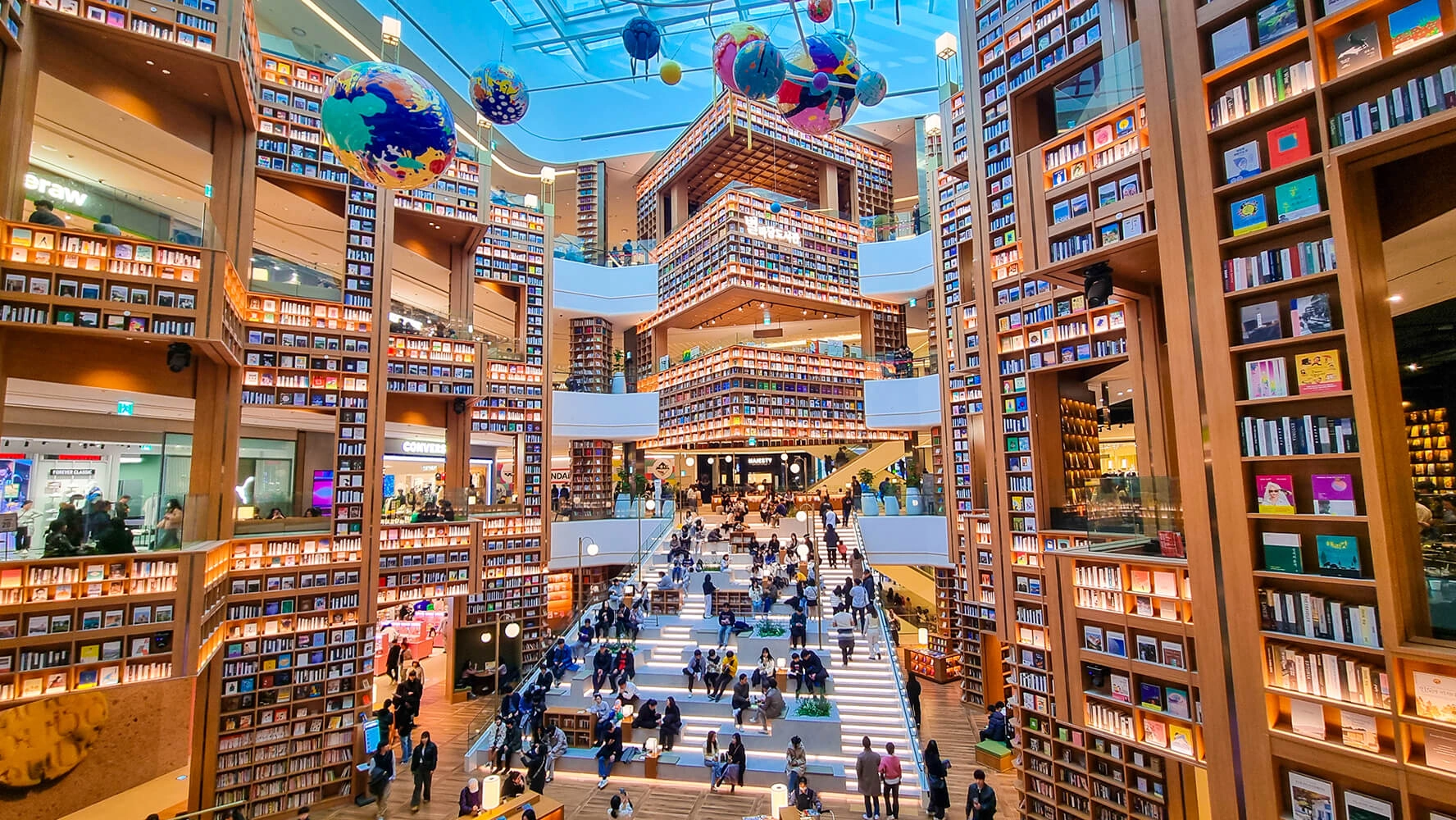
Below the national tier brokered through the Korean Film Council, the major filming cities run their own film commissions. The Seoul, Busan and Jeju film commissions support location coordination and permitting in their respective areas; final approval remains with the relevant public authority, venue or site custodian. Filming at state-managed heritage sites such as Gyeongbokgung, Changdeokgung and Jongmyo may require Korea Heritage Service approval alongside city and site-custodian permissions. Bukchon follows its own district, street and property-access process. Public-space filming at landmark venues (Starfield Library at Coex, Lotte World Tower, N Seoul Tower, Han River bridges) requires venue-side permission in parallel with the city permit, with separate location fees and time-window restrictions.
Lead times, incentive cycle, city permits, complex shoots
Realistic timelines are the planning hinge. The KOFIC Location Incentive operates under current programme guidelines, annual funding and application deadlines, so eligibility and submission timing should be confirmed before principal photography; allowing 8–12 weeks for assessment and preparation is prudent. Standard city approvals may take several working days, while road closures, crowd control, drones and protected locations require longer. Heritage-site applications involving locations administered by the Korea Heritage Service should be scheduled conservatively. A Seoul–Busan–Jeju shoot requires parallel coordination across the relevant regional and location authorities.
Korea’s filming geography, Seoul, Busan, Jeju
Three cities and one island carry the bulk of foreign filming in Korea. Seoul dominates on volume; Busan provides the second urban centre with coastal access; Jeju delivers the natural-landscape contrast for tropical-Asia stand-in work and volcanic terrain. The Demilitarised Zone exists as a fourth band but operates on entirely separate military-coordination protocols.
Seoul, Gangnam, Bukchon, Hongdae, N Seoul Tower
Seoul operates as four overlapping districts for production purposes. Gangnam runs the contemporary financial and luxury-retail look (COEX, Starfield Library, Apgujeong, Cheongdam). Bukchon and Insadong carry the heritage hanok quarter between Gyeongbokgung and Changdeokgung palaces. Hongdae and Itaewon hold the music-club, indie-art and youth-culture scenes that K-dramas use for character interiority. N Seoul Tower and Namsan provide recognisable establishing views. A multi-location day may be workable, but it should be scheduled against the actual route, traffic window and location access times. Across all four districts, film fixers in South Korea coordinate the borough-level filming approvals, traffic-control bookings, and security-zone clearances that Seoul venue access requires. A Seoul fixer holds the city-level production interface, while the Korea line producer sits above that, with the schedule, customs and crew rotation across Seoul, Busan and Jeju.

Busan, Haeundae, Gamcheon, Haedong Yonggungsa
Busan, Korea’s second city and the home of the Busan International Film Festival (BIFF), brings the southern coast into the production geography. Haeundae Beach anchors the urban-beachfront band; Gamcheon Culture Village (the painted hillside often called “Korea’s Santorini”) provides the colour-saturated residential-cluster look; Haedong Yonggungsa Temple offers the sea-temple visual with its Lighthouse-perch architecture above Gijang-gun’s rocky coast. Busan-side filming costs generally run lower than Seoul on equipment and crew day rates, which can make it the cost-attractive option when the brief allows a non-Seoul setting. For Busan work, foreign producers coordinate with local production service companies for Busan Film Commission permits, Centum City studio infrastructure, Haedong Yonggungsa coordination and Gamcheon Culture Village access.
Jeju Island, Hallasan, Olle trails, volcanic coast
Jeju is Korea’s largest island, and its volcanic landscape opens up a non-mainland visual band that has no equivalent in Seoul or Busan: Hallasan (the country’s highest peak at 1,950 metres), the Olle walking trails, the black-rock coastline at Yongmeori and the lava-tube caves at Manjanggul. Jeju’s filming permit routes through the Jeju Film Commission with approval from the relevant site custodian, national-park authority or heritage authority, depending on the location, for any shoot inside the Geomunoreum Lava Tube System or Mount Halla National Park. Indian productions have used Jeju as a tropical-Asia stand-in alongside Thailand and Bali, with the added authenticity of being the actual K-content visual language that Korean audiences already recognise.
K-content boom and what Indian productions take from it

Korea’s last decade has produced a remarkably successful cultural-export run. Parasite’s 2020 Best Picture Oscar, Squid Game’s streaming performance and the international spread of K-drama and K-pop have turned Korea into a territory with unusually high inbound creative demand, while Pachinko, Decision to Leave, Burning and Train to Busan give inbound producers a deep reference library for Korea-set work.
Indian remakes of Korean films, the verified pipeline
The Indian-Korean adaptation pipeline runs through more verified credits than popular discourse acknowledges: Awarapan (2007, from A Bittersweet Life), Murder 2 (2011, from The Chaser) and Zinda (2006, an unauthorised Oldboy reworking that became a long-running litigation matter). The licensing flow is now bidirectional: Korean studios acquire Indian IP while Indian streamers commission Hindi-language adaptations of Korean drama. For the full licensing framework, deal-flow structure and contested-attribution cases, see our remake rights India coverage.
K-pop music videos and Indian fashion-brand campaigns
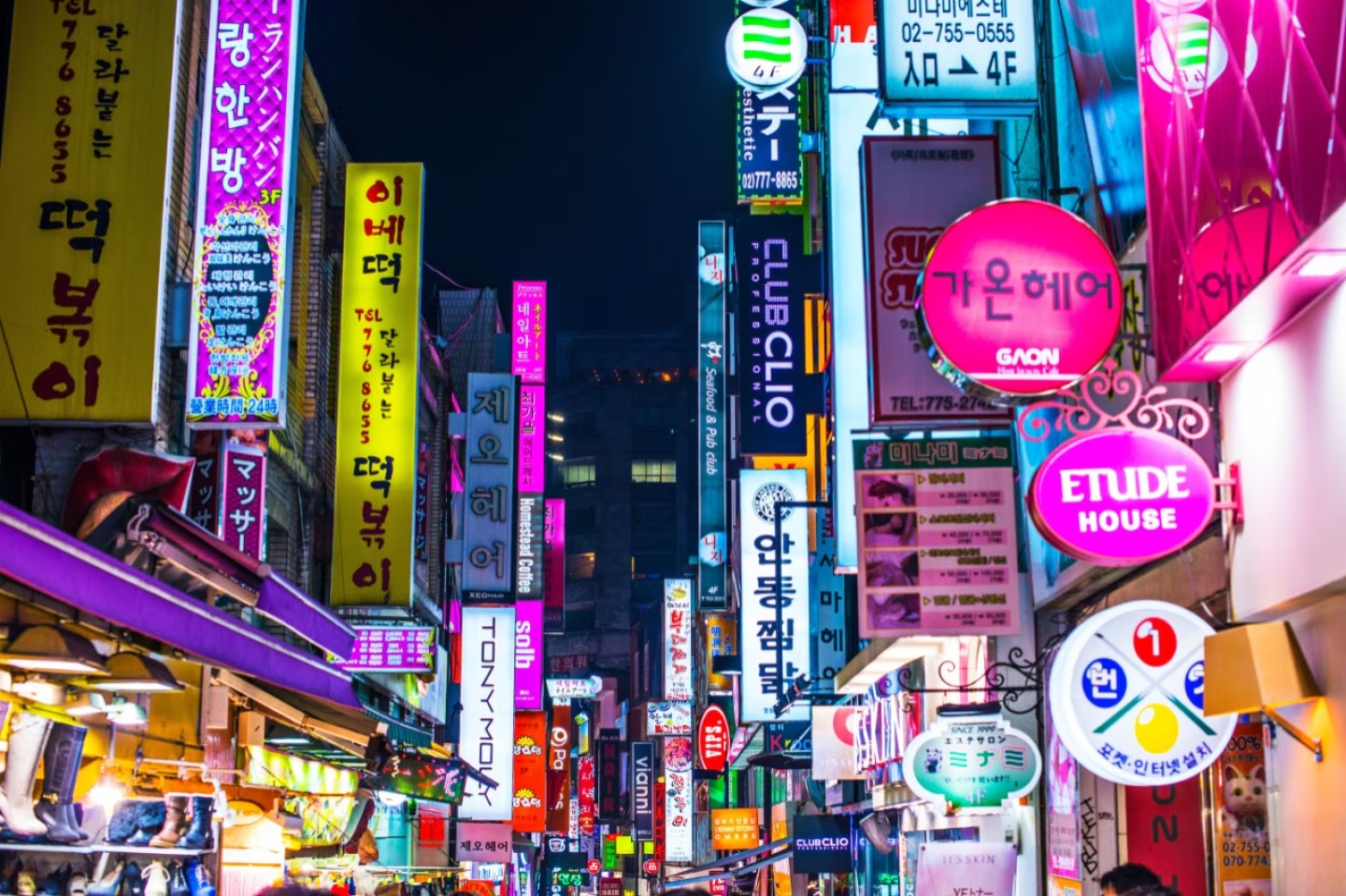
Below the feature-and-OTT tier, a steady year-round volume of K-pop music-video production and Indian fashion-brand campaign work supports steady demand for Seoul crews and equipment. Indian beauty and apparel brands have increasingly used Seoul, Myeongdong and Gangnam settings for campaigns targeting Indian Gen Z consumers who follow K-beauty and K-fashion trends, a niche but commercially meaningful inbound segment. Music video work concentrates around the Hongdae indie scene, Han River bridges and the rooftop venues that have become a standard K-pop visual backdrop.
How a Mumbai-anchored unit runs a Korea shoot

The operating model for an Indian production unit shooting in Korea is a Mumbai-anchored head producer paired with a Seoul-side line producer who coordinates the KOFIC submission, city permits, crew assembly, equipment vendor coordination, transport and accommodation. The split is consistent across our international operation: the Mumbai team flies in for principal photography only, and the Korean-side cost line stops compounding the moment the unit wraps.
Mumbai producer and Seoul-side line producer
Film fixers in Korea operating as Seoul-side line producers are the on-ground extension of a Mumbai-anchored producer. The Seoul-side line producer coordinates the KOFIC Location Incentive application, the Seoul Film Commission permits, heritage-site clearances, equipment vendor coordination and day-by-day call sheets, and prepares the post-shoot audit records, while the registered Korean applicant makes the submission and the audit determines settlement. The Mumbai producer owns the creative read, the cast schedule, the DOP brief, the budget and the back-channel with the inbound brand or studio. For Indian feature and OTT work this usually pairs an Indian DOP and director with a Korean gaffer, grip, sound and art-direction team, the hybrid model that scales day-rate efficiency without sacrificing the creative voice. The fixer in Seoul takes on the local-permit, location-coordination and unit-base work; the line producer in Korea operates above that, bridging the Mumbai producer to the Seoul-side execution end to end.
Equipment via Incheon and ATA Carnet
Korean Customs at Incheon International Airport recognises the ATA Carnet, which is how Indian production units fly camera and lighting packages directly from Mumbai or Delhi. The carnet is filed through FICCI in India, validated at outbound customs and presented again at Incheon on arrival. The Seoul-side fixer pre-briefs the local broker, holds the inventory list and readies the documentation before arrival, so clearance runs without avoidable serial-number or valuation delays.
Specialist cinema packages, including Alexa Mini LF, Sony Venice 2 and Cooke lens sets, are available through Seoul vendors, subject to dates and specification. Where equipment enters under ATA Carnet, the appointed customs broker coordinates the entry and re-export declarations against the same serial-number list.
Indian Crew Visas: Business Entry vs Paid Production Work
Entry and work authorisation for Indian cast and crew must be confirmed against each person’s nationality, role, payment structure and length of stay. Tourism or ordinary business-entry permission does not authorise paid production work. Short-term production personnel may require an appropriate employment or performance visa, supported by the Korean production partner, but the correct category should be confirmed with Korean immigration or the relevant consulate before travel. Do not ticket crew against a historical K-ETA or visa assumption.
Cold-weather production protocol
Korea’s winter months (December through February) push temperatures well below zero across Seoul and the north, with Busan only marginally warmer. Cold weather reduces battery capacity and can cause lenses and filters to fog or frost during temperature changes. We brief Indian crew at the prep stage on cold-shoot protocol and budget for the additional heating, transport-warming and welfare line items rather than absorbing them mid-production. Film fixers arrange thermal equipment, heated transport, warm-up rooms and battery rotations against the final location plan.
Korea cost framework, where the KOFIC rebate offsets day-rate gap
On baseline day rates, Korea runs higher than India and slightly higher than Bali for both crew and equipment. Seoul gaffer, grip and art-direction day rates run above comparable Mumbai rates, with the gap varying by department and season and best quoted against the actual crew list; equipment rental from top-tier Seoul vendors (DIT, lens specialists, lighting) sits at international-tier pricing rather than Asian-discount pricing.
The KOFIC cash rebate is what improves that calculation for inbound shoots. A production that qualifies for the Location Incentive recovers a meaningful share of its eligible in-country spend, which on a five-to-ten-day feature or OTT episodic shoot can narrow the net Korea cost line toward a high-end Mumbai or Bali shoot, while adding the production-value benefits of Korean locations, deeper crew specialisation in OTT-grade work, and the K-content reference register that increasingly drives Indian streaming audiences. For productions that do not qualify (insufficient qualifying spend or filming days, an unsuccessful review, or unavailable programme funding), Korea’s gross cost is higher and lower-cost bases such as Bali or Goa may compare better on budget alone, though that trade should be weighed against Korean production value and locations per brief. KOFIC eligibility can materially change the net budget comparison.

Studios, virtual production and OTT infrastructure in South Korea
South Korea’s production infrastructure has scaled rapidly over the past decade, driven by the K-content boom and international OTT investment, with the studios clustered around Seoul and Gyeonggi province and secondary capacity in Busan and Jeju. Virtual production has grown alongside, with LED volume stages now operating at international-tier scale.
Studio complexes and virtual production stages
Seoul and Gyeonggi province carry the principal studio cluster, with the Paju and Namyangju complexes anchoring international feature, OTT-series and K-drama production; Busan’s Centum City cluster and the Asia Contents Film Market anchor regional work, with Jeju adding capacity for the regional OTT-series pipeline. LED volume stages now operate across Seoul and Gyeonggi, giving productions access to cinematography-volume infrastructure in-country.
Netflix, Disney+ and the international OTT production footprint
Netflix Korea has built a deep OTT production footprint in Asia, with the platform’s K-content investment driving Squid Game, All of Us Are Dead, Hellbound, Mask Girl and the continuing series pipeline produced out of Seoul. Disney+ has expanded through Moving, Casino, Big Bet and further Korean-original series, alongside Apple TV+’s Pachinko anchoring the premium international-OTT tier. The local OTT ecosystem (Coupang Play, TVING, Wavve) supplements the international platform investment with steady domestic-tier production volume, with the combined OTT production footprint sustaining steady series production out of Seoul.
Post-production, sound and the colour layer
South Korea’s post-production cluster centres on Seoul, with sound, picture editorial, colour and VFX covering the full feature and OTT-series pipeline at international-tier capacity, scaled across the Parasite, Squid Game and Pachinko cycles. Productions routing their Korean block through Seoul finish either in the Seoul cluster or in Mumbai, Bangkok or Singapore, depending on the brief.
South Korea as a stand-in for Japan, urban Asia and futuristic cities
South Korea’s value to international productions extends beyond native Korean settings. Contemporary East Asian architecture, technology-campus density, cyberpunk-coded cityscapes and university environments let Seoul and its metropolitan area stand in for Tokyo, generic East Asian urban settings and futuristic-city briefs where the source city is unviable or cost-prohibitive. The stand-in role complements rather than replaces the native Korean setting, supporting both on the same shoot calendar.
Tokyo and contemporary Japanese-urban stand-in registers
Seoul’s Gangnam, Yeouido and the central business district carry the contemporary East Asian financial-district look that productions covering Tokyo, Osaka or generic Japanese-urban settings have used when the source city is operationally restricted or cost-prohibitive. The financial-district architecture, the late-night commercial streets and the contemporary East Asian street-level look read as Tokyo on screen, with Korean signage and visual cues swapped out in post or dressed for the shoot. Seoul production costs generally run below the equivalent Tokyo budget, with the size of the gap depending on the schedule and crew configuration and best confirmed against the actual quote. Productions weighing Korea against the regional consideration set reference our Film Fixers in East Asia coverage for Japan, China, Mongolia and Hong Kong routing.
Cyberpunk, futuristic-city and technology-campus registers
Seoul’s cinematography depth, the neon-and-LED strip across Gangnam and Hongdae, and the Songdo international business district supply the cyberpunk and futuristic-city look that science-fiction and tech productions use. Songdo on the Incheon coast supplies contemporary futuristic-architecture settings, with Coex and Starfield Library adding contemporary commercial settings in central Seoul. Technology-campus and university shoots draw on the Pangyo Techno Valley and the established Seoul campuses (Seoul National, Yonsei, Korea University).
Engaging a line producer for a Korea shoot
Film production services in South Korea: full-service versus line-producer-only engagement
For South Korea, film production services in South Korea means one of two procurement shapes. Full-service contracts route through a Seoul-registered service company that handles KOFIC Location Incentive application, film permits through relevant regional film commissions, crew and vendor booking across Seoul-Busan-Jeju, equipment rental sourcing, ATA Carnet routing through Incheon, and end-to-end shoot execution. Line-producer-only engagements are narrower: the international company retains more of the vendor management, casting and permit oversight in-house, and the Korean line producer holds fiduciary and scheduling accountability across the shoot. Productions searching for film fixers in South Korea may prefer a single Seoul-based team that handles the KOFIC application, city-permit and ICN customs tracks on the production’s behalf, not a fragmented network of borough-level facilitators.
For a single-region Seoul or Busan brief, engaging a single Korean line producer with local Film Commission relationships is a practical structure. For multi-region schedules that combine Seoul urban work, Jeju island terrain and Busan coastal or studio access, or for feature briefs claiming KOFIC Location Incentive, the full-service film production services route reduces duplicated coordination versus running parallel individual engagements.
Cost structure: film production services in South Korea are quoted as package rates combining line-producer day rate, coordinator and production-management support, permit filing fees, KOFIC application administration where applicable, and a production-service margin. Virtual-production stages and OTT-tier bookings usually route through service companies with studio relationships; independent Korean line producers partner with them for larger-facility work rather than handling it directly.

South Korea production service companies and international productions
South Korea production service companies sit at the centre of many international shoots in the country. The production service company is the Korea-registered legal entity that manages the production’s contracted tax and VAT records under the 10% Korean VAT framework, signs vendor contracts, manages cash flow, and runs the KOFIC application, qualifying-expenditure records and settlement submissions to the programme’s required stages and deadlines, supporting the applicant’s audit and filing obligations. Most international productions engaging a production company in South Korea work through a Seoul-based service company with operational depth across Seoul, Busan and Jeju. Engaging a line producer in Korea or film fixers in Korea early in budgeting allows the filing and logistics work to begin earlier across the KOFIC application, city-permit and ICN customs tracks.
The production service company carries scope distinct from the line producer and the film fixer. The line producer holds budget control and day-to-day execution across the schedule. The film fixer holds location access and permit choreography across the Seoul, Busan and Jeju film commissions. The production service company is the Korea-registered legal entity that the KOFIC rebate, the Korean tax authority filings and the vendor contracts attach to. On smaller commercial or K-pop music-video shoots one operator often carries all three roles. On feature productions and longer OTT-series blocks the functions sit with separate parties given the KOFIC rebate audit framework and the greater workload and accountability on longer productions.
Film crew in South Korea and Seoul-Busan crew sourcing
Film crew in South Korea concentrate around Seoul and Busan, with the Seoul bench carrying the bulk of international-feature, K-content series, OTT and luxury commercial work. Korea has an experienced feature, series and commercial crew base, with English-speaking availability varying by department and production period. Imported department heads should be decided against the creative brief and the confirmed local crew list. South Korea fixer networks vary by city: Seoul-Busan is the dense channel; Jeju, Daegu and Daejeon are sourced via fixer in South Korea referrals from the major-city teams.
Specialist departments draw from across the country: aerial crews based primarily out of Seoul and Incheon with drone licensing through the Korean Ministry of Land Infrastructure and Transport, underwater crews concentrated around Jeju and the southern coast, stunt crews concentrated in Seoul with experience across recent large-scale Korean feature and series production, period-design departments with Joseon-dynasty heritage specialism, and K-content specialists carrying the production-design and costume vocabulary built across the past decade of international-tier Korean series. Camera crews in South Korea are generally sourced through the Seoul-based production-service network, with crew calls structured around the KOFIC incentive cycle and the K-content series shoot calendars.
Production companies in South Korea and the foreign-producer engagement tier
Production companies in South Korea operate primarily out of Seoul, with Busan and Jeju anchoring the regional tier. Foreign producers usually assess a company’s documented KOFIC experience, comparable international credits, regional capacity, cash-flow arrangements and client references. Seoul companies hold the cash-flow infrastructure and the K-content-tier vendor relationships that international briefs require.
For an Indian production planning a Korean feature, OTT episode, branded-content shoot or music video, the working pattern is to brief the Mumbai producer on the creative requirements, location bands and shoot window, then route the on-ground execution through Seoul. Share the proposed dates, locations and broad production scope through the contact form, and the team will return with a structured execution brief.
