

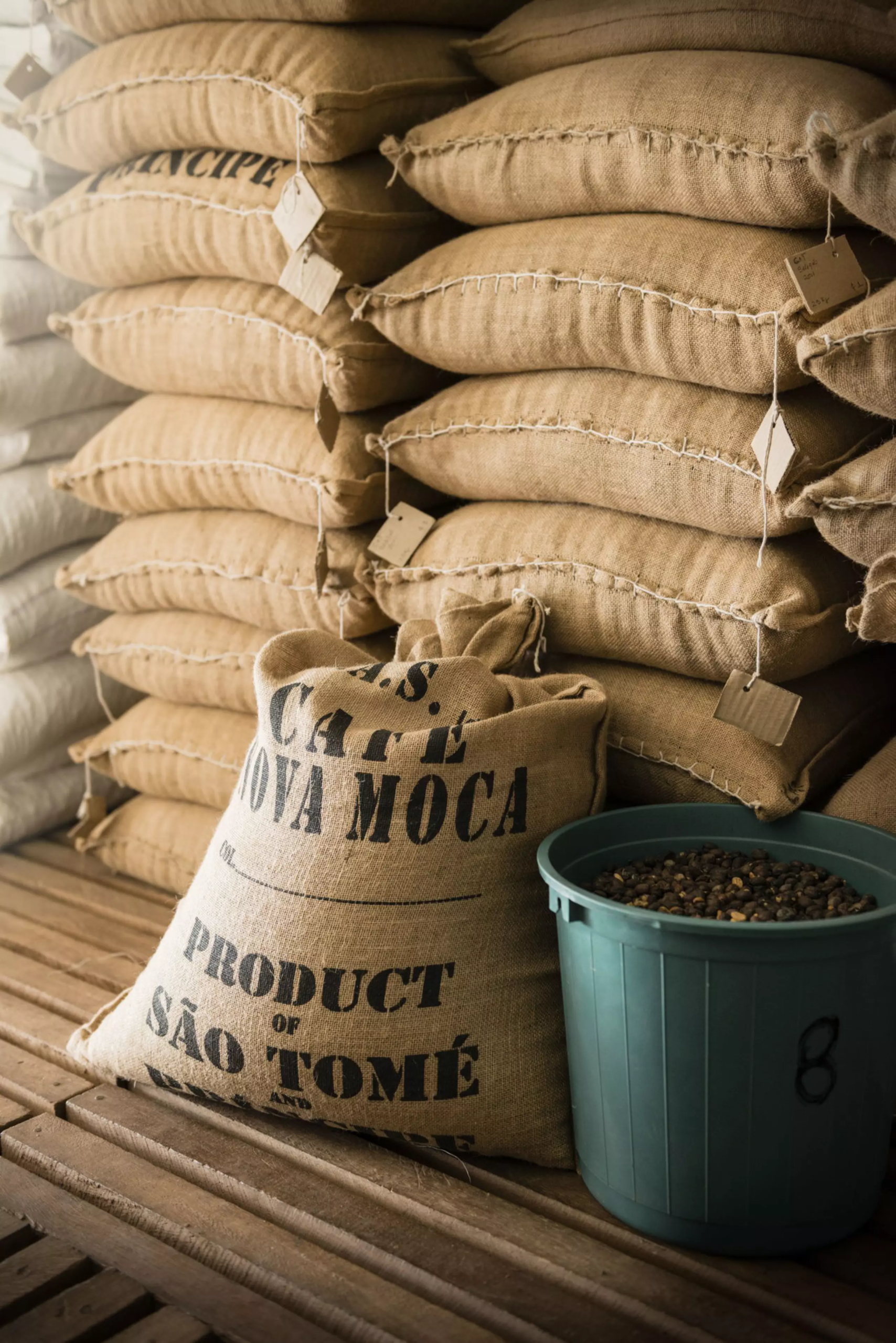
A film fixer in Sao Tome and Principe coordinates location research, recce, site-access discussions, permission enquiries, local suppliers and shoot-day logistics within an agreed scope. Celluloid Pact assesses briefs covering São Tomé and Príncipe separately, confirming the local support, travelling crew, equipment and inter-island movements each shoot requires.
Where the production also needs budget preparation, scheduling, supplier commitments and cost reporting, line-production responsibilities are agreed alongside the fixing scope. Access and approval remain with the relevant authorities and property managers.

Film Fixer in Sao Tome: Recce, Access and Local Coordination
The fixer scope is practical and front-loaded. Most of the value sits in the weeks before the travelling crew arrives, when the location list is tested against what the islands can actually provide:
- Recce photographs, access conditions and practical location alternatives for each setting in the brief.
- Identifying the relevant site manager or authority for each location and the application requirements that apply.
- Local crew and supplier availability checked against the brief, with the gaps that travelling crew or imported equipment have to cover stated clearly.
- Vehicles, accommodation, interpreters and daily movements on São Tomé Island and, where the schedule includes it, Príncipe.
- Outstanding approvals, their status and the contingency arrangements if one does not land in time.
What the fixer does not do is approve anything. Permissions are issued by the authorities and property managers responsible for each site, and the fixer’s role is to identify them, prepare the enquiry and keep the production informed of where each one stands.

São Tomé and Príncipe Locations: Islands, Roças and Pico Cão Grande
São Tomé Island, the Capital and the Coastal Belt
São Tomé Island carries the capital, the port, the principal roça plantation circuit and the interior rainforest. São Tomé City sits on the north-east coast with Portuguese colonial-era civic and religious architecture, a working market and a harbour front. The eastern coastal belt runs south through fishing villages and beaches, and the west coast road passes the Santa Catarina tunnel, a recurring framing location. Pico Cão Grande, a 663-metre volcanic plug rising from the rainforest of the south-central interior, is the island’s most distinctive landmark; approach routes pass through Obo Natural Park and are checked on the recce for access, weather and crew-movement conditions.
The Roça Plantation Circuit
The roças are the colonial-era cocoa and coffee estates that shaped the islands’ economy, and they supply the Lusophone-period architectural register that most productions come for: plantation houses, worker quarters, hospitals, chapels and rail or tramway remnants in varying states of repair. Roça Agua Izé on the east coast, Roça São João dos Angolares in the south, Roça Diogo Vaz in the north-west and Roça Sundy on Príncipe are the most frequently scouted. Each is under its own ownership or management, condition varies building by building, and the recce records what is usable, what is restricted and what the owner’s terms are before any schedule is drawn.

Príncipe Island and Roça Sundy
Príncipe sits around 150 kilometres north of São Tomé Island, with a small population, a rainforest interior and beaches on its north and east coasts. UNESCO designated the island and its surrounding marine zone a biosphere reserve in 2012; the designation describes the area’s conservation status and does not by itself set out a filming-approval procedure, which is confirmed with the regional authorities and site managers for the specific locations. Roça Sundy is where Arthur Eddington’s expedition observed the 1919 solar eclipse that supported Einstein’s general theory of relativity, and the estate remains a scouted location for that reason. Accommodation, road access and local support on Príncipe are smaller in scale than on São Tomé Island, and every Príncipe leg is planned around the inter-island transfer.

Permissions and Approvals: Project-Specific Checks
Filming permissions in São Tomé and Príncipe are confirmed for each project rather than assumed from a fixed chain. The national authority responsible for filming authorisation, and any cultural-heritage review that applies to the brief, is confirmed at scoping; Obo Natural Park’s administration governs filming inside the park on São Tomé Island, including the Pico Cão Grande approaches; the Príncipe regional government and the biosphere management body are consulted for Príncipe locations; roça owners and managers set their own terms for their estates; and filming of religious ceremonies, the Tchiloli theatrical tradition or working communities requires the consent of the people involved.
The fixer identifies the responsible party for each location, prepares the application or enquiry, and records the status of each approval for the production. No lead time is quoted on this page because none is published; timing is confirmed per authority at scoping.

Crew, Equipment and Island Logistics: Confirmed Against the Brief
The local crew pool is small, so key positions and most technical crew travel in, usually through Lisbon, with local supporting crew, drivers, boat operators and interpreters contracted on the islands. Portuguese is the operating language; the fixer and local team work in Portuguese and English with the travelling crew.
Equipment enters on the temporary-import procedure confirmed with São Tomé customs and the production’s appointed broker for the specific package; this page does not publish a carnet or transit route, because the destination’s procedure is what governs clearance, and it is confirmed before dispatch. Air routing, capacity and handling requirements for crew and cargo are confirmed with the carriers for the actual dates, as is the inter-island movement to Príncipe, which runs by scheduled flight or sea charter depending on the load. Productions staging an African multi-country schedule through Johannesburg route São Tomé as an international leg from South Africa, coordinated with our South Africa production team.
Seasons and Daylight
The islands run on a wet-and-dry cycle rather than a summer-winter one: the long dry season (gravana) from roughly June to September and the short dry season (gravanito) around January to February, separated by two rainy seasons. The dry seasons are the usual planning windows, with weather buffers kept in the schedule because equatorial conditions change quickly. Daylight runs close to twelve hours year-round, with sunrise and sunset near six o’clock, which simplifies call-sheet planning but gives no long golden-hour window; the recce notes the light at each location at the planned shooting time.

Line Production in São Tomé and Príncipe: Agreed Scope
Where the brief needs more than fixing, the line producer in São Tomé and Príncipe takes on budget preparation, the schedule across islands, supplier commitments, crew and equipment logistics and cost reporting to the foreign producer. Film production services in São Tomé and Príncipe are quoted as a package combining the fixer and line-production scope, coordination of permissions and site access, inter-island logistics and a stated production-service margin, with each line confirmed against the brief rather than published as a rate card. For productions pairing São Tomé with Mozambique or another Portuguese-speaking territory, the Lusophone context is useful for crew, language continuity and co-producer relationships, but any funding or official co-production eligibility is assessed programme by programme and is not assumed from CPLP membership. The Mozambique leg sits with our film fixers in Mozambique; how the islands compare with other African bases is covered in our filming in Africa guide.
São Tomé and Príncipe Fixer Support: From Brief to Shoot Day
Celluloid Pact assesses each São Tomé and Príncipe brief on its own terms: which island or islands it needs, which locations and what the recce has to establish, which permissions and consents apply, what local support exists and what has to travel, how equipment and crew move in and between the islands, and where the line-production scope begins. The useful starting information is the format and running time, the shoot window, the settings the script needs, the crew size and which heads of department travel, the equipment list, any permit-sensitive activity such as park interiors, roça interiors, ceremonies or drones, and an indicative budget range. From that, the film fixer in Sao Tome returns a recce plan, the permission map for the location list and the local-support picture, and the line-production scope is agreed where the production wants it.
