

Kerala runs one of the most film-friendly permit pipelines in India and has built a deep international-shoot reputation over the past two decades. The Kerala State Film Development Corporation (KSFDC) operates the country’s formally designated single-window clearance mechanism for film shoots, consolidating permits across Forest Department, Tourism, backwater authorities, local panchayats and police into one application track. That structural advantage is why Baahubali shot the Shiva Lingam sequence at Athirappilly Falls, Ang Lee shot the Patel family vacation sequence in Munnar’s tea gardens, and Mollywood feature production runs year-round out of Kochi. Film fixers in Kerala and the line producer Kerala network handle the KSFDC single-window, the Forest Department NOCs for Periyar and Wayanad, the Athirappilly waterfall access, and the four-zone shoot logistics that move a single schedule between Kochi, Fort Kochi, Alappuzha, Kumarakom, Munnar, Wayanad and Athirappilly.
Most Kerala shoots route through Mumbai for equipment, crew supplements and production base. See our Film Fixers In Mumbai page for the operational hub that supplies the corridor. Kerala operates as the southern coastal and forest-heritage layer inside line producer India, our wider production network that spans Mumbai, Delhi NCR, Rajasthan, Goa and the southern studios.
This page covers how line producers and film fixers in Kerala — productions also search for this layer as a line producer company in Kerala — run shoots across the four working zones: Kochi and Fort Kochi, the backwater belt from Alappuzha through Kollam, the Munnar and Wayanad hill country, and the Athirappilly forest corridor. KSFDC single-window, monsoon-shutdown calendar, the Mumbai–Kerala corridor, and the international precedent that built the state’s film-friendly reputation.

How Kerala’s production layer operates
Two facts shape every Kerala production brief that film fixers take on. The first is that KSFDC runs the only formal single-window film-permit mechanism in India, with the Managing Director of KSFDC serving as the designated nodal officer. The second is that Kerala is functionally a southern extension of the Mumbai production corridor, with flights from Mumbai to Kochi averaging around two hours, equipment air freight is routine, and most premium feature and ad-film schedules base pre-production in Mumbai before moving the unit south.
Film fixers in Kerala, KSFDC single-window clearance
KSFDC consolidates Forest Department clearance, Tourism Department NOCs, backwater authority permits, Kerala Police coordination and local panchayat approvals into one application process. The MD of KSFDC is the designated nodal officer; a producer submits a single shoot brief and KSFDC routes the parallel applications. Standard lead times run two to three weeks for general locations, longer when ASI heritage sites or restricted forest reserves are involved. KSFDC also operates Chitranjali Studio and Kalabhavan Studio under its own infrastructure portfolio, and runs a state film subsidy scheme for qualifying productions.

The Mumbai–Kerala corridor
Mumbai to Kochi averages around two hours by air. Mumbai to Trivandrum averages around two and a half hours. Equipment carnets, ARRI and Red camera packages, lighting trucks and specialised grip are road- or air-freighted from Mumbai for any shoot above commercial spec. Kochi has a working local equipment market that covers ad-film and basic feature work, but international-spec packages are routed from Mumbai. Production offices for multi-week schedules base in Kochi (closer to the airport and the backwaters) or Munnar (when the bulk of the shoot is hill-country).
Why Kerala carries the international-shoot reputation
Kerala’s film-friendly profile sits on three foundations. English fluency among the working production population is unusually high, so international units brief and direct in English without translation friction. Infrastructure across road, accommodation and hospital coverage is consistent. And the state’s political continuity around film policy has held across governments, with KSFDC and the Film Cell operating with consistent state-level support across administrations.

Production bandwidth, what Kerala delivers
Kerala runs four distinct shoot tiers in parallel. Mollywood feature production, the international film calendar, the wedding-and-destination commercial market, and the premium ad-film and OTT slate that now uses Kerala as a default southern setting. The state’s film-friendly reputation is built across all four.
Mollywood feature production
Kerala is the home market for Mollywood, the Malayalam-language feature industry that produces some of the country’s most acclaimed cinema. Mohanlal, Mammootty and Fahadh Faasil anchor the tier-one slate. The Drishyam franchise originated here in 2013 with Aashirvad Cinemas and director Jeethu Joseph, before crossing into Hindi, Tamil, Telugu, Mandarin and now Indonesian adaptation markets. The 2024 Mollywood slate (Manjummel Boys, Premalu, Aavesham) ran the highest cross-language theatrical conversion of any Mollywood year on record, broadening the talent pool international productions can tap when staffing Kerala-based shoots. The Mollywood crew bench is dense, cross-trained across feature and OTT spec, and the local production conventions differ from the Mumbai union structure.
International film precedent
The international film precedent in Kerala is unusually deep for an Indian state. Baahubali: The Beginning shot the Shiva Lingam sequence at Athirappilly Falls in Thrissur district, using the largest waterfall in Kerala as the backdrop for one of Indian cinema’s most iconic frames. Locals now refer to Athirappilly as the Baahubali Waterfall.
Ang Lee’s Life of Pi shot the Patel family vacation sequence at Munnar’s Tea Gardens and Rose Gardens before the Pacific ocean sequences moved to Taiwan studios. Beyond these two anchor credits, Kerala has carried a steady run of international auteur productions, documentary slates and brand films that use Munnar, the backwaters and Fort Kochi as recognisable Indian frames.
Premium ad films, weddings and destination commercials
Outside the feature production calendar, Kerala runs as one of the densest ad-film and music-video production locations in India. Resort properties along the backwaters and the southern coastal belt double as ready-made production base camps. The destination wedding and tourism-brand market is one of the largest in India. Kerala’s positioning as an international tourism brand pulls a continuous calendar of brand-film and lifestyle work into the state.

Fort Kochi as a European-period stand-in
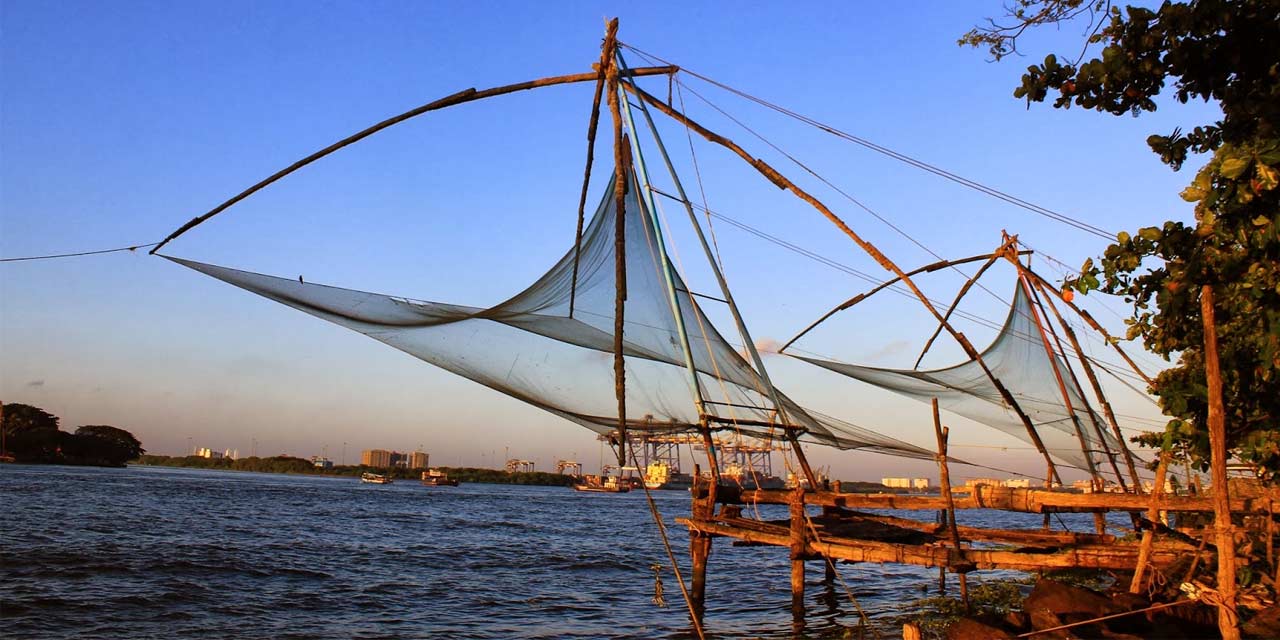
Fort Kochi’s Portuguese, Dutch and British colonial architecture (the Chinese fishing nets, the Cochin Synagogue, Mattancherry Palace, the spice warehouses in Jew Town) gives Kerala a stand-in capability for European-period coastal frames. International and Indian-period productions use this belt routinely. The Fort Kochi circuit also pairs cleanly with the Mattancherry and Jew Town heritage zones for a single shoot-day route.
Permits, jurisdictions and clearances
Even with KSFDC running the single window, certain shoot categories trigger separate clearance tracks underneath. Forest reserve work, waterfall NOCs, backwater houseboat permits and Fort Kochi heritage clearance each carry their own lead times. A working set of film fixers in Kerala launches these in parallel rather than sequentially.
Forest department: Periyar, Wayanad, Eravikulam

Periyar Tiger Reserve in Thekkady, the Wayanad Wildlife Sanctuary on the northern Karnataka border and Eravikulam National Park around Munnar (home to the Nilgiri tahr) all sit under Forest Department jurisdiction. Filming permits inside the reserves are tightly controlled, with seasonal restrictions during breeding windows and crew-count limits enforced. Lead times run three to five weeks; drone use is rarely granted inside the core reserve zones.
Athirappilly Falls and waterfall NOCs
Athirappilly Falls and the broader Vazhachal forest corridor sit under combined Forest Department and Tourism Department jurisdiction. Shooting at the falls itself requires a separate NOC from the Athirappilly forest range office in addition to the KSFDC general permit. Monsoon-season shoots (June to September) face access restrictions when water levels overrun the safe-shoot zones; dry-season shoots (October to May) get more controllable camera positions but lose some of the visual drama of peak flow.
Backwater authority and panchayat NOCs
Houseboat and backwater shoots route through Kerala State Inland Navigation Corporation (KSINC) for state-owned houseboats, individual operator NOCs for private houseboats, and the relevant village panchayat for shore-side access. Alappuzha is the highest-volume backwater shoot zone, Kumarakom slightly more upscale, and the Kollam belt quieter. Lead times for a clean houseboat shoot run two to three weeks; multi-boat coordinated shoots run longer.
KSFDC application steps and statutory lead times
The KSFDC application is a structured five-step track that a line producer in Kerala anchors from script breakdown to permit issuance.
- Production registration: filed with the production company name, the Indian co-producer or production service entity, the script synopsis, the schedule outline and the proposed locations.
- Location list: proposed shoot dates and a per-location intent note covering crowd size, camera setup, equipment scale and any restricted-access asks.
- Agency-by-agency clearance routing: KSFDC distributes the application across Forest Department for Periyar, Wayanad and Eravikulam, the Tourism Department for state-owned heritage and tourism-board sites, KSINC and the backwater panchayats for Alappuzha and Kollam, and the relevant local police jurisdictions.
- Consolidated fee schedule: against which the production pays.
- Master permit issuance.
Statutory turnaround sits at 21 working days for non-restricted location lists and 30 to 45 days where Forest Department or ASI heritage approvals stack on top. International productions should budget 8 to 10 weeks from KSFDC application to first shoot day with full clearance in hand.
Kerala film subsidy scheme
KSFDC operates a state film subsidy scheme that qualifying productions can claim against. Qualification criteria include filming a defined percentage of the production in Kerala, using Kerala crew above a threshold count, and meeting language/content guidelines on a sliding scale. The subsidy is meaningful for mid-budget Malayalam features and select inbound international productions; the application sits with KSFDC and runs in parallel with the shoot permit track.

Routes, weather and the monsoon calendar
Kerala is a long, narrow state running roughly 580 kilometres north to south along the Arabian Sea coast. Most shoots base out of Kochi (Ernakulam district) as the operational midpoint, with day-trips and short relocations to Munnar, the backwaters, Athirappilly and further north into Wayanad or south into Kollam and Trivandrum.
Distance, drive time and the airport split
| Route | Distance | Drive time | Best window |
|---|---|---|---|
| COK Kochi Airport ↔ Fort Kochi | ~35 km | 60 min | year-round |
| COK Kochi ↔ Athirappilly Falls | ~60 km | 2 hrs | Oct–May |
| COK Kochi ↔ Alappuzha (backwaters) | ~60 km | 1.5 hrs | year-round |
| COK Kochi ↔ Munnar | ~140 km | 4 hrs | Oct–Feb |
| COK Kochi ↔ Wayanad (Kalpetta) | ~260 km | 7 hrs | Oct–Feb |
| COK Kochi ↔ Periyar (Thekkady) | ~145 km | 4 hrs | Oct–Feb |
| COK Kochi ↔ Kovalam (via NH66) | ~220 km | 5 hrs | Oct–Mar |
| TRV Trivandrum ↔ Kovalam | ~15 km | 30 min | year-round |
| Mumbai ↔ COK Kochi (flight) | n/a | 2 hrs | year-round |
| Mumbai ↔ TRV Trivandrum (flight) | n/a | 2.5 hrs | year-round |
The Kerala monsoon, the longest shutdown window in India
The southwest monsoon typically makes landfall in Kerala first. June through September is heavy continuous rain, with August routinely the wettest month. Backwater shoots become difficult to sustain, hill stations get fog and mudslide risk, and outdoor productions effectively shut down. October to February is the prime window: cool, dry, clear light and minimal weather risk. April and May are humid pre-monsoon with harsh midday light; some productions use this window for studio interiors and Athirappilly dry-season frames.
Peak window pricing and the December-January high season
October to February is also Kerala’s tourism high season. Hotel rates, houseboat hires and resort-property bookings run 30 to 60 percent above off-peak inside this window, with late December and early January at the peak of the season as international holiday demand overlaps with the production calendar. Producers planning multi-week schedules inside the prime window block accommodation eight to ten weeks ahead.

Engaging a line producer in Kerala
Kerala shoots benefit from KSFDC’s single-window pipeline, but the operational layer still needs someone coordinating approvals across Forest Department, backwater authorities, panchayats, and the Mumbai corridor for equipment movement. That is what a working line producer in Kerala carries.
What a Kerala line producer holds
Film fixers in Kerala hold standing relationships across the whole approval stack: KSFDC application coordination, Forest Department NOC for reserve shoots, KSINC and private operator coordination for houseboats, Tourism Department for state-owned heritage sites, local panchayat clearance for village-level access, Kerala Police liaison for street work, and Mumbai-side coordination for ATA carnet, accommodation block booking and customs. That creates a seven-authority coordination network on a multi-location Kerala schedule.

Mumbai-Kerala crew rotation and HOD staffing pattern
Most international productions filming in Kerala build the unit around Mumbai-based HODs (DP, gaffer, key grip, production designer, costume designer) with Kerala-based regional crew filling the larger working bench. The flight pattern supports this directly: Mumbai to Kochi runs around two hours, Mumbai to Trivandrum closer to two and a half hours, and equipment air-freight from Mumbai-based rental houses reaches Kochi by next-day delivery for any shoot above commercial spec.
The Kerala line producer brief therefore anchors on three layers: the Mumbai HOD rotation, the Kerala regional crew bench, and the in-state fixer layer at each shoot location. English fluency among Kerala production crews is the highest of any Indian state, which is why international units brief and direct in English without translation friction. Mollywood crew working between feature seasons routinely supplement international shoots in scout, line-production assistant and second-unit capacities, which gives the Kerala crew bench unusual depth for a regional market.
Cost benchmarks for international Kerala shoots
Kerala’s day rates sit in the middle band of Indian production economies, materially lower than Mumbai for crew and equipment and slightly higher than Tamil Nadu for ad-film work given the language-and-fluency premium. A typical international commercial shoot in Kerala runs at 60 to 80 percent of the equivalent Mumbai day rate when staffed with regional crew under Mumbai HOD direction, with the savings concentrated in art department, costume, transport, and the in-state production layer.
Feature productions running 30 to 50 day schedules through Kerala typically run at 50 to 70 percent of comparable Mumbai costs against the same script profile. The Kerala film subsidy applies on top for projects that qualify under the cultural-content brief, layering an additional 5 to 15 percent equity-tier offset. Equipment rental routes through Mumbai houses with Kochi-staging hubs; Kerala-local equipment covers ad-film and basic feature work, while large-scale grip, lighting and camera packages still come down from Mumbai under air-freight schedules. Crew-cost benchmarks are tracked at the briefing stage so the production budget reflects the actual Kerala-vs-Mumbai split on the day.
Lead times and budget bands
Standard lead times: two to three weeks for a Kochi-only municipal shoot with KSFDC single-window; three to four weeks for a backwater houseboat schedule with KSINC and operator coordination; four to six weeks for Athirappilly Falls or Periyar Tiger Reserve shoots; six to eight weeks for international productions needing Mumbai equipment movement, ATA carnet documentation, accommodation block booking and union roster coordination.
Kerala day rates sit below Mumbai for comparable crew and equipment spec, meaningfully below Delhi NCR for the same production tier. The multi-territory schedules that come through our office routinely combine Kerala with Mumbai under a single production brief, with one line producer team holding the schedule end to end rather than splitting it across regional vendors.
