

Lisbon is one of the few European production capitals where you can run a feature in a UNESCO-listed riverside quarter, a Moorish-walled palace town, and an Atlantic fishing village inside the same week. Recent international productions, House of the Dragon at Monsanto and James Bond at Estoril, have rebuilt the city’s reputation as a working base for English-language productions. What changed in 2026 was the framework underneath: Portugal consolidated its film incentives under a new programme called SCRI.PT, which folded the old Cash Rebate and Cash Refund schemes into RIPAC, administered by ICA as two tracks: a medium-budget incentive at 30% and a large-scale incentive at 30% on the first €2 million of eligible spend and up to 25% above.
This page is for producers and line producers planning a Lisbon shoot for the first time, and for those who’ve worked in Portugal before and want a working reference for permits, regions, costs, and how the local fixer ecosystem operates under the new SCRI.PT regime. The workflows below reflect current production practice across Lisbon, Sintra, Porto, and the wider Portuguese production corridor as the post-2026 rebate framework beds in.
Why productions choose Lisbon and what local film fixers in Lisbon actually do
Lisbon’s draw is geographical compression. Within an hour of the city centre you can reach Atlantic coast at Cascais and Estoril, Moorish hilltop palaces at Sintra, Roman-era ruins, working fishing villages, and the medieval boulder town of Monsanto. The Tagus waterfront covers maritime stand-in needs; Alfama and Mouraria carry the look of a pre-modern Mediterranean port without studio set dressing. That range, plus an English-fluent service crew base that has been training on international productions since the early 2000s, is what producers come back for.
How the Lisbon fixer layer operates
The term “fixer” gets used loosely in conversations about filming in Lisbon. On the ground it covers a defined sequence: scouting and presenting locations against a script’s needs, securing the right permits through the Câmara Municipal de Lisboa and the Lisboa Film Commission, assembling a local crew at the right scale, handling cash flow and ATA carnet customs for equipment moving in and out through Humberto Delgado Airport, and managing day-to-day liaison between the visiting team and Portuguese authorities. The work bridges what a line producer does in the planning phase and what a production manager does on set. A well-run fixer hands over a permit calendar at the briefing stage, not a week before the shoot. Lisbon film permits run through the Câmara Municipal de Lisboa film unit, the three-working-day standard makes Lisbon one of the faster Western European permit jurisdictions.
Fixer vs line producer vs production service company
A fixer typically operates as a single point of contact with a network. A line producer takes financial responsibility for the production budget and signs vendor contracts. A production service company (sociedade de produção) is the legal entity that files the SCRI.PT rebate application, issues invoices, and holds liability. On smaller commercial shoots one person plays all three roles. On a feature or limited series with local spend above €500,000, they should be separate functions even if the same firm provides them, keep the brief and the bank reconciliation in different hands. Productions that ignore this distinction get blindsided when an invoice doesn’t reconcile with a permit fee or a crew payment doesn’t show in the rebate filing.
Lisbon’s production geography, Alfama, Belém, Sintra, and beyond
Filming in Lisbon clusters around three corridors plus an extended-region tier. Each has its own permit authority, crew availability, and seasonal window. Lisbon fixers tend to work across all three because the distances are short, a shoot can move from Alfama to Sintra to Cascais inside a single day with the right unit base.
Alfama, Baixa, Bairro Alto, the historic centre
Alfama is the oldest quarter, narrow tiled lanes, fado bars, the Sé de Lisboa cathedral, the São Jorge castle on the hill above. The lanes are too narrow for a full grip truck; productions stage equipment in the wider streets around Largo das Portas do Sol and walk gear in.
Baixa is the post-1755-earthquake grid that runs from Rossio down to Praça do Comércio on the Tagus, wide neoclassical avenues, ideal for period pieces from late-1700s onwards. Bairro Alto sits above Baixa, full of small bars and restaurants by night, used by international productions for its rooftop sequences and tight-lane atmosphere. Permits across this zone go through the Câmara Municipal de Lisboa, with the Lisboa Film Commission acting as the coordinating desk between productions and the municipality. Lisbon film permits for the historic centre run through additional Alfama-area neighbourhood liaison. Narrow lanes, residential density and step-street access drive most of the operational nuance. International productions engage production companies in Lisbon for Alfama-Baixa-Bairro Alto permits, residential-liaison handling and the historic-centre routing that anchors most period-feature work.

Belém and the Tagus waterfront
Belém sits west of central Lisbon along the Tagus. The Torre de Belém and Jerónimos Monastery are UNESCO sites with their own permit committees layered on top of the municipal permit. Productions come to Lisbon for the Age of Discovery look, limestone Manueline architecture, the river running wide before opening to the Atlantic. The Belém Cultural Centre and the modern MAAT museum sit alongside the historic monuments, giving the central area a usable contrast for stories that span periods. Santa Apolónia and Cais do Sodré stations bracket the waterfront for transport-themed sequences. International productions engage production companies in Lisbon for Belém-Tagus permits, monument-access coordination and the waterfront-station routing that anchors most monumental and contemporary feature work.

Sintra, palaces, forests, and the fantasy register
Sintra sits forty minutes northwest of Lisbon and supplies the fantasy and Gothic register Portuguese cinema is increasingly known for internationally. The Pena Palace (the painted Romanticist confection on the hilltop), the Moorish Castle (a 9th-century ruin), Quinta da Regaleira (initiation wells and esoteric gardens), and Monserrate Palace cover most fantasy-period briefs. The Sintra-Cascais Natural Park around them gives forested cover with old roads, Portuguese productions and international shoots covering Eastern European or Iberian medieval looks use this stretch heavily. Each palace has its own access manager under Parques de Sintra-Monte da Lua, so permit timelines run alongside the municipal track. International productions engage production companies in Sintra for Pena-Quinta-Moorish Castle access, Parques de Sintra coordination and the palace-and-forest routing that anchors most fantasy-register feature work.

Beyond Lisbon, Cascais, Porto, Algarve, Monsanto
Cascais and Estoril on the Atlantic coast forty minutes west of Lisbon supply the casino-coast period look, Bond shot the Casino Estoril sequences here, and the stretch still draws international features for any 1950s-to-1970s European glamour brief. Porto, three hours north, runs its own working bench at smaller scale, international productions usually fly the lead unit up rather than driving.
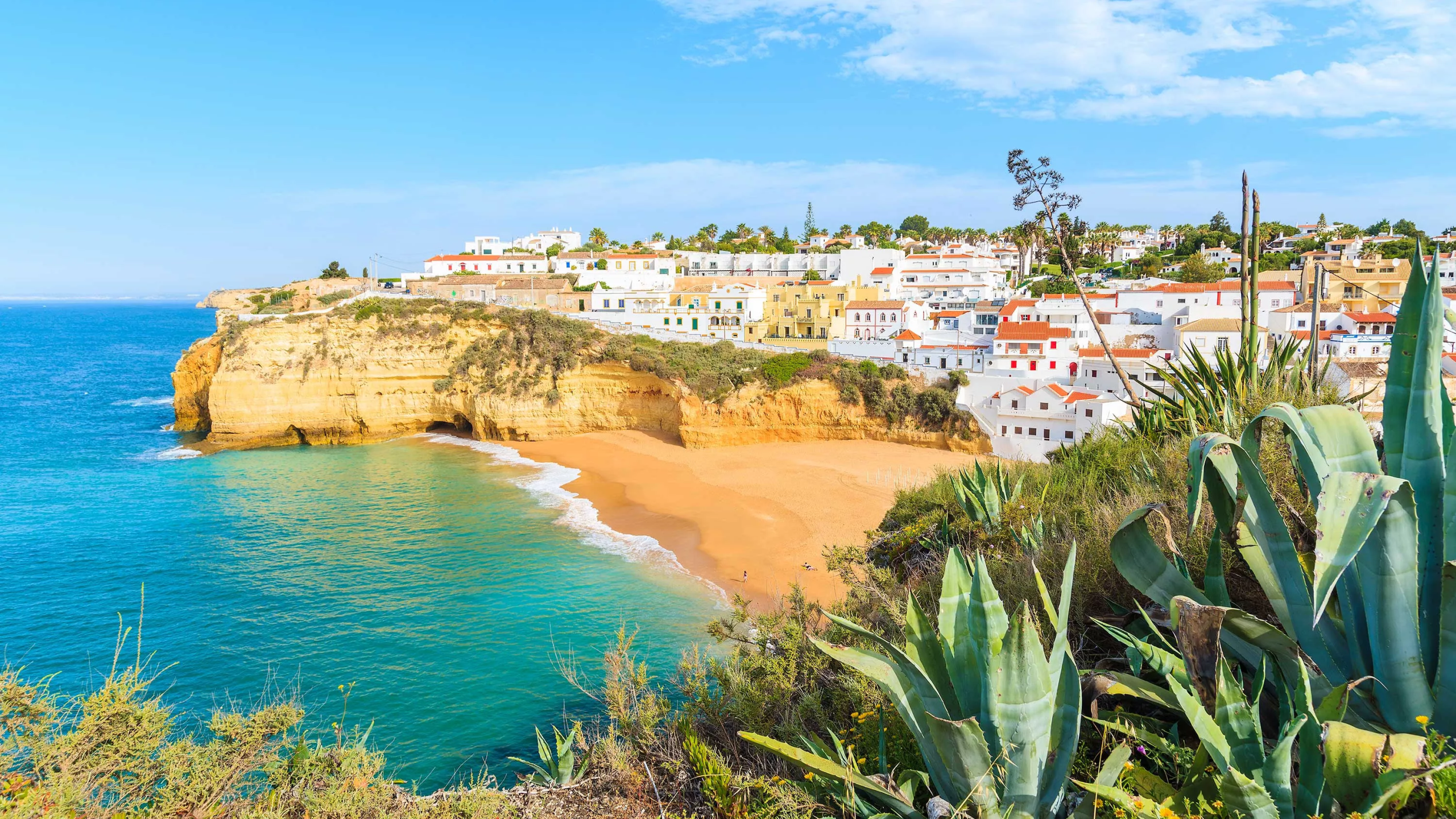
The Algarve coast, three hours south, supplies Mediterranean-style cliff coast and white-village stand-ins. Monsanto, two and a half hours east of Lisbon in the Beira Interior, is the medieval boulder village House of the Dragon used as Dragonstone. The Douro Valley, four hours northeast of Lisbon, supplies terraced river-valley vineyards used in recent Netflix productions. For shoots that extend across Lisbon, the Algarve, and Madeira together, with the 40% SCRI.PT uplift available in the autonomous regions, the film fixers in Portugal piece sits alongside this Lisbon-specific reference.

Permits, customs, and the Lisboa Film Commission
Every foreign production filming in Lisbon needs municipal permission via the Câmara Municipal de Lisboa, coordinated through the Lisboa Film Commission. The Lisboa Film Commission acts as the coordinating desk between productions and the municipal departments that issue the actual licences. The local production-services team files this on the production’s behalf. Build the permit timeline first.
Municipal permit process, lead times, and fees
Standard municipal filming permits in Lisbon typically issue within a few working days of submission, with Lisbon among the faster permit jurisdictions in Europe at that level. The exact turnaround should be confirmed against the current Câmara Municipal de Lisboa schedule at briefing stage.
The administrative fee schedule covers a base per-application charge plus public area occupation tiered by square-metre footprint and shoot duration, with the surplus tier rising as the occupied area increases. Exact rates should be confirmed against the current Câmara Municipal de Lisboa fee schedule at briefing stage. Larger productions seeking fee exemption (granted at municipal discretion when the production is considered to serve the municipality’s interests) typically need to file well ahead of the shoot date with a full project folder including synopsis, script, crew CVs, financing entities, production budget, distribution circuit, and a description of the sets with filming dates and locations involved. Lisbon film permits cover most public-street and Câmara-managed location categories under a single window, sub-permits for sensitive heritage zones and police-coordination filming layer on top.

ICA, the Portugal Film Commission, and national coordination
Above the municipal layer sits the Instituto do Cinema e Audiovisual (ICA), the national film body that administers the SCRI.PT rebate scheme, and the Portugal Film Commission (PIC Portugal), which coordinates between regional film commissions and acts as the national gateway for foreign productions. The Lisboa Film Commission is the city desk; PIC Portugal handles cross-regional coordination when a shoot moves between Lisbon and another region. For productions running multi-region schedules, the line producer files the SCRI.PT rebate application with the ICA, not with any single regional commission. Lisbon film permits for ICA-qualifying productions interact with the SCRI.PT framework, the Portugal film cash rebate guide maps the full incentive workflow against the Câmara-level permit timing.
ATA carnets, customs, drones, and sensitive items
Portugal accepts ATA carnets for temporary equipment imports, the standard route for international shoots bringing cameras, lenses, lighting, and grip in through Humberto Delgado Airport (LIS) in Lisbon. Carnets must be filed with the producing country’s chamber of commerce before departure. The Portuguese customs broker stamps the carnet in and out; gear that doesn’t stamp out triggers a duty assessment. As Portugal is in the EU, productions arriving from another EU member state move equipment freely without carnet, relevant for crews trucking gear from Spain.
Drone operations go through the ANAC (Autoridade Nacional da Aviação Civil) registration and require a flight authorisation for any zone classified as restricted, most of central Lisbon falls into this category. Weapons (including practical firearms used as props) require a Public Security Police (PSP) permit and a local armourer of record. Sensitive items including pyro go through a separate authorisation track that the fixer files alongside the municipal permit.

Crew, the SCRI.PT cash rebate, and engaging a line producer in Lisbon
Lisbon’s crew base has deepened sharply since 2018 as the city became a base for international streaming productions. Most heads of department, DP, gaffer, key grip, sound recordist, production designer, art director, assistant directors, post-production, can be filled locally at international working standards. English-fluency is the operational norm in the Lisbon and Cascais crew layers; Porto and the regional bases run more in Portuguese.
Crew depth, equipment houses, and post
Arri Alexa packages (Mini LF, 35), Sony Venice, and Red lines are available through equipment houses including MovieMakers, Tóbis, and Filmaco. Grip and lighting cover most production scales; specialist underwater or large-scale SFX leads tend to fly in from London, Madrid, or Paris and pair with local crews underneath. Post-production has expanded recently, Lisbon now has a working colourist bench and several VFX shops sized for episodic work. For shoots running outside Lisbon, expect a transfer day in the schedule when moving the unit base between corridors.
SCRI.PT and the 30% cash rebate, how RIPAC actually works
SCRI.PT (Decree-Law 57/2026) is the new audiovisual and film industry funding programme that came into force in 2026, consolidating the old Cash Rebate and Cash Refund into RIPAC (Regime de Incentivos à Produção Audiovisual e Cinematográfica), with two tracks that cannot be combined; the full rules sit on our Portugal film incentives page. RIPAC has an annual budget of €50 million for 2026 through 2029, split between medium-budget production (eligible spend under €2.5 million per project or season) and big-budget production (above that threshold).
For big-budget productions, the headline rate is 30% on the first €2 million of qualifying spend, with up to 25% on the portion above. Qualifying spend means money spent on Portuguese vendors, crew, locations, and post, international labour brought in does not qualify. Applications go to the ICA, with a Selection Committee making the final call on which projects are admitted. Cash flow note: the rebate pays out at wrap, not upfront. Plan around a delay of several months between wrap and disbursement. Productions can also access the Mutual Guarantee Line (€150 million across the four-year window) to bridge cash flow if needed.
Two structural rules to plan around: under SCRI.PT, the same project cannot benefit simultaneously from both incentives forming part of RIPAC, and productions should split spend into local-qualifying and international-non-qualifying buckets from day one. The application package includes the synopsis, the production budget broken down by qualifying and non-qualifying spend, the shoot schedule, the contracted Portuguese service company, and the cultural test the project passes against.

Seasonal scheduling and the Lisbon production calendar
Lisbon’s shoot calendar runs almost year-round, but two windows matter. April through June and September through October give the longest usable light hours alongside the most stable weather, production-friendly temperatures in the high teens to mid-twenties and a Tagus light that DPs come specifically for. July and August are workable but hot, tourist-heavy, and Sintra access tightens with visitor volume. November to February stays mild by European standards but light hours drop and Atlantic weather fronts make outdoor scheduling unpredictable. Commercial shoots tend to run two to seven days; episodic blocks ten to twenty-five; features twenty-five to ninety depending on the multi-region structure. Pre-production with local film fixers in Lisbon runs three to six weeks ahead, depending on permit complexity and whether the SCRI.PT application needs to be filed for the same production.
Lisboa Film Commission, single-window permits and police-coordination escalation
The Lisboa Film Commission sits as the coordinating desk between the production, the Câmara Municipal de Lisboa permit authority, and the supporting agencies that any non-trivial Lisbon shoot eventually touches. For a clean street-level permit in Baixa, Alfama or Bairro Alto, the Commission acts as the single window: the production files the request, the Commission routes it through the Câmara, and the standard administrative track runs without further escalation. The value of working through the Commission rather than approaching the Câmara cold is that the routing knowledge for sensitive heritage zones, residential-density neighbourhoods and waterfront jurisdictions sits in one desk.
Police-coordination escalation is the layer that productions underestimate most often. Any Lisbon shoot involving traffic control, weapons handling, drone operation in regulated airspace, or filming on or near transport infrastructure (Santa Apolónia, Cais do Sodré, the 25 de Abril Bridge approaches) routes through PSP coordination on top of the standard Câmara permit. The Lisboa Film Commission flags this escalation early when the synopsis and shoot plan are filed; productions arriving with a finalised schedule but no police-coordination request typically lose days to the parallel approval track. The operational rule for Lisbon film permits is straightforward: file with the Commission first, route the PSP track in parallel, and treat the police-coordination calendar as the binding lead time rather than the Câmara administrative window.
Engaging a line producer in Lisbon
The brief we work from is simple. Send the script or treatment, a target shoot window, a rough crew size, the locations you have in mind (or the locations the script implies, we can suggest), the equipment level you’re planning, and the budget bracket. We come back within a few working days with a feasibility note covering availability, permit lead times, corridor scheduling, rough cost framing, and an indication of where the SCRI.PT rebate is likely to land. By the first feasibility pass, the permit timeline, regional logistics, and likely rebate path should already be visible. Securing Lisbon film permits early, at brief stage rather than at scout closure, compresses the multi-window approval cycle and locks in the heritage-zone slots that fill quickly in peak months.
Our line producers in Portugal work across Lisbon, Sintra, Cascais, Porto, and the Algarve, handling municipal permits, ICA coordination, regional crew assembly, and multi-region scheduling for international shoots. We’re particular about which productions we take on, capacity is finite and we want to be the right fit for the shape of the shoot.
Lisbon rewards prepared productions. The municipal permit window is short, the rebate framework is now stable under SCRI.PT, and the crew base has the depth for English-language international shoots, but every part of the equation is solvable when the permit calendar, the SCRI.PT filing, and the regional logistics are mapped before principal starts. That’s what a Lisbon production office actually does, make the permits, rebate filing, and regional logistics workable before principal photography begins.
