

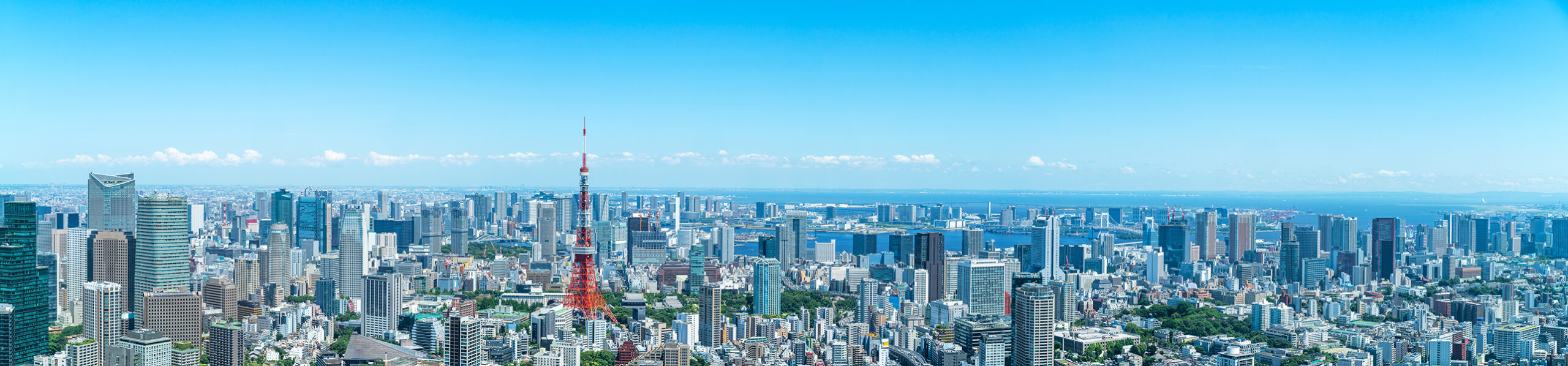
A line producer Japan desk and film fixers in Japan coordinate international features, series, documentaries and commercials across Tokyo, Kyoto, Osaka, Hiroshima, Okinawa and Hokkaido. The line producer holds the budget, the schedule, the contracts and the ministry-and-commission filings, while the fixers run locations, prefectural permits, crew, equipment and the daily execution in each region the schedule touches.
Most international briefs in Japan run on a Tokyo-anchored pair: a Tokyo-based line producer plus a regional film fixer in each prefecture on the shoot. Tokyo is the operational base: it provides airport connectivity, equipment and studio access, Shinkansen links through the principal mainland corridors, and domestic flights to Hokkaido and Okinawa, and the regional fixers carry the local permit and location knowledge in Kyoto, Osaka, Hiroshima, Okinawa and Hokkaido.
This guide covers how a Japan shoot is actually run: the production regions, the city-by-city filming detail, the crew, equipment, studio and permit layer, and how a multi-region schedule is sequenced. Eligibility, thresholds and payment mechanics for Japan’s national rebate and the Tokyo grant sit on the separate Japan film incentives, crew rates and permits guide.
Why Japan works for international production
Japan reads as a single country to most foreign producers and as several distinct production economies to anyone working it operationally. Each region draws on a different combination of regional film commissions, municipal authorities, police, property owners and location administrators, with its own permit rhythm and visual register, and routing a brief across more than one of them in a single schedule is the core problem the Japan line-production team manages.

Japan’s production regions
Japan’s filming geography resolves into five working production regions that a country brief routes through:
- Tokyo and Kanto, the contemporary-urban base, studio infrastructure and post-production capacity, and the operational hub for most multi-region shoots.
- Kyoto–Osaka and the Kansai corridor, the heritage-and-period register through Kyoto’s temples and districts, plus Osaka’s commercial-urban and castle tier and Kobe’s port environment.
- Hiroshima and western Japan, the memorial-and-modern cityscape, with Miyajima and the western coastal register.
- Hokkaido, the winter and alpine register, with Sapporo as the base and Niseko for snow-heavy briefs.
- Okinawa, the tropical, beach and coastal terrain that mainland Japan does not supply, across the Ryukyu and Yaeyama islands.
A country brief usually pairs Tokyo with one or two of the others, and the schedule’s difficulty is the cross-region coordination rather than any single location. Productions weighing Japan typically compare it against Korea, Taiwan and Hong Kong for the East-Asian urban look; that regional comparison sits on our Film Fixers In East Asia hub. Where a brief needs a Japanese-village or highland register that a Japan schedule cannot absorb, Indian terrain can double for it, coordinated through our line producer India, though that is a landscape-plate exception rather than a substitute for a Japan shoot.
Season shapes a Japan schedule as much as geography. The cherry-blossom window in late March and April, the autumn-colour weeks in Kyoto and the mountains, Okinawa’s typhoon compression and Hokkaido’s snow reliability each narrow when a specific register is shootable, so a multi-region brief that needs more than one of them is a calendar problem before it is a permit problem, and the line producer builds the shoot order around the tightest seasonal window first.
Crew movement, equipment and entry
Regional legs move on the Shinkansen network, Tokyo to Kyoto in about two hours twenty minutes and Tokyo to Hiroshima in a little under four hours, which removes the multi-day inter-region transit that affects some other Asian territories. Professional equipment typically moves under ATA Carnet originated through the production’s home-country chamber of commerce, cleared at Narita, Haneda or Kansai, with the customs broker confirming the route and endorsements for each shipment. Entry status for foreign cast and crew depends on nationality, the duties performed, remuneration and the length of stay, so the applicable visa or entry route should be confirmed for each passport and role before travel (Japan Ministry of Foreign Affairs).
Tokyo, Kyoto, Osaka and Japan’s filming hubs
Japan’s filming detail concentrates in a handful of cities, each carrying a distinct register that a country brief routes through, with film fixers holding the local permit and location layer in each.

Tokyo, the urban production base
Tokyo carries the contemporary-urban scale and is where most international productions establish their Japan base. The Tokyo Film Commission operates Tokyo Location Box through the Tokyo Convention & Visitors Bureau, working alongside the Tokyo Metropolitan Government, and runs a one-stop service for location scouting, permit liaison and ward-level coordination (Tokyo Location Box). Formal permissions depend on the location and activity, involving the relevant ward, road administrator, property owner or police authority, with Shibuya, Shinjuku, Minato, Chiyoda and Chuo covering most production-heavy frames. Regulated drone flights require the applicable MLIT/JCAB permission through DIPS (Japan MLIT drone guidance), alongside any location-specific or police coordination, and the line producer and location managers run these day to day.
Film fixers working the Tokyo leg handle the logistics beneath the permit layer: location access, talent and extras booking, equipment cross-hauls from the Roppongi rental houses to the day’s shoot site, and hotel routing across the ward map. That pairing, a line producer holding the schedule and budget alongside a film fixer running daily execution, is the standard model for a Tokyo-based shoot, and the Tokyo team usually carries the broader Japan-side coordination when the brief runs into other regions.

The Tokyo Metropolitan Government also runs a filming grant for productions shooting inside the capital’s special wards, reviewed against a points framework covering Tokyo shoot days, local-crew share and the production’s connection to the city. It is a separate support scheme; whether it can be combined with other public funding must be confirmed against the current programme rules, and the current cap and eligibility detail sit on the incentives guide. In practice the line producer files the grant application in parallel with the ward-level permit coordination so neither calendar holds up the shoot dates.
Kyoto, heritage filming and Gion permits
Kyoto carries the heritage and period terrain behind most of Japan’s international historical work. The Kyoto Film Commission handles the formal liaison, and permits run through the city government plus the relevant temple, shrine or district authority depending on the location. Kinkaku-ji, Fushimi Inari, the Arashiyama bamboo grove and the Higashiyama district account for most of the recurring frames international productions request.
The Gion district carries its own sensitivity. Geisha and maiko movement, tourist-restricted lanes and resident-community concerns mean a Gion-set scene needs early film commission coordination, well ahead, with the allowance confirmed for the specific site, and the same caution applies to the narrow heritage lanes at Ponto-cho, Ninen-zaka and Sannen-zaka. An experienced Kyoto film fixer is the standard execution layer below the line producer for any Kyoto-anchored leg. Kyoto also carries a purpose-built period-drama resource in the Toei Kyoto Studio complex at Uzumasa, long used for domestic jidaigeki, which some international productions draw on for controlled Edo-period sets rather than negotiating live-heritage access for every frame.

Osaka and the Kansai corridor
Osaka anchors the commercial-urban tier in Kansai. The Osaka Film Council coordinates permit enquiries and city-level liaison, with Osaka Castle, Dotonbori, the Umeda business district and the Universal Studios Japan exterior as the recurring location set. Osaka also functions as the base for shoots that route into Nara for its temple-and-deer-park environment, into Kobe for the port and Chinatown frames, and into Wakayama for coastal alternatives outside the Kanto orbit.
The Kansai advantage is connectivity: the Shinkansen puts Hiroshima inside about ninety minutes and Kyoto a short hop away, so a Kansai-anchored brief can touch three or four prefectures inside a week-long shoot without losing daylight to inter-region transit.

Hiroshima, cityscape and memorial register
Hiroshima carries a particular sensitivity. The Hiroshima Film Commission liaises across the city government, the Peace Memorial Park administration and the prefectural government for any production that touches the historical-memory layer, the Atomic Bomb Dome, the Peace Park grounds and the Memorial Museum exterior, where productions move on documentary-protocol terms with advance community consultation. The contemporary cityscape, Hondori, Peace Boulevard and the Hiroshima Castle reconstruction, runs under the standard commercial permit framework.
The Miyajima Torii gate, an hour’s ferry from the city, is its own tide-window planning exercise: the gate stands in water at high tide and on sand at low tide, so shoots needing one or the other configuration anchor on the tide table rather than the call sheet.

Okinawa, tropical and coastal
Okinawa supplies the tropical, beach and coastal terrain that mainland Japan does not. The Okinawa Film Office coordinates prefectural permit enquiries, with the operational geography running from Naha on the main island out to Ishigaki, Iriomote and Miyako, across white-sand beach, reef-edge coastal, sub-tropical forest and the Okinawan heritage architecture around the Shuri Castle reconstruction.
Typhoon season runs roughly June through October, which compresses the productive shoot window toward the autumn-through-spring band, and some location work near the United States military footprint on the main island requires additional Status of Forces Agreement coordination that can add lead time when it triggers.

Hokkaido, winter and alpine
Hokkaido carries the winter and alpine register, with Sapporo as the operational base and Niseko as the primary location for snow-heavy briefs. The Sapporo Film Commission and the relevant Hokkaido regional offices handle the regional coordination (Japan Film Commission), and on snow-dependent work the season, not the call sheet, governs the schedule, so alpine legs are planned around the reliable snow window and a weather contingency.
Crew, equipment, studios and multi-region scheduling in Japan
Beyond permits, a Japan shoot runs on the crew, equipment and studio layer that film fixers in Japan and the line producer assemble. Japan carries a deep professional crew base concentrated in Tokyo and Kansai, with English-language capacity strongest at the head-of-department level; most international productions import their key creative roles and source the wider crew locally.
Camera, lighting and grip inventory concentrates in the Roppongi and wider Tokyo rental houses, with specialist items imported under carnet. Stage work routes through the major facilities, Toho Studios, Nikkatsu and the Tokyo studio complexes, usually via service companies that hold the facility relationships, and colour and short-form post-production capacity sits in Tokyo.
Location permits are coordinated through Japan’s film commissions. The Japan Film Commission describes a network of more than 130 regional commissions that assist foreign productions with permits and production access (Japan Film Commission). These commissions scout, liaise and broker, while the formal approvals sit with each prefecture’s local authority, the police for traffic and airspace work, and the relevant property owners or community committees. The regional fixers run this coordination on the ground in each region while the line producer holds the cross-region master schedule.
On the crew side, Japan’s department benches in camera, lighting, grip, art and construction are deep enough that inbound productions can source much of their below-the-line crew locally, and the working standard on international sets is high. Where a brief needs specialist capability, aerial units, underwater, motion-control or precision driving, the regional fixers source it locally where it exists and confirm the carnet route for anything shipped in. Vendor contracting, insurance that names the intended locations and activities, and the production bank account and cost reporting run through the line producer or the appointed services company, so that the audit trail the rebate relies on is intact from prep through wrap.
Stage and studio capacity is real but finite and books ahead: Toho Studios and Nikkatsu carry the established sound-stage inventory and the Tokyo studio complexes cover the mid-scale work, so stage-dependent briefs lock their facility dates early in pre-production, usually through a service company that holds the facility relationship rather than through an independent line producer alone. Post-production for colour, conform and the short-form deliverables that ship from set is available in Tokyo, one reason the city stays the operational base even when principal photography happens in another region.
Multi-region scheduling uses Tokyo as the base and the Shinkansen for crew and equipment movement between legs. A worked example makes the shape clear: a thirty-day feature carrying contemporary-urban, heritage and tropical demands might sit around fourteen days in Tokyo, eight in Kyoto and six in Okinawa, with the balance in cross-region transit and turnaround, while a purely Tokyo-set project compresses the regional layer entirely and routes through the Tokyo team, which then carries the wider Japan-side responsibilities. The Japan line-production desk sequences the permit and funding calendars so the shoot dates lock without a window slipping.
Permits and the national incentive
Permit coordination in Japan runs through the regional film commissions, with the formal approvals held by prefectural and municipal authorities and the police for anything that impacts traffic or airspace. Lead times vary by prefecture and location complexity, so the practical rule is to open each commission’s coordination early and confirm the current turnaround for the specific location list.
On the incentive side, Japan operates a national location rebate administered through VIPO, covering up to 50% of qualifying in-country spend with a per-project cap of ¥1 billion (VIPO), and the Tokyo Metropolitan Government offers a separate filming grant for work inside the capital (Tokyo Location Box). Eligibility, qualifying expenditure, application timing and payment mechanics for both the national rebate and the Tokyo grant sit on our Japan film incentives, crew rates and permits guide, the cost-and-incentive companion to this execution page.
Engaging a line producer in Japan
Engaging in Japan takes one of two shapes. A full-service contract routes through a Tokyo-registered production-services company that carries the VIPO application, prefectural permit coordination, crew and vendor booking, equipment and carnet routing through Narita or Kansai, and end-to-end shoot execution. A line-producer-only engagement is narrower: the international company keeps more of the vendor management, casting and permit oversight in-house, while the Japanese line producer holds the budget, schedule and contracting accountability across the shoot.
For a single-region Tokyo or Kyoto brief, one film fixer in Japan working under the line producer often covers the location, permit and field layer efficiently. For multi-region schedules that combine Tokyo urban work with Kyoto heritage, Osaka commercial districts and a Hokkaido or Okinawa leg, or for features claiming the national rebate, the full-service route absorbs the coordination overhead and centralises it.
How a brief gets sized follows from that. A single-region shoot is usually a line-producer-plus-fixer engagement; a multi-region feature claiming the rebate is usually a full-service one; and the decision on whether to route any landscape-plate work outside Japan happens at briefing stage rather than in post, because it cascades through carnet routing, visa timing and a second film-office interface. What the international company is really buying in either shape is the sequencing discipline that gets a multi-region schedule to lock on time.
A multi-region Japan brief typically runs on the same pairing: a line producer in Tokyo holding the contract, the schedule and the escalations across VIPO, the Tokyo grant office and any regional film commission the schedule triggers, and film fixers in Japan in each prefecture running permits, crew, equipment, transport and daily execution. Keeping that field layer properly resourced is what holds a multi-region schedule together and protects the incentive gain, rather than thinning it to trim the production fee.
