

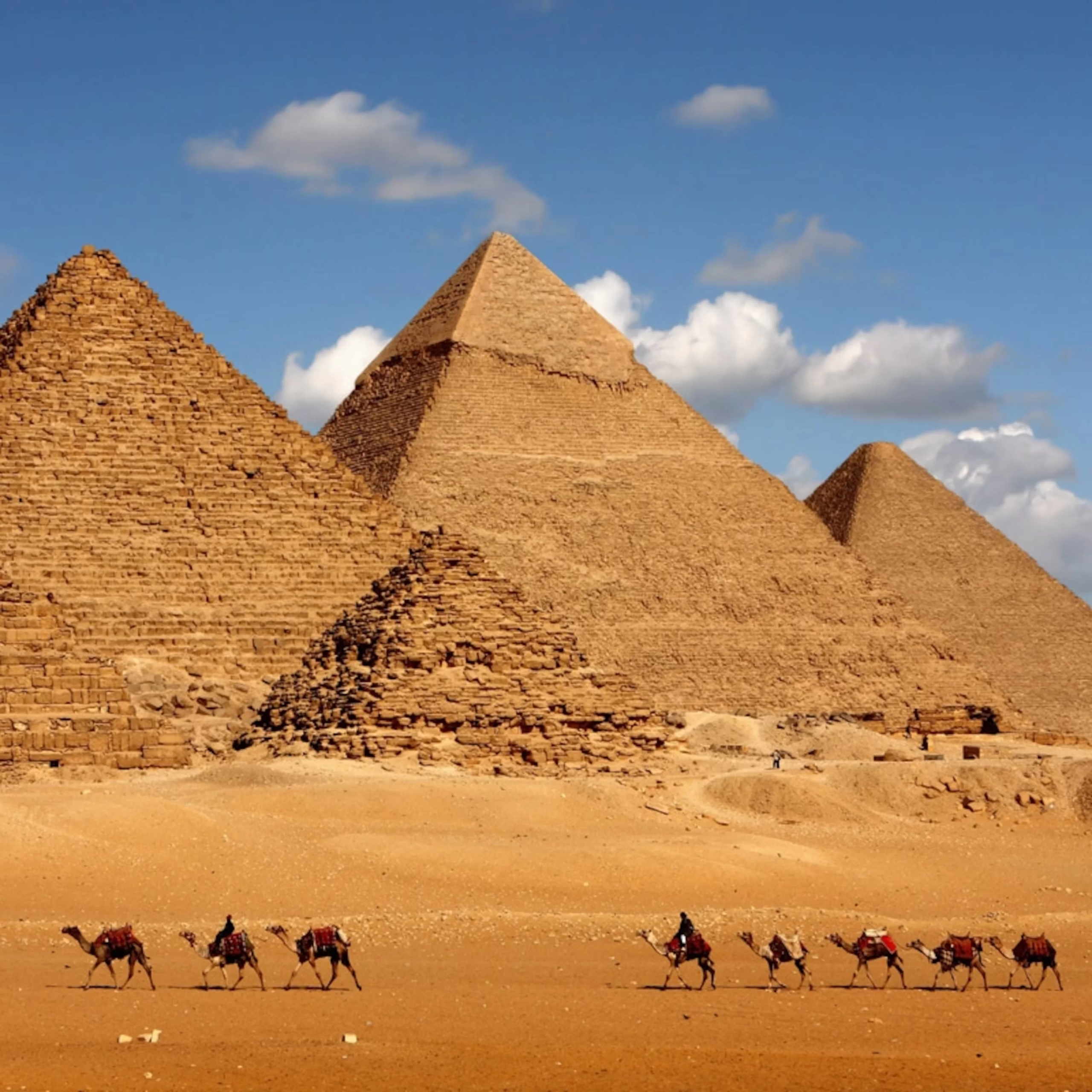
A line producer Egypt team holds the budget, schedule, contracts and reporting for an international shoot in Cairo and Giza, Luxor and Aswan, the Red Sea coast and Alexandria. On larger briefs, film fixers in Egypt work within that line-production structure: the fixer manages location access, filming permits, local crew and daily logistics, while the line producer keeps commercial control. An Indian, US or European unit then lands with one accountable local structure rather than a chain of separate facilitators. The service supports features, series, documentaries, commercials and branded content that need Egypt Film Commission (EFC) filing, antiquities approvals, temporary equipment admission and crew-entry requirements sequenced before travel.
Egypt sits alongside Jordan and Morocco within our Film Fixers In Middle East coverage, with line producer Jordan handling Petra and Wadi Rum briefs and the Moroccan Atlas and Sahara covered separately. This page sets out what the fixer and the line producer each handle, the four Egyptian location bands, the permit stack the EFC coordinates, crew and equipment sourcing, and the brief we need to scope a shoot.
Line Producer Egypt and Film Fixers in Egypt: What the Local Team Handles
A film fixer Egypt brief begins with location access, EFC coordination, local crew and daily logistics. That means location scouting and clearance, the EFC submission and site-custodian permits, local crew sourcing, transport, unit base, security liaison and the daily logistics that keep a unit moving between Cairo, the Nile sites and the coast. The line producer handles control: the budget, the schedule, supplier contracts, cash flow, production reporting and delivery. On a single-city commercial one person may carry both roles. On a multi-band feature or series, they may be separate roles under one production-services contract. Either way the foreign producer deals with one accountable lead in Cairo.
- EFC application, script and location filing, and liaison with the authorities that sign off inside the EFC window
- Giza, Saqqara, Luxor and Aswan antiquities permits, per-site fees and dated approvals
- Temporary equipment admission and customs clearance through Cairo and Hurghada
- Drone-permit coordination through the EFC and the relevant aviation and security authorities
- Crew entry and work-authorisation planning by nationality and role
- Local crew sourcing from the Cairo and Alexandria production circuits
- Transport, accommodation, unit base and security across every Egyptian shoot band
- EMPC incentive eligibility and documentation support where a brief qualifies, with the eligibility test confirmed first
Film Fixer Egypt: Permits, Locations and Daily Shoot Support
Prep starts with the location list and the script, because both drive the filing. The fixer flags any scene touching antiquities, military, religious or security-sensitive subjects, then files once through the EFC, which coordinates the relevant reviews. Antiquities sites come back as dated, per-site approvals, and those dates set the shooting order for Giza, Saqqara, Luxor and Aswan. While the filing runs, the equipment route is decided: ship the package in on temporary admission through a Cairo broker, or rent camera and lighting locally and fly only the specialist items. Crew entry is settled by role and nationality at the same time, and any drone work is opened as its own coordination item because it can require additional lead time.
Once approvals are back, the line producer locks travel, the unit base, transport and accommodation against the confirmed dates, and the fixer briefs the site custodians and security contacts for each location. During the shoot the local team runs the daily movement between sites, holds the permits on set, manages the escorts where a site requires one, and files a daily production report to the foreign producer. Wrap closes with re-export of the equipment against the same inventory that came in, settlement of location and escort invoices, and, where EMPC eligibility has been confirmed, the audit paperwork that the programme requires.
Who engages the team and for what
Features and series usually need the full structure: a multi-band schedule across Cairo, the Nile sites and sometimes the coast, a script that has to be flagged for review, a shipped equipment package and a mixed local and travelling crew. Documentaries turn on access, so the work is subject review, custodian permissions and a small mobile unit that can move between sites quickly. Commercials and branded content run short and tight, often a day or two at Giza or on the Red Sea, where the difference between a filming permit and a still-photography permit, and the time window a site grants, decides whether the day works.
Indian productions bring their own pattern: song and set-piece sequences at Giza or Philae, Hindi or Tamil-speaking crews travelling with the unit, and a decision on whether the camera package flies from Mumbai or rents in Cairo. In every case the foreign producer briefs one Cairo lead and the local team carries the rest.
Locations: Giza, the Nile Valley, the Red Sea and Alexandria
For production planning, Egypt can be divided into four working location bands. The Cairo-Giza band supplies the iconic establishing shots and the production base. The Luxor-Aswan band carries the temple, tomb and Nile period backdrop. The Red Sea band carries marine, underwater and luxury-travel work. Alexandria delivers Mediterranean heritage and urban architecture for productions that need a coastal-city setting without leaving Egypt. Each band brings different custodian approvals, seasonal constraints and cost lines within the wider EFC coordination route. The EFC’s public filmed-in-Egypt roster lists the recent international features and series that have worked these bands, which is useful as location reference rather than as a guarantee of access for a new brief.
Cairo and Giza Pyramids: iconic shots and the production base
Greater Cairo is a common base for international shoots and for film crews in Egypt, with crew lodging, equipment rental and any EMPC studio work routing through the city. A Cairo fixer works the permit, crew and equipment tracks in parallel from the first prep call. Giza Pyramids permits operate as a separate sub-track inside the EFC submission: the Ministry of Tourism and Antiquities keeps operational control of the plateau itself, with the EFC carrying the production-side coordination. A line producer landing a brief at Giza coordinates the Supreme Council of Antiquities approval, the per-site time window and the security protocol the plateau requires.
Luxor and Aswan: temples, tombs and the Nile period backdrop
Luxor and Aswan support period and historical work. Valley of the Kings, Karnak, Luxor Temple, Philae at Aswan, Abu Simbel and the Nile cruise stretch between the two cities each carry their own per-site permit costs under the EFC process, with approvals, fees and access windows confirmed for each proposed site. A Luxor fixer with documented experience at those sites keeps those approvals sequenced with the schedule, and an Aswan fixer runs the Philae and Abu Simbel legs and the Nile logistics for the southern block.
The length of a Luxor base depends on the number of sites and the access windows each grants, so it is planned against the actual site list rather than a standard duration. October through April is generally the more workable period; summer temperatures above 45°C compress the working day to early-morning and late-afternoon legs and stretch the schedule if the dates cannot move.

Red Sea coast: underwater, marine and luxury travel
Sharm el-Sheikh, Hurghada and the Marsa Alam coast carry underwater work, marine-vessel sequences and the luxury-travel setting that brands use for high-spend documentary and content campaigns. Underwater work has its own permit sub-track that the EFC coordinates with the Environment Ministry; the reefs are protected and a separate environmental clearance is required for any commercial underwater shoot inside a protected zone. The Red Sea band runs year-round, but October through May is often more workable for water temperature and visibility, and July and August humidity compresses the day in the same way Luxor heat does.
Alexandria: Mediterranean heritage and urban architecture
Alexandria covers the Greco-Roman remains, the heritage urban core around the corniche, the Bibliotheca Alexandrina and the early-twentieth-century European architecture of the Raml and Manshiya districts. Permits are coordinated through the EFC, with the Alexandria Governorate and any relevant heritage, venue or property custodian involved according to the location list. Fees and access conditions are confirmed location by location; city-level coordination should not be treated as blanket approval for individual buildings or managed sites.

Western and White Desert: Sahara stand-in alternatives
The Western Desert and the White Desert sit as Sahara alternatives for productions where the Moroccan Sahara that our film fixers in Morocco cover is unavailable, or where the schedule prefers an Egypt-anchored shoot. The White Desert’s chalk formations carry a distinct look that the Moroccan Sahara does not supply; productions use it for that texture rather than as a like-for-like substitute. Permits route through the EFC plus the Environment Ministry where the White Desert falls inside a protected zone.
Permits, Crew Entry and Equipment: The EFC Filing Window
For filming permits in Egypt, the EFC currently receives foreign-production requests and coordinates the relevant approval routes. In November 2025, Egypt’s Cabinet approved draft regulations for a Single Digital Window intended to formalise that central route. The relevant ministries, security bodies and site custodians still determine their respective approvals. The EFC publishes a 10-to-30-day permit target; that is the commission’s processing aim, not a guaranteed production lead time. Sensitive content, antiquities sites, drones and protected zones carry their own review, and travel and principal photography should not be locked until those clearances are back.
What every Egypt production clears first
Most foreign productions begin with a common set of filing, crew-entry, equipment and insurance requirements, which then varies by format, nationality and location. This is the checklist a film fixer in Egypt walks a client through first.
- EFC application: the foreign production company submits directly to the EFC with a synopsis or treatment, shot list, location list, schedule outline, crew manifest, equipment inventory and local production-services company details where used. Content touching Egyptian military, intelligence, presidential or religious-institution subjects is flagged at first submission so the additional security review runs alongside the standard flow.
- Local production partner: useful for permits, customs and on-the-ground crew, and required where project guidance specifies one; our Cairo team acts in this role when needed.
- Crew entry and work authorisation: confirmed by nationality, role, duration and production structure. Egypt’s official eVisa guidance covers entry eligibility and requires passports to remain valid for at least six months from arrival; any work authorisation required for the crew’s activities is confirmed separately before travel.
- Temporary equipment admission: camera, lighting and grip packages clear on broker-confirmed temporary admission against a detailed inventory, with a customs security based on duty and tax exposure and refunded on re-export.
- Production insurance: requirements are confirmed per project and may include equipment, crew and third-party liability cover for particular authorities, locations or suppliers. Carrier acceptance and any notarisation are checked before filing.

Antiquities sites and custodian approvals
Giza and the temple sites each carry their own permit tier, and the fee varies by site, production type, access window and the current Ministry schedule, so the line is quoted per project rather than from a fixed table. Documentary, commercial and long-form productions sit in different tiers, with the published Ministry of Tourism and Antiquities pricing as the reference point. The filming permit and the still-photography permit are separate workflows with separate fees per site. Some sites require a security escort, invoiced as a separate daily line and confirmed at quotation, and filming outside standard hours carries a supplement. Antiquities fees are budgeted as their own ledger line, apart from the production day rate. Do not assume these direct authority fees qualify for the EMPC incentive; their treatment must be tested against the current programme terms.

Temporary equipment admission
Egypt does not currently appear on the official ATA Carnet country list, so camera, lighting, grip and accessory packages enter on broker-confirmed temporary admission rather than a Carnet. An Egyptian customs broker arranges the entry, meets the shipment at the Cairo International cargo terminal and confirms the current process brief by brief. The inventory must match the shipment at serial-number level for high-value items or customs will hold it pending resolution, and clean re-export documentation is held for departure. Drones, satellite phones and certain radio or encrypted transmission equipment are not cleared under standard temporary admission and need separate pre-approval before they ship; the broker confirms the category and the lead time before the equipment leaves the origin country.
Drones and security-sensitive content
Drone work requires separate advance coordination. The EFC states that it handles drone permit applications for foreign productions, while the applicable Defence, Civil Aviation and location restrictions are confirmed against the proposed aircraft, operator, coordinates and shot list. A production should not ship or fly a drone until the authorities have confirmed the applicant, documents, insurance, permitted airspace and lead time. Aerial work therefore remains a separate critical-path item in prep.
Film Crew Egypt: Cairo Studios and Local Sourcing
Egypt’s studio inventory is anchored by Studio Misr, in operation since 1935. Misr International Films, the Youssef Chahine company founded in 1972, is among the established production houses in Egypt and carries co-production and production-services capacity for international features. EMPC is the incentive-linked studio campus on the western edge of Cairo. For line production in Egypt, foreign shoots may use a registered local production company for the contracting and compliance layer, with line producers in Egypt running budget and schedule.
Cairo has working camera, lighting, grip and AD departments, with credits, experience and availability checked against the brief before appointments are confirmed. Specialist positions, high-end colour and aerial or underwater units are sourced regionally when a brief calls for them, coordinated from the Cairo production base, with casting and local hires briefed by language, community and role rather than a fixed look.
Languages, rates and travelling heads of department
English-language capability is confirmed by department and role, with interpreters or additional language support arranged where needed. Day rates are quoted per brief by department and by city, because a Luxor or Red Sea leg carries travel and per-diem lines that a Cairo studio day does not, and the decision on which heads of department travel with the unit and which are hired locally is made against the creative brief and the confirmed local crew list rather than as a default.

EMPC Incentive: What Qualifies and Where It Is Covered
Egypt’s cash incentive is administered by the Egyptian Media Production City (EMPC). The EFC’s published programme material associates the 30% figure with productions shooting within EMPC premises and using its facilities, so it should not be modelled as an automatic rebate against all Egyptian location spend. Eligibility, the treatment of location days, audit documents and payment timing are confirmed against the live programme terms at briefing stage. Eligibility should be tested before the schedule and financing assumptions are locked, rather than treating the headline percentage as an automatic post-shoot claim. The full eligibility test, qualifying-spend treatment and application sequence sit on our Egypt film incentives and rebates page.
Whether the brief needs a fixer for a single day at Giza or a line producer in Egypt for a multi-week schedule across all four bands, the scoping request is the same. Send the proposed dates, the locations or bands you have in mind, the format (feature, series, documentary, commercial or branded content), local and travelling crew requirements, the equipment list and whether it ships in or rents locally, any scenes touching antiquities, military, religious or security-sensitive subjects, and a preliminary budget range. From that we return a feasibility read covering the EFC route and its authorities, site approvals and fees, crew and equipment, drone and security review where relevant, and where the EMPC incentive does or does not apply. For how Egypt compares with other African bases on permits, crew and cost, see our filming in Africa guide.
