

A line producer Saudi Arabia team holds the budget, schedule and contracts for an international shoot in the kingdom, while film fixers in Saudi Arabia coordinate permits, locations, local crew, equipment and daily logistics across Riyadh, AlUla, Jeddah, NEOM and the Red Sea coast. The applicable Saudi applicant, production partner and permit holder are confirmed for each filing, and the current rebate framework is assessed separately on the Saudi incentive guide linked below.
Saudi Arabia has become a significant international production destination over the last few years. The Film Saudi rebate now offers up to 60% of eligible expenditure under the current Saudi government announcement, Film AlUla offers additional support that is conditional and assessed in advance, and studio infrastructure is being developed at NEOM, Qiddiya and Riyadh’s JAX District alongside the existing location base. Kandahar’s AlUla shoot showed the location quality at feature scale, and Film AlUla’s continuing slate of international features shows the incentive converting into production traffic.
Productions mapping the Gulf treat the Emirates and the kingdom as the peninsula’s two production pillars: our film fixers in Dubai handle the UAE leg while the Saudi team runs everything inside the kingdom. Where permit timing, content requirements or a tight schedule rule Saudi out for a given brief, Egypt, Jordan, Tunisia and parts of Morocco can stand in for specific Saudi visual registers within their own permit frameworks. NEOM is a production location and facilities partner operating within the Saudi regulatory framework, so the Saudi-direct-versus-substitution call is modelled from the brief stage against Film Saudi eligibility, the GAMR licence and permit stack, the customs route and the stand-in pattern.
Why Saudi Arabia now: the Film Saudi rebate, GAMR licensing and the production surge
Three structural moves shape planning for any line producer in Saudi Arabia. The Film Saudi rebate was raised under the current programme, subject to its eligibility rules. The General Authority of Media Regulation (GAMR) is the licensing and permitting authority for audiovisual production, operating alongside the Saudi Film Commission, which gives foreign productions a defined route into the kingdom. And the location and studio base, from AlUla and Riyadh to NEOM and Jeddah, now supports full schedules. Minimum spend, caps and eligible categories change with each programme update and are kept on the incentive guide rather than restated here.

The Film Saudi rebate and Film AlUla’s conditional support
Film Saudi, administered by the Saudi Film Commission, offers up to 60% of eligible Saudi-incurred expenditure, structured as a cashback against audited spend rather than as a tax credit, which reduces production cost at the project level for the Indian production company, US studio or line producer Saudi Arabia routing the claim against actual outlay. The eligible categories, thresholds, caps, application timing and the national, NEOM and AlUla layers are set out in full on Saudi Arabia film incentives and rebates, which is the owner for current terms.
Film AlUla describes its additional support as conditional: it is assessed in advance and tied to agreed contributions or deliverables, such as training or local engagement, on the terms published on the Film AlUla incentives page. It is not a universal supplement and is not added to the national rate as a fixed percentage, so any AlUla support is modelled per project once Film AlUla has confirmed what applies. Film fixers in Saudi Arabia experienced with the Film Saudi format prepare the qualifying submission with the Saudi applicant, with the required supporting records for review.
Saudi Film Commission and GAMR as the two authorities
The Saudi Film Commission administers Film Saudi and is the production-side coordination point with the Ministry of Culture. The General Authority of Media Regulation (GAMR) licenses audiovisual production and issues filming permits and no-objection certificates; commercial filming requires the applicable GAMR licence or permit ahead of the shoot, attached to the production, its location list and its crew. Published service periods differ by service: the GAMR audiovisual-production licence lists 30 working days, while a filming NOC lists one working day on the Saudi government services portal. Heritage, municipal and development-authority approvals for specific locations run separately, and NEOM locations are permitted within the same framework with NEOM as the site partner.

Recent international productions through the Film Saudi pathway
The recent roster carries the structural story. Gerard Butler’s Kandahar shot AlUla as a doubling location for Afghanistan and showed that the Hegra-Hisma sandstone landscape reads at international-feature scale. Film AlUla’s continuing slate of international scripted features is the demand-side signal that the incentive is drawing features rather than only commercials and documentaries.
Saudi feature Norah showed that the local production-services bench can carry feature-scale work independently of imported above-the-line teams. Film AlUla and the Saudi Film Commission publish their own production and company figures, which change from year to year and are not restated here. Our own production-services work covers Riyadh studio days, AlUla heritage locations and the Red Sea coastal register; our most recent Saudi line-production engagement, for Falcon Pictures, routed across Riyadh and the western Saudi sites.
Locations: AlUla, NEOM, Riyadh, Jeddah and the Empty Quarter
For production planning, Saudi Arabia’s locations can be grouped into five working bands. The AlUla-Hegra band carries the sandstone heritage terrain that international productions arrive for. The NEOM-Red Sea band is the modern-Saudi futuristic frame and a developing production-facilities base. The Riyadh-Diriyah band carries the contemporary metropolitan and modern-heritage frame. The Jeddah-Al-Balad band delivers Red Sea entry and the UNESCO old-town frame. The Empty Quarter and Asir highlands carry the alternative-desert and high-altitude bands that productions occasionally need but rarely build full schedules around.
AlUla and Hegra, UNESCO sandstone heritage
AlUla holds Saudi Arabia’s most internationally recognised heritage backdrop. Hegra (Madain Saleh) is the country’s first UNESCO World Heritage Site, with sandstone tomb facades carved in the same Nabataean tradition that produced Petra in Jordan; access conditions for the tomb clusters are set by the Royal Commission for AlUla for each production. The Hisma desert north and east of the AlUla settlement carries the dune-sandstone landscape that doubled for Afghanistan in Kandahar.
Permits route through Film AlUla as the production-side lead, with the Royal Commission for AlUla holding the heritage-site clearance and GAMR licensing applying nationally. Schedule windows favour October through March; summer temperatures regularly exceed 45°C and compress the working day to early-morning and late-afternoon windows. A film fixer Saudi Arabia team working AlUla coordinates with Film AlUla’s production team, and the Nabataean heritage zone, the Maraya venue and ranger-coordinated access each carry their own lead time.
NEOM and the Red Sea coast, production location and facilities partner
NEOM is a development in the Tabuk region whose NEOM media sector team positions it as a production location and facilities partner: the Hisma desert canyons, the Red Sea coast and marine zones, and planned studio infrastructure. Filming at NEOM operates within the applicable Saudi regulatory framework: GAMR licensing, ZATCA customs, content requirements and work authorisation apply as they do elsewhere in the kingdom, with NEOM coordinating site access, facilities and location support.
Productions anchoring part of a schedule at NEOM can seek Film Saudi eligibility on the same terms as other Saudi locations, with NEOM’s own facilities and access arrangements confirmed for the project. Film fixers in Saudi Arabia routing NEOM briefs coordinate the NEOM site team alongside the national permit track rather than treating NEOM as a separate regime.

Riyadh and Diriyah, modern metropolitan and UNESCO heritage
Riyadh carries the contemporary-Saudi look that NEOM and AlUla do not supply: Kingdom Centre, the King Abdullah Financial District and the cultural developments around Diriyah Gate are the working modern-Saudi frames for productions that need the urban-Gulf range. Diriyah, twenty minutes outside the Riyadh centre, holds Saudi Arabia’s second UNESCO World Heritage Site, the At-Turaif quarter, the original mud-brick capital of the first Saudi state. Permits route through GAMR, with the Royal Commission for Riyadh City and the Diriyah Gate Development Authority as the location authorities for heritage and development sites. Riyadh also functions as the production base for crew rotation between AlUla, the Empty Quarter and Jeddah, with hotel inventory and the airline schedule out of King Khalid International supporting multi-leg schedules.
Jeddah and Al-Balad, UNESCO old town and Red Sea entry
Jeddah serves as Saudi Arabia’s western entry hub and as the home of the Red Sea International Film Festival, the country’s flagship film-industry event. Al-Balad, Jeddah’s UNESCO World Heritage old-town quarter, supplies a heritage-Hijaz environment distinct from AlUla’s desert sandstone and Riyadh’s modern metropolitan frame. The coral-stone architecture of Al-Balad, the Red Sea corniche south of the historic core, and access to the Red Sea for underwater or coastal-marine work all sit inside the Jeddah catchment. Location permissions run through the Jeddah municipality and the relevant site authorities alongside the GAMR licence.
Empty Quarter and Asir highlands, alternative desert and altitude
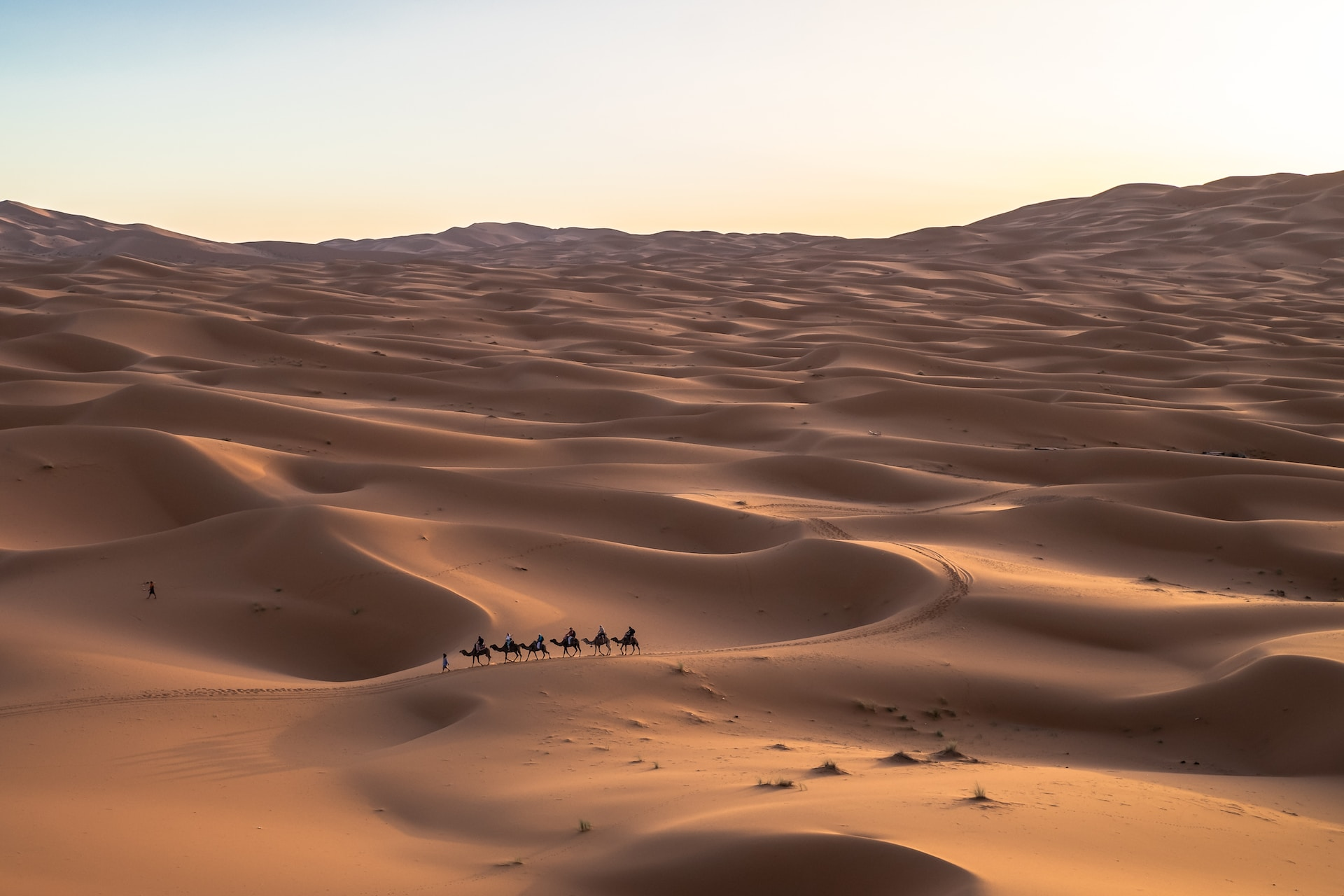
The Empty Quarter (Rub’ al Khali) is the world’s largest contiguous sand desert and carries a dune-scale register that AlUla’s sandstone setting does not supply. Productions arriving for the absolute-desert frame route into the Empty Quarter through Sharurah on the southern entry and operate with extended logistics chains. The Asir highlands in the southwest carry juniper-forested mountain registers that contradict the desert-Saudi expectation, useful for scripts that cross temperate-altitude geography. Both bands are extension legs rather than primary shoot bases and are scheduled as supplementary days against an AlUla or Riyadh anchor.

Permits, customs, visas and regulations: the operational stack
Saudi Arabia’s permitting and customs stack has changed in the last two years. Saudi customs began accepting ATA Carnets on 1 June 2024, including for professional equipment, with pre-approval through ZATCA required before arrival, per the ZATCA announcement; Saudi Arabia is listed in the ICC ATA Carnet directory. Productions arriving from Egypt, Morocco, Jordan or Tunisia therefore plan the customs route per shipment with the clearance agent rather than assuming one regional pattern.
Film Saudi and GAMR application flow
The filings run on distinct routes. The GAMR licence or permit application is lodged through the Saudi applicant confirmed for the project, with a working-script summary, the location list, the equipment manifest and the applicant’s documentation. Film Saudi eligibility is a separate submission to the Saudi Film Commission through the eligible applicant. Customs runs as its own track with ZATCA, where a foreign importer or its representative may seek ATA Carnet pre-approval and a local clearance agent handles arrival. Timing is service- and location-specific: GAMR publishes its own period per service, heritage, municipal and development-authority approvals run on their own timetables, and NEOM site access is confirmed with NEOM. The application is started as early as the location list allows, and no blanket lead time is assumed.
Saudi applicant, production partner and permit holder
Filming licences and permits, any Film Saudi application and customs clearance each have their own applicant rules. The applicable Saudi applicant, production partner and permit holder must be confirmed for each filing: the named permit holder, the rebate claimant and the customs principal may be one entity or several, depending on the project structure, the licences each holds and what ZATCA permits for the equipment route. Productions without a confirmed partner build that setup into prep before the schedule is committed.
A film fixer in Saudi Arabia, also called a production fixer in Saudi Arabia, coordinates locations, crew, equipment and daily logistics; whether the fixer’s company also holds the licences to act as applicant is confirmed per project rather than assumed. Established production houses in Saudi Arabia commonly file as the accredited production company in Saudi Arabia, with production services in Saudi Arabia (crewing, equipment and location logistics) routed through the same licensed entity. Partners are vetted against prior delivery rather than marketing claims.

ATA Carnet and customs clearance
Saudi customs accepts ATA Carnets for professional equipment, subject to ZATCA pre-approval before arrival through the ZATCA ATA Carnet service. Equipment that does not travel on a carnet clears through standard temporary-import procedures with the applicable guarantee and re-export schedule, handled by a licensed local clearance agent. The manifest, the carnet or temporary-import filing and any pre-approval are prepared before shipping, and the lead time depends on the route, the agent and the equipment list.
The clearance agent is typically engaged through the Saudi production partner. Drones and any equipment carrying export-control documentation from the origin country need separate Saudi approvals under the production permit, with their own lead times confirmed for the project.
Crew entry and work authorisation
Crew entry depends on nationality, role and duration. Saudi Arabia’s tourist eVisa is expressly not a work visa under the official Saudi eVisa terms, so it cannot be relied on for crew undertaking paid production work. The applicable entry route and any work authorisation for each passport are confirmed for the project with the Saudi production partner before flights are booked, and Film AlUla can support visa processes for productions filming in AlUla.
Validity windows must align with the schedule, including pre-production legs, and passports need the validity Saudi entry requires beyond the planned exit. The film crews in Saudi Arabia assembled for a shoot combine international heads with Saudi-resident technicians, and the line producers in Saudi Arabia running the schedule build the entry timeline into prep so no film crew in Saudi Arabia arrives before its clearance is confirmed.
Filming at NEOM within the national framework

NEOM’s media sector team coordinates site access, facilities and location support inside the development. Licensing, customs, content requirements and work authorisation for a NEOM shoot follow the applicable Saudi framework; NEOM does not replace GAMR licensing or ZATCA customs. What NEOM offers is the location set, the Hisma desert canyons and the Red Sea coast, planned studio infrastructure and a single site counterpart. For productions weighing Saudi-direct against the substitution pathway below, NEOM is one location option inside the Saudi framework rather than a separate regime.
Content review and cultural considerations
GAMR reviews the production as part of licensing. Narrative productions submit a script synopsis with the application, and content in sensitive categories may be subject to additional review, so productions flag such content at first submission. Scheduling around prayer times, working conditions at religious and heritage locations and any crew-composition requirements are confirmed with the Saudi production partner and the location authority and built into the schedule.
Egypt, Jordan, Tunisia and parts of Morocco, when other corridor territories carry Saudi briefs

Saudi Arabia is a serious production destination on its own merits: the rebate, the location quality and the developing studio base all support direct shoots. The substitution pattern is therefore a brief-by-brief call that productions sometimes find more economical or schedule-friendly, not a defensive move. The map below covers the four MENA territories that carry specific Saudi visual registers when the brief, the budget or the schedule favours an alternate route, for the entire shoot or for specific bands of a multi-territory production.
Jordan’s Petra and Wadi Rum for the AlUla-Hejaz terrain
Jordan’s Petra and Wadi Rum offer the closest direct match to AlUla-Hejaz. The Nabataean sandstone tradition that produced Madain Saleh also produced Petra, and the Wadi Rum formations carry a desert-monument register close to the Hisma desert. Our Film Fixers in Jordan route works through the Royal Film Commission, which publishes periods for its facilitation categories, with Petra, Wadi Rum and other site approvals running separately. Jordan is not listed in the current ICC ATA Carnet directory, so equipment enters Jordan as a temporary admission under Jordan Customs through a local clearance company. Jordan does not run a rebate comparable to Film Saudi, so productions model the rebate value against the Saudi prep timeline when making the call.
Egypt’s Western Desert and Sinai for the dune-and-mountain backdrop
Egypt offers dune and mountain terrain that productions occasionally substitute for Saudi Arabia’s desert and altitude bands. The Western Desert and the Sinai mountain frames around Mount Sinai supply the mountain-desert imagery that the Empty Quarter and the Asir highlands cover in Saudi terms. The Egypt Film Commission coordinates approvals for foreign filming, Egypt is not listed in the current ICC ATA Carnet directory so equipment enters under Egypt’s own temporary-import route, and the current Egyptian incentive terms sit on the Egypt incentive guide. Egypt covers the cross-territory call for productions whose creative brief allows the substitution.

Tunisia for the southern desert and Berber-architectural register
Tunisia is an option productions sometimes select for brief-specific Saudi visual registers. The southern Sahara around Tozeur and Matmata carries dune and rock-formation registers that read close to the Hisma and Hejaz desert frames, and the Star Wars heritage of the territory means production-side experience at international scale is documented. Productions whose brief permits the substitution, or whose project does not fit the Film Saudi eligibility rules, sometimes find Tunisia the operational answer, with the current quote deciding it.
Parts of Morocco for the kasbah-and-southern-oasis look
Morocco’s kasbah belt around Ouarzazate and the southern-oasis corridor through Erg Chebbi carry a desert-and-architectural register that occasionally substitutes for specific Saudi briefs, particularly where the shot list emphasises mud-brick frames over the sandstone-monument environment that AlUla and Petra share. Morocco’s established production-services bench, Atlas Studios, CCM authorisation framework and 30% cash rebate, worked through our local film fixers in Morocco, make it the substitution route for combined heritage-and-studio briefs that do not require the AlUla-specific Nabataean register.
When Saudi-direct is the right call: rebate, NEOM and Hegra
The substitution map runs in both directions. Productions whose budget benefits from the Film Saudi rebate and any confirmed Film AlUla support, whose schedule fits the Saudi prep window, or whose shot list requires the Hegra Nabataean register or the NEOM coastal frame will route Saudi-direct. Productions whose schedule cannot absorb the Saudi partner and licensing setup, or whose project does not meet the Film Saudi eligibility rules, typically run a substitution call through the Egypt-Jordan-Tunisia-Morocco map. The framework is to weigh the confirmed rebate value against the prep timeline, the shoot-window flexibility and the equipment-routing plan for the specific brief.

Every Saudi brief sits within our Line Producer Middle East network. To engage our film fixer Saudi Arabia and line producer Saudi Arabia team for a specific shoot, whether direct-Saudi, NEOM-based or part of an Egypt-Jordan-Tunisia-Morocco substitution schedule, reach out with shoot dates, location bands, expected crew size and the brief register. We respond within the timetable agreed at engagement with a feasibility note covering Film Saudi eligibility, the NEOM-versus-mainland call, the customs route and the rebate model against the shoot window.
