

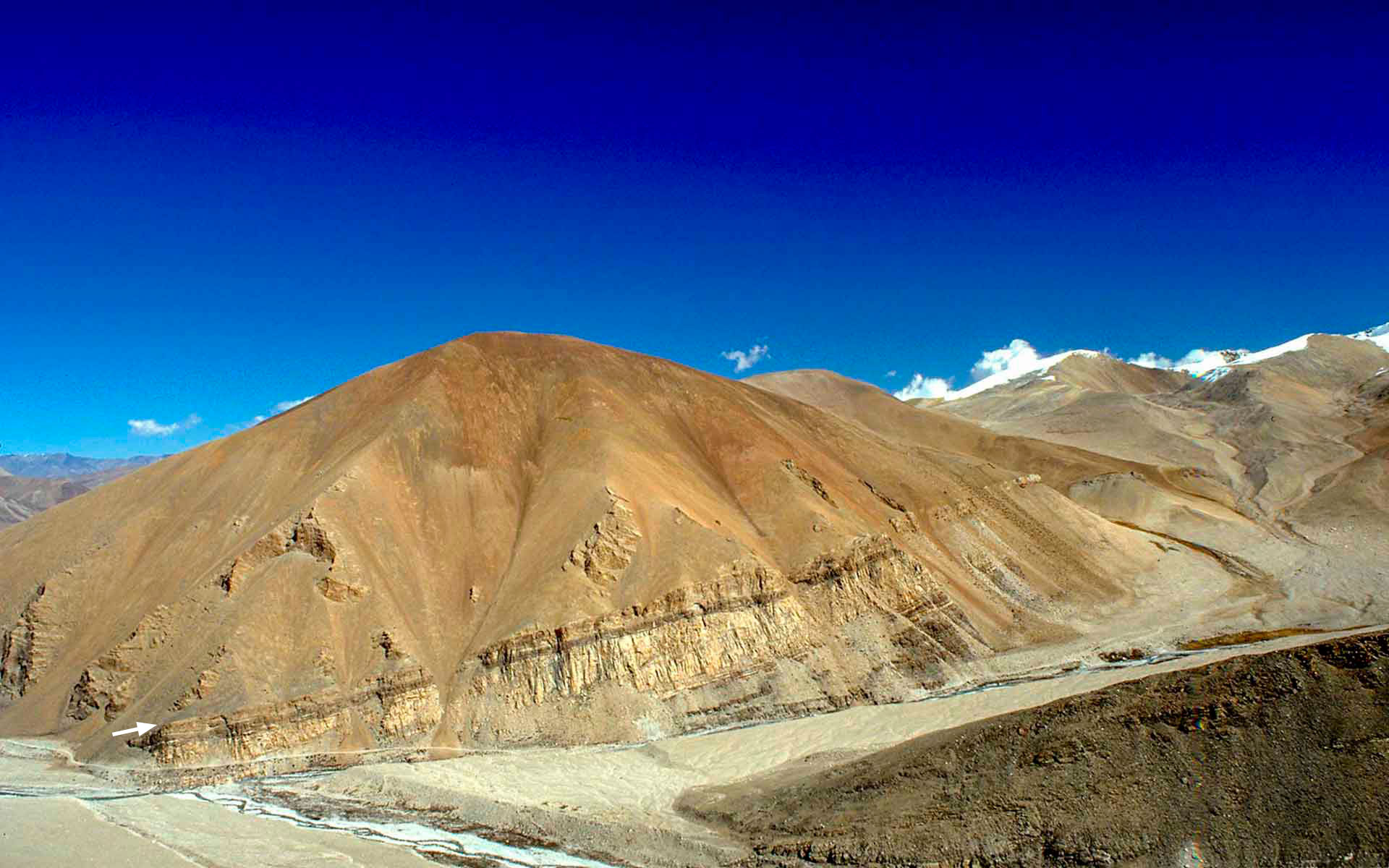
Productions briefed on Tibet or Myanmar locations land at the same wall: both jurisdictions sit so far inside the restricted-territory band that direct filming is structurally rare. Tibet (the Tibet Autonomous Region of China) runs a permit stack that routes every foreign crew through licensed escorts, prohibits independent movement, and bans foreign-brought drones outright. Myanmar has operated under US, UK and EU sanctions since the February 2021 military takeover, with no centralised film-permit authority and an active OFAC compliance layer that almost every internationally-financed production has to clear before any equipment moves. The practical reality is that most productions targeting a Tibetan-Buddhist or Burmese visual flavour route through stand-in locations instead.
This page maps the operational reality across Tibet and Myanmar, then walks through the four stand-in tracks productions actually use, Nepal, Ladakh, Kashmir Valley, and the Arunachal–Nagaland Northeast Indian frontier. The first call we make on every Tibet/Myanmar brief is into our film fixers in Nepal network, Nepal carries the closest direct Tibetan-Buddhist match, the friendliest permit framework, and the production-reference depth (Doctor Strange, Caravan, multiple BBC documentary series) that justifies routing most Tibet-look briefs through Kathmandu — our line producer Nepal team handles that workflow end-to-end. For Nepal-specific rate benchmarks — permit lead-times, crew day rates, equipment hire — the Nepal film production rates satellite carries a line-by-line worked example. Where the brief routes through Indian-side stand-ins instead, Ladakh, Tawang, Kashmir, our line producer India network handles the FFO MIB application layer alongside the state-level ILP/RAP coordination, with film fixers in Delhi running the FFO and Arunachal/Nagaland state-level paperwork from the Delhi base where the central film-application infrastructure sits.
The central thesis: Looking at the production record over the last decade, the pattern is consistent: feature films pursuing Tibetan or Himalayan-Buddhist visual settings have historically routed through Argentina (Seven Years in Tibet), Morocco (Kundun), Nepal (Doctor Strange), and other stand-in territories. Burmese-setting features have routed through Malaysia, Thailand, or India’s northeast. The stand-in route preserves the visual register, avoids the permit and sanctions stack, and brings the production inside an insurable jurisdiction. Film fixer Tibet Myanmar briefs almost always land in one of the four stand-in tracks covered below.

Tibet vs Nepal vs Ladakh vs Tawang at a glance
The four territories most commonly considered for Tibet and Tibetan-Buddhist briefs sit at very different operational positions. The table below summarises the four-way decision for foreign productions weighing direct Tibet access against the established stand-in alternatives.
| Requirement | Tibet (TAR) | Nepal | Ladakh | Tawang |
|---|---|---|---|---|
| Foreign filming access | Difficult | Easy | Moderate | Moderate |
| Drone clearance | Very restricted | Possible (CAAN) | Possible (with DGCA + MoD) | Possible (with ILP + MoD) |
| Tibetan-Buddhist monastery register | Authentic | Authentic (Mustang, Boudhanath) | Authentic (Hemis, Thiksey) | Authentic (Tawang Monastery) |
| Insurance and completion bonds | Difficult | Straightforward | Straightforward | Straightforward |
| Production infrastructure | Limited (state-led) | Good (Kathmandu base) | Moderate (Leh + Delhi support) | Moderate (remote, Delhi-anchored) |
The decision-tree the table reveals is structural: Nepal anchors the lowest-friction Tibetan-Buddhist register access; Ladakh and Tawang carry the Indian-side authentic registers under the standard Indian permit framework; direct Tibet access remains operationally difficult under almost every production category. The detailed permit, stand-in and routing analysis below builds on this overview.
Tibet and Myanmar, why direct filming is structurally rare
The two territories run different blocking architectures but produce the same operational outcome, feature, OTT and brand productions almost always route around them rather than through them. Understanding the specific permit and sanctions reality matters because the stand-in decision flows from those constraints.
Tibet (TAR) permit reality, TTB, escort requirement, drone ban
Filming inside the Tibet Autonomous Region requires a Tibet Travel Permit (TTP) issued by the Tibet Tourism Bureau, secured through an authorised local travel agency. The TTP is the entry layer. Filming permission is a separate accreditation stack, every international crew lodges with the TTB plus the relevant prefectural authority, and the permit is tied to a defined shot list, location list, and licensed escort.
Independent movement is not permitted. Crew cannot freely scout, change locations mid-day, or schedule against weather without re-routing through the escort and the prefectural desk. Drones brought from outside China are banned, aerial filming must use locally sourced, locally registered drones operated under additional aerial-clearance permits. A film fixer Tibet brief that needs Lhasa, Shigatse, Everest North Face base or the Yarlung Tsangpo valley runs against this stack at every location decision.
The escort and licensed-guide structure is not negotiable. Foreign productions cannot file independent TTB applications, cannot self-schedule location moves, and cannot bring crew over from China-mainland routes without re-clearing the permit at the prefectural level. Tibet-side production-services agencies hold the licensed-fixer status; foreign producers can only operate under that infrastructure. Most TTB-licensed agencies will lodge applications for documentary projects with significant lead times; commercial and feature applications face significantly higher approval barriers and are uncommon in practice.
Myanmar post-2021, sanctions, permit-authority vacuum, OFAC compliance
Myanmar has operated under active sanctions regimes from the United States (OFAC Burma Sanctions Regulations, 31 CFR Part 525), the European Union (Council Regulation 401/2013, renewed annually), and the United Kingdom since the February 2021 military takeover. The sanctions are sectoral and targeted, they restrict transactions with specified Myanmar-military-linked entities and individuals, and US productions in particular face direct OFAC compliance obligations on any service-provider, hotel, equipment-rental, or fixer payment that may touch the sanctioned list.
Filming permits themselves sit inside a vacuum. There is no clearly designated international-production permit authority on the Myanmar side, the Ministry of Information has historically handled foreign filming applications, but post-2021 the process is unstandardised, lead times are unpredictable, and most western insurance carriers will not underwrite productions inside the territory. Documentary productions and Burmese-diaspora projects continue, with significant local-fixer reliance, but commercial features and brand productions face effectively prohibitive operational constraints under current conditions.
Nepal, the primary Tibetan-Buddhist and Himalayan stand-in
Nepal carries the closest direct match for Tibetan-Buddhist visual range, the most permissive permit framework in the corridor, and the deepest production-reference track. The Nepal Film Development Board operates a centralised filming-application desk, and the Mustang region of Nepal, the so-called “Last Forbidden Kingdom”, sits inside the same Tibetan-cultural geography that productions are actually chasing.

Upper Mustang, the Tibetan-Buddhist register on the Nepal side
Upper Mustang, the autonomous Tibetan-cultural region of Nepal that borders Tibet directly, carries the most accurate Tibetan-Buddhist visual fingerprint accessible to international productions. Lo Manthang’s walled capital, the cave monasteries of Chhoser, the high desert terrain at 3,800m altitude, and the Tibetan-Buddhist gompas and chortens read on screen as authentically Tibet because culturally and geographically they are part of the same Tibetan plateau. The film Caravan (1999), shot in Mustang, earned an Academy Award nomination on the strength of this visual match.
Mustang requires a Restricted Area Permit beyond standard Nepal entry, US$500 for the first ten days plus US$50 per additional day, sponsored through a Nepalese trekking agency. The permit framework adds lead time but the process is predictable and the area is accessible. Production logistics route through Pokhara and Jomsom airstrips.
The cultural authenticity of Upper Mustang is significant. The Loba people of Mustang carry direct Tibetan-cultural lineage, the spoken language is a Tibetan dialect, the religious practice is Sakya and Nyingma Tibetan Buddhism, and the architectural vocabulary, flat-roofed mud-brick houses, prayer-flag stupas, monastery murals, reads as Tibet because it culturally is Tibet, separated only by the political border. For productions where authenticity is part of the brief rather than just visual approximation, Upper Mustang is the highest-fidelity stand-in available.
Kathmandu Valley, Boudhanath, Patan, the Doctor Strange route
The Kathmandu Valley delivers concentrated Tibetan-Buddhist heritage inside one production base. Boudhanath stupa, one of the largest Tibetan-Buddhist stupas in the world, anchors the visual stack. Swayambhunath (the Monkey Temple) adds a second hilltop chorten frame. Patan in Lalitpur, used as Marvel’s Kamar-Taj in Doctor Strange (2016), delivers a heritage-courtyard frame that reads as ancient sanctuary in any Asian-mystical brief.
Production access within the Kathmandu Valley is significantly faster than Tibet-side permits. The local film fixer Nepal team coordinates with the Department of Archaeology for heritage-site filming, with the Pashupati Area Development Trust for religious-site frames, and with local police for traffic-management at the Boudhanath circumambulation route.

Himalayan terrain, Everest base, Annapurna, Langtang
Where the brief calls for high-altitude Himalayan landscape rather than Tibetan-Buddhist heritage specifically, the Nepalese Himalayan ranges deliver the same altitude register that productions associate with Tibet. Everest Base Camp (Nepal side), the Annapurna circuit, and the Langtang Valley all sit at 4,000m-plus and read as the same Tibetan-plateau-edge terrain. Productions chasing the “rooftop of the world” visual without TTB constraint route here.
Altitude logistics need a film fixer Nepal team with high-altitude experience, porter coordination, weather-window scheduling, acclimatisation days, and oxygen-supply protocol all sit inside the production day-1 cost line. For productions filming the Bhutanese side of the Himalayan corridor rather than the Tibet stand-in or the Nepal-side high-altitude register, our Film Fixers In Bhutan team handles the Druk Yul Royal Government Department of Culture approval chain and the Paro Airport single-entry constraint.
Nepal Film Development Board, the permit framework
The Nepal Film Development Board (film.gov.np) operates the centralised filming-application desk for international productions. Standard application lead times run two to four weeks, with restricted-area extensions (Mustang, Manaslu Conservation Area, Lower Dolpo) requiring additional fee bands and trekking-agency sponsorship. Drones require Civil Aviation Authority of Nepal clearance, generally six-week lead time.

Indian stand-ins, Ladakh, Kashmir, Tawang, Nagaland
India delivers a parallel stand-in track with two distinct registers, high-altitude Tibetan-Buddhist monasteries (Ladakh, Tawang) and northeast Himalayan terrain (Arunachal Pradesh, Nagaland). Both add the FFO MIB film-application layer plus state-level entry permits, and both run at a cost premium relative to Nepal. They become the correct routing when the brief specifies Indian production base, when Nepal-side permits cannot be cleared inside the schedule, or when the visual brief is specifically Arunachal–Tawang Tibetan culture rather than the Mustang variant.
Ladakh, Hemis, Thiksey, Stakna and the high-altitude desert
Ladakh, now the Union Territory of Ladakh since 2019, sits on the same trans-Himalayan plateau geographically continuous with western Tibet. Hemis, Thiksey, Stakna and Phyang monasteries deliver authentic Tibetan-Buddhist heritage register at 3,500m altitude. The Nubra and Zanskar valleys carry the high-altitude desert frame that doubles for the Tibetan plateau. The Indian Army’s presence across most of the Ladakh corridor adds a permit layer but provides production-security infrastructure unavailable on the Nepal side.
Foreign nationals require a Protected Area Permit beyond Leh; Indian nationals’ Inner Line Permit requirement was abolished in 2021 but specific sub-areas (Pangong Tso shore zones, Tso Moriri) still require area permits issued by the Deputy Commissioner Leh. Film application routes through the FFO at MIB plus the Ladakh Autonomous Hill Development Council, Leh.

Kashmir Valley, Srinagar, Dal Lake, alpine and lake backdrop
Kashmir Valley delivers an alternative alpine, lake and Mughal-heritage backdrop, Srinagar’s Dal Lake, the Mughal Gardens, and Sonamarg/Pahalgam/Gulmarg have anchored Bollywood high-altitude shoots for sixty years. It is not the primary Tibetan-Buddhist match, productions briefed for Tibet-specific Buddhist look route to Ladakh or Tawang first. Kashmir runs at a hospitality and security-coordinated cost premium and serves the alpine/lake brief rather than the Tibet-stand-in brief.
Tawang and Arunachal Pradesh, 17th-century Tibetan-Buddhist monastery, China border
Tawang Monastery, Galden Namgey Lhatse, is the largest Tibetan-Buddhist monastery in India and the second-largest in the world after the Potala in Lhasa. The 17th-century complex sits at 3,000m in western Arunachal Pradesh, eight hours by road from Bomdila, with Sela Pass (4,170m) and Bumla Pass on the China-disputed border. The visual register is directly Tibet-Buddhist, the architecture is the same yellow-hat Gelugpa school as Lhasa’s central monasteries, and the cultural texture is geographically continuous with Tibet itself.
Arunachal Pradesh requires Inner Line Permit for Indian nationals and Protected Area Permit (Restricted Area Permit) for foreigners, foreign tourists must travel in groups of two or more, sponsored by a recognised Indian travel agency, with pre-drawn itineraries. The China-border zones (Bumla, Kibithu) carry additional military-coordinated clearances. Film application routes through the FFO MIB plus the Arunachal state-level Department of Information and Public Relations.
The Tawang access window is constrained by weather more than by permits, Sela Pass closes for snow December through April most years, limiting the production calendar to May through November. Helicopter access from Guwahati to Tawang via Bomdila or to Lumla is available but expensive and weather-dependent. Productions targeting Tawang typically build the schedule around the May–October window and absorb the additional eight-hour road approach from Bomdila as a planned production day.


Nagaland and Dzukou Valley, Northeast Himalayan terrain
For Myanmar-set productions, Nagaland is less a Tibet stand-in and more a Burmese-borderland stand-in. Nagaland sits structurally between the Tibet stand-in zones and the Myanmar stand-in zones on the Indian side, anchoring the Burmese-frontier and Northeast Asian highland visual register that productions covering ethnic-borderland geography draw on. Dzukou Valley sits at 2,400m on the Nagaland-Manipur border with rolling green highland terrain that reads as Northeast Asian rather than Tibetan-Buddhist, and the broader Nagaland ethnographic-village register (Mon, Khonoma, Kisama) supplies the Burmese-frontier village look that documentary, OTT and feature productions covering hill-tribe, Naga or upland-Burma narratives have routinely used. The valley is part of our documented stand-in inventory for Japanese village-and-highland briefs (referenced on our Japan cluster), and on the Tibet/Myanmar side it covers Burmese-frontier highland visuals when the production specifies Northeast Asian or upland-Burma terrain.
Nagaland requires Inner Line Permit. Indian permit application clears through the FFO MIB plus the state Department of Tourism. Mon district, Kohima, and the Dzukou approach all sit inside the standard production-access band.

Indian permit reality, ILP, RAP and the FFO MIB film application
Indian-side stand-in routing runs three permit layers in parallel. The Film Facilitation Office at the Ministry of Information and Broadcasting handles the central film-application layer. Each state’s Department of Information adds the state-level approval. And the territorial permit, Inner Line Permit for Indian nationals, Protected Area Permit for foreigners, gates entry into Arunachal, Nagaland, sub-areas of Ladakh, and historic-restricted zones in Kashmir.
Lead times are predictable: FFO turnaround typically runs four to eight weeks for standard applications, with state-level concurrent clearance often the longer bottleneck running six to ten weeks for the more permit-heavy states; ILP/RAP can be issued faster (two to three weeks) but specific zones (Bumla, Pangong, deep Mustang-adjacent Arunachal) carry military-coordinated layers that add four-week bands. Most international productions route through Delhi as the operational gateway before pushing crew and equipment into the stand-in territory.
Myanmar stand-ins, Northeast Indian frontier and Thai border
Where the brief is specifically Myanmar-set rather than Tibet-set, the stand-in geography shifts. Mizoram and Manipur on the Indian Northeast share direct border with Myanmar and carry the same forested-frontier visual, bamboo-construction villages, monsoon-tropical hill terrain, and Sino-Tibetan cultural overlap that reads as Burmese on screen. Mizoram permits route through the Mizoram Department of Tourism plus ILP. Northern Thailand’s Mae Hong Son and Chiang Rai provinces deliver Shan-State-equivalent terrain with Burmese-style architecture and Tai-Buddhist heritage. A film fixer Myanmar brief that cannot route through Yangon or Bagan direct will almost always land in one of these two corridors instead.
Production references on the Myanmar-stand-in track: Beyond Rangoon (1995) routed through Malaysia for the urban Yangon footage; The Lady (2011) routed through Thailand; numerous BBC and ARTE documentary series have used Mizoram-side Burmese-diaspora footage for the contemporary Myanmar story. The visual brief lands; the production sits inside an insurable, sanctions-clean jurisdiction.
Famous Tibet and Myanmar stand-ins in cinema
The stand-in tradition for Tibet and Myanmar productions has anchored some of the most internationally recognised features of the past three decades. Reading the production geography of these credits is instructive: every major Tibet-set or Myanmar-set feature has routed through a stand-in territory rather than direct access, with the choice of stand-in shaping the visual identity of the finished film.
Tibet-set features and where they actually shot
Seven Years in Tibet (1997, directed by Jean-Jacques Annaud, starring Brad Pitt as Heinrich Harrer) anchored its principal photography in Argentina, with the Andes Mountains around Mendoza and the surrounding high-altitude landscape supplying the Trans-Himalayan visual register. Kundun (1997, directed by Martin Scorsese) anchored its production in Morocco, with Ouarzazate and the Atlas Studios complex supplying the Tibetan monastery and palace interiors and the surrounding Atlas terrain supplying the high-altitude exteriors. Doctor Strange (2016, directed by Scott Derrickson) anchored its Kathmandu sequences in Nepal, with Patan, Thamel and the surrounding Newari neighbourhoods supplying the on-screen Kamar-Taj environment, and is the canonical contemporary Tibet stand-in route through Nepal.
Myanmar-set features and the Southeast Asia stand-in tradition
Beyond Rangoon (1995, directed by John Boorman, starring Patricia Arquette) anchored its principal photography in Malaysia, with the Penang and surrounding Southeast Asian terrain supplying the Yangon-period and Burmese-frontier register. The Lady (2011, directed by Luc Besson, starring Michelle Yeoh) anchored a substantial portion of its production in Thailand, with Bangkok and the surrounding Thai infrastructure supplying the Yangon-period interiors and the broader Southeast Asian visual context. The Southeast Asian stand-in tradition for Myanmar-set work continues to route through Thailand, Malaysia or the Indian Northeast depending on the period and ethnographic register the script requires.
Insurance and completion-bond reality on Tibet and Myanmar productions
The structural blocker on direct Tibet and Myanmar filming is often not the permit framework. It is the insurance and completion-bond layer that international productions require to close financing, deliver to broadcasters or studios, and protect cast and crew against the operational realities of working inside restricted or sanctioned territories.
Insurability and territory-risk underwriting
International production insurers (the Travelers, AIG, Reel Media, OneBeacon Entertainment and the established Lloyd’s of London entertainment underwriting syndicates) treat Tibet and post-2021 Myanmar as elevated-risk territories for underwriting purposes. Coverage on cast, crew and equipment for direct shoots inside the Tibet Autonomous Region or post-2021 Myanmar is either declined outright or carries premium loadings and territory exclusions that materially affect production economics. The stand-in route through Nepal, Ladakh, Tawang or Thailand sits inside the standard underwriting framework, with insurance pricing aligned to the routine production-insurance market and no territory-risk loading on top.
Completion bonds, studio requirements and broadcaster delivery
Completion bond providers (Film Finances, UniFi Completion, the established international completion-bond underwriters) carry the contractual responsibility for delivering the production to the financiers, studio or broadcaster on the agreed schedule and budget. On Tibet and post-2021 Myanmar productions, the completion-bond underwriting typically requires either a stand-in routing structure or a fully-underwritten backup-territory contingency that materially increases the production budget. The major studios and the principal international broadcasters (Netflix, Disney+, Apple TV+, the established theatrical distributors) carry delivery requirements that align with the completion-bond framework, which is why nearly every Tibet-set or Myanmar-set feature at studio or streaming-tier scale routes through stand-in territories from the financing stage onward rather than as a fallback if direct access is denied.
Sanctions and OFAC interaction with insurance
The Myanmar OFAC framework layers onto the insurance and completion-bond decision. US-side productions cannot contract directly with Myanmar-resident vendors, brokers or local production companies without OFAC compliance review, and the insurance and completion-bond underwriters require the OFAC-compliant operational shape to be in place before they will underwrite the production. Stand-in routing through Thailand, the Indian Northeast or other non-sanctioned territories is the standard mechanism that makes Myanmar-set productions insurable and bondable at international-tier scale.
Routing decisions, engagement and corridor coordination

Nepal vs Indian-side routing, the decision tree
The routing decision turns on three variables. First, the visual specificity of the brief, if Tibetan-Buddhist heritage is the actual target, Nepal-Kathmandu plus Mustang or India-Ladakh both deliver, with Nepal slightly cheaper and India slightly more accessible from an Indian production base. Second, the production’s financing and insurance corridor, US/UK studio productions often prefer the Indian route for sanctions-free routing, OFAC-clean payment infrastructure, and Lloyd’s-underwritable production insurance. Third, the schedule constraint, Nepal’s permit lead times are shorter for standard zones; Indian permit lead times are predictable but longer.
For Burmese-setting briefs, Nepal is the weaker match (no equivalent culture); the Northeast Indian frontier (Mizoram, Manipur, Nagaland) or Thailand carries the Burmese-frontier visual closer. Our Himalayan production desk coordinates film fixer Tibet Myanmar briefs across both tracks from a single accountable point.
Documentary vs feature vs OTT, what each production type can achieve
Documentary productions retain the most flexibility. Single-camera documentary crews continue to access both Tibet (through TTB-licensed agencies, with significant lead time and restricted shot lists) and Myanmar (through local-fixer arrangements, with OFAC compliance), and the documentary register accepts the inherent constraint of escort-led filming. Documentary series for international broadcasters continue to access both territories on a project-by-project basis, with extended lead times and restricted scope.
Feature films almost never shoot Tibet or Myanmar direct in the current decade. The schedule, crew-size and creative-freedom constraints make stand-in routing the default. OTT episodic productions sit in between, long-form documentary OTT can route through Tibet with TTB escort, but scripted episodic OTT routes through Nepal or India almost universally. Brand and commercial productions: stand-in routing only; direct access is operationally unfeasible.
Himalayan production desk, coordination across Tibet, Myanmar and the stand-ins
Our Himalayan production desk runs the Tibet/Myanmar/Nepal/India stand-in coordination as a single integrated operation. The same line producer holds the brief, the same fixer team coordinates across the Kathmandu base and the Indian-side high-altitude corridor, and the same equipment and crew rotation infrastructure routes between Kathmandu, Leh, Tawang and Kohima as a unified production. Productions targeting a Tibet/Myanmar visual register engage us at brief stage so the routing decision and the financing/insurance corridor are locked together rather than sequentially.
For Indian-side production bases, the Himalayan production desk holds the crew, equipment houses, and FFO MIB film-application infrastructure that underpins every India-stand-in routing. Direct access to the Northeast Indian frontier (Tawang, Nagaland) routes through the same Himalayan production desk, which coordinates the FFO MIB film-application timing alongside the Arunachal and Nagaland state-level approvals.
Tibet and Myanmar production service companies and OFAC-compliant stand-in routing
Production service companies covering Tibet and Myanmar briefs typically operate from the stand-in territories rather than from Lhasa, Yangon or Mandalay themselves, given the structural restrictions on direct foreign-production access into the Tibet Autonomous Region and the Myanmar post-2021 OFAC and sanctions framework. The production service company on a Tibet stand-in brief is most often a Kathmandu-based Nepali production service company holding the Upper Mustang, Khumbu and Kathmandu Valley operational depth, supplemented by Indian-side production service companies in Delhi or Mumbai when the brief routes through Ladakh, Tawang or the Indian Himalayan corridor. On Myanmar stand-in work, the production service company sits in the Indian Northeast (Nagaland, Mizoram corridor) or in Thailand, depending on which side of the Myanmar border the script’s geography reads as.
The OFAC compliance shape on any Myanmar-touching production runs through a third-country production service company holding the legal entity that the foreign producer contracts with, with no direct financial or contractual relationship to any Myanmar-resident party. The line producer on a Tibet or Myanmar stand-in brief manages budget control across multiple territories on the same schedule and coordinates the cross-border equipment and crew movement that stand-in routing inherently requires. Foreign productions engaging a production service company for Tibet or Myanmar work select based on cross-border stand-in routing experience, OFAC and sanctions compliance track record, and the operational depth across Nepal, the Indian Himalayan corridor, the Indian Northeast and Thailand that the brief realistically draws on.
Film crew in the Tibet-Myanmar corridor and stand-in crew sourcing
Film crew for Tibet and Myanmar briefs draw from the stand-in territories’ crew benches rather than from inside the source countries. The Tibet stand-in crew base sits in Kathmandu and supplements through the Ladakh and Indian Himalayan corridor for cross-border briefs that move between Nepal and the Indian-side routing. Kathmandu carries the deepest stand-in crew bench with AMS-protocol-trained crew, helicopter pilots high-altitude rated through the Civil Aviation Authority of Nepal, expedition-logistics specialists with Khumbu and Mustang experience, and Newari-and-Tibetan heritage specialists who anchor most of the architectural register stand-in shots require.
The Myanmar stand-in crew base operates from the Indian Northeast (Nagaland, Mizoram, Arunachal Pradesh) and from Thailand depending on the script’s geographic register. The Indian Northeast bench carries the frontier-architecture and ethnographic-village specialists that anchor most Myanmar stand-in feature work, with the cross-border permit framework (Inner Line Permit, Restricted Area Permit, FFO MIB film application) running through the Indian-side line producer. Camera crew on Tibet or Myanmar briefs typically run through the Kathmandu, Delhi or Mumbai line producer networks depending on which stand-in route the schedule lands on, with crew calls structured around the cross-border permit lead times the stand-in routing inherently requires.
Production companies in the Tibet-Myanmar stand-in network
Production companies handling Tibet and Myanmar briefs operate across the stand-in network rather than from inside the source countries. Kathmandu production companies anchor the Nepal-side Tibet stand-in work, with Delhi and Mumbai production companies anchoring the Indian-side Ladakh, Tawang and Northeast Himalayan routing. The line producer holds the cross-territory coordination layer, the film fixer handles the in-territory permit choreography in each stand-in zone, and the production service company holds the legal entity that the foreign-producer contract attaches to. Foreign producers engaging production companies for Tibet or Myanmar briefs typically select based on cross-border stand-in routing experience, OFAC and sanctions track record on Myanmar work, the depth of the Nepal-and-Indian production-company relationships the stand-in network depends on, and the cross-corridor budget oversight that multi-territory stand-in briefs structurally require.
Lead times, archival-footage alternatives and the “we tried direct” reality
Tibet/Myanmar briefs typically run sixteen to twenty-four week pre-production from green-light to first day, longer if any direct access is being attempted. Stand-in routing through Nepal compresses that to eight to twelve weeks; Indian stand-in routing runs ten to fourteen weeks. Archival-footage and library-shot infill is a legitimate budget line for productions needing specific Tibet/Myanmar frames the stand-in cannot replicate, Lhasa Potala Palace street-level, Yangon Shwedagon Pagoda, Bagan temple grids, and we coordinate the archival-footage licensing layer alongside the live-production stand-in shoot for clients who need the hybrid.
Many productions that initially explore direct Tibet or Myanmar access ultimately pivot to stand-in routing once permit, sanctions, insurance and scheduling constraints are assessed in detail. Engaging us at brief stage with an honest assessment of the visual brief, the schedule window and the financing-corridor constraints lets the routing decision crystallise at the right point, before crew and equipment are committed to the wrong jurisdiction.
