

A line producer Saudi Arabia appointment covers the budget, schedule and supplier commitments for a production in the kingdom, while film fixers in Saudi Arabia support location recce, access enquiries and local shoot arrangements. Celluloid Pact can be appointed for either role or for both, with responsibilities agreed for each production.
This page covers how the work is planned across Riyadh and Diriyah, AlUla, NEOM and the Red Sea coast, Jeddah, the Empty Quarter and Asir, and which permission, crew-entry and equipment questions are confirmed with the appropriate parties before commitments are made.
Line Production and Local Fixing in Saudi Arabia
The line producer prepares and maintains the production budget and schedule, gathers quotations, places commitments within the authority agreed with the commissioning production and reports costs and changes. The fixer supports the location side: recce, access enquiries, follow-up on applications and local arrangements on the shoot days.
The two roles can be appointed together or separately. The appointment records who carries each responsibility, who submits each application and which decisions the commissioning production retains.
Regulatory approvals remain with the responsible authorities, and site access is confirmed by the relevant owner or manager. Holding a production licence does not itself authorise every proposed location or activity.
Celluloid Pact has line-produced a Falcon Pictures shoot in Saudi Arabia, working across Riyadh and western Saudi locations.

Budget, Schedule and Supplier Commitments
The estimate separates crew, equipment, locations, transport, accommodation, preparation and wrap, with assumptions and exclusions shown beside the figures. Separately quoted application or location costs stay distinct from the producer’s fee. The schedule links filming days to confirmed access, unit movements and departmental preparation.
The cost report distinguishes expenditure incurred, commitments not yet invoiced and the forecast cost of completing the work. Changes to dates, locations or activities record their cost, schedule effect and approval status before commitments go beyond the agreed authority.
Incentive eligibility and application requirements are assessed separately from the production-service appointment. See our Saudi Arabia film incentives and rebates guide for the scheme details. Potential recovery is distinguished from confirmed funding and available production cash.
Planning Saudi Locations
Locations are assessed individually against the brief: access, hours, unit footprint, power, parking, holding areas and the authority or owner who controls each site. The locations below offer different settings for assessment against the brief.
AlUla and Hegra
AlUla includes Hegra, Saudi Arabia’s first UNESCO World Heritage Site, with sandstone tomb facades. Access conditions for heritage areas are set by the controlling authorities for each production, and Film AlUla and the Royal Commission for AlUla are the bodies to confirm them with. The surrounding desert terrain is assessed for access and logistics. Daylight, temperature and working hours are checked for the proposed dates, and each site’s access arrangements are confirmed individually.

NEOM and the Red Sea Coast
NEOM is a development in the Tabuk region whose media sector presents the area as a production location and facilities partner. Filming there follows the applicable Saudi framework for licensing, customs, content and work authorisation, with NEOM confirming site access and facilities. Coastal and marine filming need their own assessment of vessels, operators and site conditions.

Riyadh and Diriyah
Riyadh offers contemporary urban locations such as the Kingdom Centre and the financial district. Diriyah includes the At-Turaif quarter, a UNESCO World Heritage Site. The location authority for each heritage or development site, such as the Royal Commission for Riyadh City or the Diriyah Gate Development Authority, is confirmed for the specific location, alongside the licensing that applies to the production. Unit movements, hotels and flights are assessed for the actual itinerary, and Riyadh is not assumed to be the base for every schedule.

Jeddah and Al-Balad
Jeddah is a Red Sea coastal city and the home of the Red Sea International Film Festival. Al-Balad, its UNESCO World Heritage old town, has coral-stone architecture distinct from the desert and modern-city locations elsewhere in the kingdom. Location permissions run through the municipality and the relevant site authorities alongside the licensing that applies to the production, and coastal or underwater work is assessed separately.
Empty Quarter and Asir Highlands
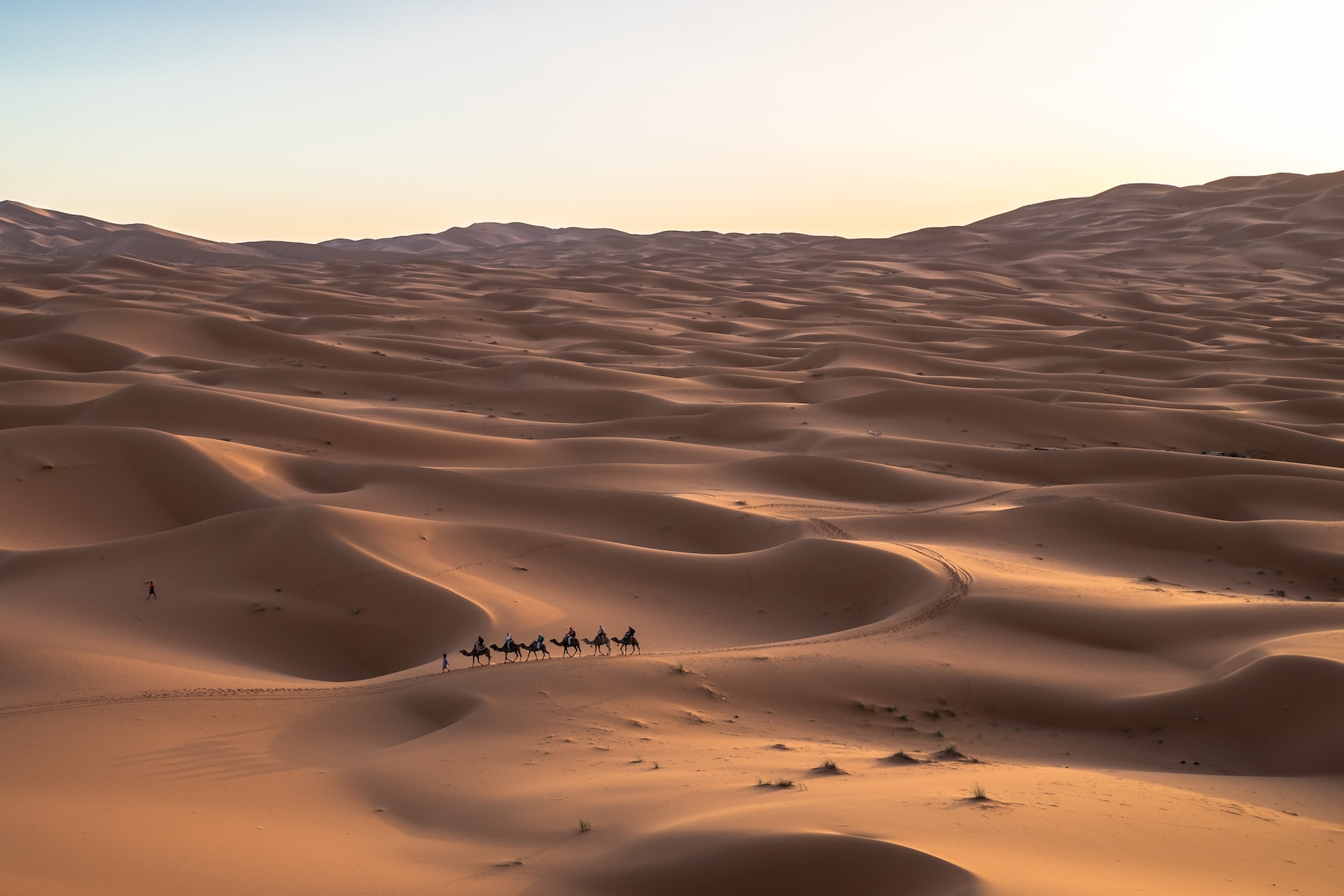
The Empty Quarter (Rub’ al Khali) is a vast sand desert region, and the Asir highlands in the southwest have mountain terrain that differs from the desert locations. Either can be a primary or secondary location depending on the brief. Access, transport, support vehicles and communications are assessed for the specific site.
Crew, Equipment and Unit Logistics
The line producer develops crew and equipment requirements with the production’s department heads, comparing travelling and Saudi-resident options for each role against the dates, languages, experience and technical requirements. Quotations state the personnel or equipment, hire period, preparation and return days, transport and payment terms. Transport and accommodation follow crew numbers, equipment loads and the agreed itinerary.

Crew Entry and Work Authorisation
Entry requirements depend on nationality, role and duration. The applicable visa route and any work authorisation for each passport are confirmed with the Saudi production partner and the relevant authority before travel is booked, and a tourist visa should not be assumed to cover paid production work. Passport validity and dates for preparation and filming legs are checked against the schedule.
Equipment Shipments and Customs Clearance
The customs route for equipment is confirmed for each shipment, whether by carnet, temporary import or another procedure, with a licensed clearance agent and the applicable authority. The manifest, the filing and any pre-approval are prepared before shipping, and lead times depend on the route, the agent and the equipment list. Drones and equipment carrying export-control documentation need separate confirmation of the approvals that apply.
Permissions and Specialist Arrangements
Permission requirements depend on the production, the locations and the proposed activities. The appointment identifies who prepares the information, who submits each application, who follows up outstanding requirements and how decisions are communicated. Where an authority publishes a service period, it applies to that service and is not an end-to-end clearance timeline.
Licences, Permits and Location Approvals
The General Authority of Media Regulation (GAMR) regulates audiovisual production, and the licence or permit that applies depends on the production and its activities. Incentive applications, customs clearance and location approvals are separate processes with their own applicants and timetables. Heritage, municipal and development-authority approvals run separately for specific locations, and NEOM site access is confirmed with NEOM. Applications start as early as the location list allows, and no blanket lead time is assumed.
Saudi Applicant, Production Partner and Permit Holder
The applicable Saudi applicant, production partner and permit holder are confirmed for each filing. The named permit holder, any incentive claimant and the customs principal may be one entity or several, depending on the project structure and the licences each holds. Whether a fixer’s company also holds the licences to act as applicant is confirmed for each project rather than assumed. Where a production works through a licensed Saudi production company, the appointment states which entity files, which holds the permit and which contracts suppliers.
Content Review and Cultural Considerations
Narrative productions may be asked for a script synopsis with a licence application, and sensitive content may attract additional review, so such content is flagged at first submission. Prayer times, working conditions at religious and heritage locations and any crew requirements are confirmed with the Saudi production partner and the location authority and reflected in the schedule.
Coordinating Other Country Legs
Some productions combine Saudi Arabia with filming in other countries. Each country leg is assessed separately for its own permissions, equipment route, crew entry and costs, and can be appointed separately. A location elsewhere is not treated as a substitute for a Saudi location unless the production decides that after assessing both.
For the UAE, see our film fixers in Dubai.
For Jordan, our Film Fixers in Jordan can be appointed for locations such as Petra and Wadi Rum, subject to their own approvals.
For Morocco, see our local film fixers in Morocco. Wider regional work is covered on our Line Producer Middle East page.
Preparing a Saudi Production Brief
To discuss a Saudi appointment, send the script or treatment, format, proposed dates, location references, crew size, travelling departments and equipment list. Include any marine, aerial or heritage-site activity, the budget and what the production will handle itself.
Compare the scope, availability, fee basis and reporting arrangements for the line producer and the fixer. Agree the first deliverables, booking authority and the decisions the commissioning production retains before commitments are placed.
Celluloid Pact can assess the brief and set out the preparation, applicant questions and open decisions before local commitments are confirmed.
