

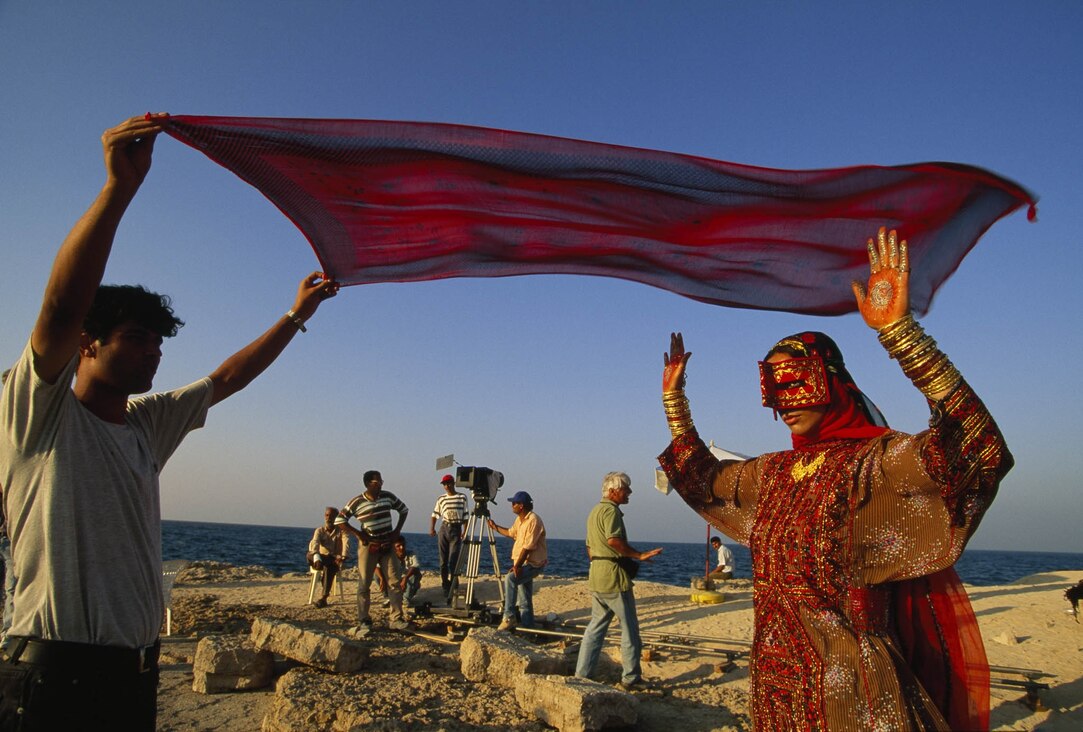
Film Fixers In Iran work through one of the more demanding production environments in the Middle East corridor and one of the most rewarding for productions that clear the permit chain. A working line producer Iran and Line Producer Middle East network is essential for an Iran schedule because the country layers Ministry of Culture clearance, Ministry of Foreign Affairs sign-off, Press Visa routing and US sanctions reality on every foreign production that lands.
There is no cash rebate framework in Iran. There is no fiscal incentive scheme of the kind Morocco, Saudi Arabia or Egypt operate. What Iran offers instead is one of the deepest cultural landscapes in the region, locations that range from the Caspian forests through Persian heritage cities to Dasht-e Kavir and Lut desert plateaux, and crew costs that sit materially below European or US base rates. The country has produced internationally recognised cinema for four decades through Abbas Kiarostami, Asghar Farhadi, Majid Majidi, Mohammad Rasoulof and Jafar Panahi, and the in-country production ecosystem reflects that depth.
This page is the working reference for productions planning an Iran shoot, covering the permit chain, the sanctions and currency reality, the Press Visa routing by nationality, the major filming locations from Tehran through Isfahan, Shiraz, Yazd and the desert plateau, and the engagement scope a foreign production should plan against before script lock.

Why Iran Works For International Productions
Iran operates differently from most production destinations in the Middle East. There is no rebate to anchor the math against. Press Visa timelines vary by passport in ways that other regional pages do not face. US sanctions affect carnet routing, payment routing and equipment sourcing in concrete operational terms. And the permit chain runs through state authority interfaces that an experienced fixer has built over years of foreign production work. None of these are reasons to avoid Iran. They are reasons to plan the schedule with a longer pre-production runway and a sharper brief than other corridor countries require.
The permit chain and the regulators behind it
Foreign production permits in Iran are issued by the Ministry of Culture and Islamic Guidance through its Film Production Permit Council, with parallel clearance from the Ministry of Foreign Affairs for the Press Visa side of the filing. The Farabi Cinema Foundation is the largest Iranian production and international distribution body but does not issue foreign permits directly. The Documentary and Experimental Film Center operates as a parallel authority for documentary work. The permit covers filming across the country once issued and must be carried on set at all times, since productions can expect to be questioned by local police and provincial authorities during the shoot.
The Permit Council has faced periodic criticism from sections of the Iranian film industry, although it remains the authority responsible for foreign-production permit approvals. The body remains operational and continues to issue foreign production permits, but the policy environment may shift over the next year. A film fixer and line producer with active institutional relationships clears applications faster than a cold first-contact filing, which is the standard pattern across countries with discretionary permit authorities.
US sanctions, OFAC and the carnet workaround
Iran accepts ATA Carnets for film equipment temporary import, but US-issued ATA Carnets are not accepted. Productions operating under US sanctions need to route equipment through chambers of commerce in non-US jurisdictions, with European or Asian chamber-issued carnets the working alternative. Where a carnet cannot clear, the Iranian fixer arranges a Ministry of Culture letter listing the imported gearlist, which is presented at the port of entry to clear customs through the standard temporary import process. Tehran Imam Khomeini International Airport (IKA) is the standard customs entry for equipment-heavy crews.
Payment routing into Iran is constrained by OFAC and Iranian banking restrictions. International wire transfers do not clear directly to Iranian banks, so production payments typically route through third-country intermediaries, often in the UAE or Turkey, and the Iranian fixer handles the local-currency conversion to IRR for crew, location fees and supplier disbursement. Iran has experienced wild exchange-rate fluctuations in recent years, which means budgets quoted in USD or EUR can move materially against IRR between briefing and shoot. The fixer locks rates against the schedule wherever possible.
Press Visa timelines by nationality
All foreign filming crew enter Iran on a Press Visa, applied for through the Ministry of Foreign Affairs after the Ministry of Culture has cleared the production permit. Synopsis, locked script, crew passport details and project information go into the application pack. Timelines vary materially by nationality. US and UK passport holders typically face three to four months from filing to issuance. German, French and most other European nationals clear in two to four weeks. Politically sensitive projects, including documentaries on social or political subjects, can be rejected outright at the Ministry of Culture stage and never reach the visa application.
A government minder may be assigned to set depending on the project scope, particularly for documentaries and any production touching politically sensitive material. The minder’s role is observational and protocol-related rather than directly editorial in most cases, but the briefing has to factor minder transport, accommodation and per-diem into the production budget. The Iranian line producer manages the minder interface for the production.

Iran filming locations by region
Iran’s filming locations split across five broad regions, each with its own permit administrators at the provincial level and its own logistical pattern for crew rotation. Most foreign schedules base in Tehran for the equipment and crew backbone, then deploy to Isfahan, Shiraz, Yazd or the desert plateau for the location work, returning to Tehran for post and wrap. Internal flights handle the inter-city moves, with Iran’s domestic network covering Tehran to Isfahan, Shiraz, Yazd, Tabriz, Mashhad and Bandar Abbas at frequencies that support a multi-region production schedule.
Tehran and the Caspian-Alborz band
Tehran is Iran’s production capital and the base most foreign shoots anchor against. Filming locations of note in Tehran include Golestan Palace, the Tehran Grand Bazaar, Azadi Tower, Milad Tower, Imamzadeh Saleh at Tajrish Square, Vali-e-Asr Mosque, Park-e Jamshidieh and Pol-e Tabiat. The National Museum of Iran and the Tehran Museum of Contemporary Art are the heritage and gallery anchors for indoor schedules. The Cinema Town of Radio and Television in Tehran is the working backlot, with an Old-Tehran alley and shopfront set used by domestic features and accessible to foreign productions through the production-services interface.
North of Tehran, the Alborz mountain range opens the high-altitude band. The Dizin, Shemshak and Tochal ski resorts sit above 3,000 metres, with an October-to-June ski season that supports winter-sport production windows. Beyond the Alborz, the Caspian Sea coast provides the green-forest and beach band that contrasts sharply with the desert south. The Badab-e Surt limestone terraces in Mazandaran, the Golestan National Park and the Kangelo Castle ruins at Savadkuh are the heritage and natural-landscape anchors for the northern region. International productions engage production companies in Tehran for Ministry of Culture and Islamic Guidance (Ershad) permit handling, Golestan Palace and Niavaran complex heritage access, the Tehran Film City studio bookings, and the Tehran-Caspian corridor scheduling that anchors most northern-region production.

Isfahan, Shiraz, Persepolis and the Persian heritage band
Isfahan is one of the Silk Road’s architectural jewels and one of Iran’s most heavily-filmed heritage cities. Naqsh-e Jahan Square anchors the Safavid-era ensemble of Sheikh Lotfollah Mosque, Shah Mosque and Ali Qapu Palace, with Chehel Sotun Palace nearby. The bridges across the Zayandeh River, Si-o-Seh Pol, Pol-e Khaju, Pol-e Shahrestan and Pol-e Chubi, are themselves filming subjects. The Zoroastrian Ateshkadeh-ye Isfahan fire temple sits on a hill overlooking the city. Most Isfahan filming runs from sunrise through mid-morning and from late afternoon through dusk, when the square’s light is at its strongest.
Shiraz, the cradle of Persian civilisation, runs the Vakil Bazaar, Eram Garden, the Mausoleum of Shah-e-Cheragh, Karim Khan Citadel and the Pink Mosque (Nasir-ol-Molk Mosque) for filming. A short drive from Shiraz opens the ancient ruins of Persepolis, Naqsh-e Rustam necropolis and Pasargadae archaeological site, the three sites that anchor Achaemenid-era Persian heritage for cinema. Productions running Persian-empire briefs route through this corridor regardless of contemporary positioning. Kashan, between Tehran and Isfahan, opens the Fin Garden, Tabātabāei House, Borujerdi House and Sultan Amir Ahmad Bathhouse, plus the Noushabad Underground City and Agha Bozorg Mosque, for a denser Qajar-era heritage layer. International productions engage production companies in Isfahan and Shiraz for Naqsh-e Jahan Square heritage-committee permits, Persepolis archaeology authority clearance, and the Persian-period stand-in scheduling that anchors most international period and biblical-Middle East shoots routing through the central heritage band.

Yazd, Kerman and the desert plateau
Yazd is one of the oldest continuously inhabited cities on earth and the cultural centre of Iranian Zoroastrianism. The city is built around a labyrinth of mud-brick alleys, hidden courtyards and the wind-catcher (badgir) towers that supplied passive cooling to the desert architecture for centuries. Filming locations include the Zoroastrian Towers of Silence on the outskirts, Amir Chakhmaq Mosque complex, Jameh Mosque of Yazd, Dowlat Abad Garden and the Yazd Khan Bazaar. Just outside Yazd, the Bafgh Desert and the Narin Qal’eh mud-brick castle at Meybod provide additional desert-architecture filming options. The Saheb Azalan Club Zurkhaneh runs the traditional Iranian gymnasium ritual that several documentaries have filmed.
Kerman, further south, is the gateway to the Lut Desert and to Bam Fortress, Rayen Fortress, Shazdeh Mahan Garden and the Meymand troglodyte village. The Ganjali Khan complex in Kerman itself, with the Ganjali Khan Bath, anchors the city’s Safavid-era heritage layer. Dasht-e Kavir, the Great Salt Desert, sits on the central Iranian plateau and opens the lowest-population landscape band in the country. Garmeh, a charming desert oasis village, provides the working base for desert-edge shoots. The Lut Desert’s Kalut formations are one of the most photographed landscapes in Iran, with wind-sculpted ridge structures that read as alien-planet, post-apocalyptic or Mars stand-in depending on lens choice and grade. International productions engage production companies in Yazd and the central plateau for Yazd old-town mud-brick heritage access, Zoroastrian fire-temple coordination, Kerman bazaar permits, and the Dasht-e Lut desert-corridor scheduling that anchors most desert and sci-fi stand-in work.
Qeshm, Hormuz and the Persian Gulf islands
Qeshm Island in the Persian Gulf is Iran’s largest island and home to the Hara mangroves, the Star Valley canyons and a working underwater-photography pipeline supported by the local dive operators. Hormuz Island, smaller and further west, is famous for its range of red, ochre and silver-grey rock and soil tones, with the waters around the island a striking red colour washing onto silvery-black sands. Hormuz reads on camera as an alien-planet or Mars stand-in environment that productions reach for when the Lut Desert’s terrain is not quite right. Kish Island operates as Iran’s resort island with a different permit dynamic that several commercial productions have used. International productions engage production companies in Qeshm, Hormuz and the Persian Gulf islands for Geo-Park access permits, the colour-stratified terrain of Hormuz island, and the maritime-and-coast scheduling that complements the Persian heritage and desert-plateau corridors.
Permits, customs, crew and equipment in practice
Permit application and the institutional interface
The Ministry of Culture and Islamic Guidance permit application requires a synopsis, locked script in Farsi translation or the original language with synopsis translation, full crew list with passport details, day-by-day shooting schedule, full equipment list with serial numbers, and a sponsor letter from the Iranian production unit. The Iranian film fixer and line producer is the conduit for the application, since foreign productions cannot file directly. Once the Ministry of Culture clears the production application, the Ministry of Foreign Affairs takes over for the Press Visa side, which extends the timeline materially for US and UK nationals.
The institutional interface in Iran rewards relationship continuity and patience. Applications that arrive alongside an existing fixer relationship with the Permit Council move faster than cold filings. Productions that arrive without permit clearance and attempt to film informally face serious consequences, including equipment confiscation and the risk of charges that carry severe penalties in Iranian law. The permit-carry rule is enforced.
ATA Carnet routing and equipment customs
Iran joined the ATA Carnet system through the Iran Chamber of Commerce. Carnets issued by European or Asian chambers of commerce clear at Tehran IKA customs through the standard temporary import process. US-issued carnets are not accepted, so productions with US-based gear typically route the equipment ship through a third-country chamber, often the German DIHK or French CCI, depending on the shoot’s logistical anchor. The Iranian film fixer coordinates the customs broker at IKA and the post-shoot re-export through the same office. Where carnet routing is not feasible, the Ministry of Culture letter listing the imported gearlist substitutes, with a customs bond posted against equipment value and refunded on re-export.
Iranian crew, talent and English-speaking key positions
Iran has a smaller crew pool than Morocco or Egypt but a deep one in the categories where international productions work. Directors of photography, art directors, set decorators, focus pullers and sound recordists with feature credits are available, with a working subset that speaks English at production-fluency level. The talent landscape includes Persian, Kurdish, Gilaki, Mazandarani, Lur, Baluchi, Azeri, Turkmen and Qashqai casting registers, which gives productions a wide range of regional looks without bringing talent in from outside the country. Casting is typically run in-house by the Iranian production unit.
Specialised positions where Iran’s crew base is thinner include stunts, certain DP categories that require international-rental-specific equipment familiarity, and high-end colour finishing. Productions running a long-schedule Iran shoot can bring those positions in from Europe or the regional production hubs, subject to Press Visa clearance for the incoming crew. The Iranian film fixer manages the supplementary visa filing for the additional positions.

Equipment, studios, backlots and post-production
Iran’s equipment rental houses cover standard camera, lighting and grip packages, with HD cinema cameras, lens kits and Technocrane availability locally sourced. For larger productions, the working pattern is to source the bulk of the gearlist locally and bring in specialised optics, specialist rigs or specific camera bodies as supplementary kit from Europe or Asia. The country has four to five production studios available to visiting productions, most of them affiliated with the national broadcaster or with Farabi-aligned production houses. The Cinema Town of Radio and Television in Tehran provides the standing-set backlot for period and Old-Tehran scenes. Post-production facilities in Tehran cover colour, sound mix and 35mm processing, with Dolby and international-standard finish available for festival-track features.
When to film and the seasonal pattern
Iran’s climate runs arid or semiarid across most of the country, with a subtropical band along the Caspian coast. Winters from December through March are very cold and snowy in the northwest and the Alborz range, milder in the south and along the Persian Gulf. Summers from June through September push above 40°C across the central plateau and the desert south, with crew physical-performance considerations and shoot-window constraints to factor. Spring from April through June and autumn from September through November are the best filming windows, with mild temperatures, long usable daylight and minimal weather risk across the major filming regions.
Ramadan dates shift across the Gregorian calendar and need to be checked against any Iran shoot window. Many services run reduced hours during Ramadan, restaurants close during daylight and the production day adapts around iftar timing. Nowruz, the Iranian New Year, falls around 21 March and effectively closes the country for two weeks, with most services closed and most crew on personal leave. Ashura and other Shia religious observances also affect specific dates and warrant a check against the shoot schedule.

Iran as a stand-in geography for biblical, Persian and Central Asian settings
Iran’s structural value to international productions goes beyond its native Persian register. The country’s location depth, heritage architecture and desert-plateau terrain allow it to serve as a stand-in for biblical Levant, ancient Mesopotamian, Silk Road, Iraq, Syria and Central Asian settings that are operationally difficult or impossible to film in their native countries. The combination of preserved Achaemenid, Sassanid, Safavid and Qajar-era heritage layers, the central desert plateau and the northern Caspian-Alborz region creates a cross-period geography that few other production-tier territories can match.
Biblical Levant and ancient Mesopotamian registers
Iran’s mud-brick old towns (Yazd, Kashan, Bam), the desert-plateau caravanserai network and the Khuzestan plain southwest of Tehran read as biblical Levant and ancient Mesopotamian terrain at international-tier production scale. Productions filming Old Testament, early Christian or pre-Islamic settings that would otherwise require Israel, Jordan or Iraq access route through Iran when the Levantine corridor is operationally closed. The Khuzestan region carries the ancient Elamite and Sassanid layers that read as Mesopotamian on screen, with Susa and the surrounding archaeological zone supplying the most authentic Mesopotamian-period register accessible to international productions.
Persian, Silk Road and ancient-Persia registers
The native Persian register sits across Persepolis, Pasargadae, Naqsh-e Rustam and the broader Shiraz-Fars heritage band, anchoring ancient Persian, Achaemenid and Sassanid feature productions. The Silk Road register runs through Yazd, Kashan, Isfahan and the central caravanserai network, with the Bazaar of Isfahan and the surrounding mud-brick caravanserai infrastructure carrying the densest Silk Road authenticity of any preserved heritage zone. Safavid-era Isfahan supplies the early-modern Persian register that has anchored international period features and documentary work referencing the Mughal-Persian or Ottoman-Persian historical interface. Productions running the Ottoman-Persian bridge as a single creative brief often pair our coverage here with our film fixers in Turkey team for the Istanbul + eastern Anatolian leg.
Central Asian and Caucasus stand-in registers
Iran’s northeastern Khorasan region, bordering Turkmenistan, supplies the Central Asian stand-in register for productions requiring Turkmen, Uzbek or broader Central Asian terrain when the source countries are operationally inaccessible. The Iranian Azerbaijan region in the northwest, around Tabriz and Lake Urmia, supplies the Caucasus stand-in register that productions covering Armenian, Azerbaijani or eastern Anatolian settings have used. The northern Caspian-Alborz band reads as the Caspian basin generically, with the Mazandaran and Gilan forest terrain anchoring lush-mountain registers that read as Caucasus mountain landscape on screen.
Iranian cinema ecosystem and institutional layer
The Iranian cinema ecosystem carries one of the strongest international art-house and festival-cinema reputations of any production-tier country, anchored by six decades of continuous feature production and the institutional framework that supports it. International productions engaging with Iran benefit from the depth of crew and creative talent built across the New Wave and post-revolution cinema cycles, alongside the institutional infrastructure that supports co-production, financing and festival placement.
Farabi Cinema Foundation and the institutional framework
The Farabi Cinema Foundation (FCF), established in 1983 under the Ministry of Culture and Islamic Guidance, operates as the principal institutional interface for Iranian cinema, handling international co-production agreements, festival placement coordination, and a portion of the cultural project funding routed through the Ministry. Farabi sits alongside the Cinema Organisation of Iran on the regulatory layer, with international co-productions on Iranian features routinely structured through Farabi participation. The Tehran Film City, a state-supported studio complex on the outskirts of Tehran, anchors the institutional studio infrastructure with sound stages, backlots and the post-production layer that supports both domestic and international service work.
Fajr International Film Festival and the Iranian New Wave
The Fajr International Film Festival, held annually in Tehran, is the country’s principal cinema platform and the institutional gateway for Iranian feature recognition. The festival sits alongside Iran’s strong Cannes and Berlin presence, with Iranian features carrying multiple Palme d’Or, Camera d’Or, Golden Bear and Silver Bear placements across the past three decades. The Iranian New Wave, anchored by Abbas Kiarostami (Palme d’Or 1997 for Taste of Cherry), Mohsen Makhmalbaf, Bahram Beizai and Dariush Mehrjui, set the international art-house template that the modern wave has extended through Asghar Farhadi (Academy Awards 2012 for A Separation and 2017 for The Salesman), Jafar Panahi (Golden Bear 2015 for Taxi), Majid Majidi (Academy Award nomination for Children of Heaven), and Mohammad Rasoulof (Golden Bear 2020 for There Is No Evil). The depth of festival-tier creative talent that Iranian production-service companies access is structurally unique to the country.
Engaging Celluloid Pact for an Iran shoot
Iran productions run on a longer pre-production runway than most Middle East corridor schedules. The realistic minimum is sixteen weeks from the first feasibility call to crew arrival, with the permit chain and the Press Visa timeline driving most of that span. US and UK passport-holder schedules need eighteen to twenty weeks to leave headroom for the visa side. Documentary and politically sensitive projects need additional time and an upfront feasibility assessment before any Ministry filing.

Iran production service companies and OFAC-compliant routing
Iran production service companies sit at the structural centre of every international production landing in the country, with sanctions compliance as the operational backbone. The production service company is the Iranian-registered legal entity that holds the Ershad accreditation, signs vendor contracts with Iranian suppliers, manages cash flow inside the Iranian financial perimeter and absorbs the institutional liaison with the Ministry of Culture and Islamic Guidance, the Cinema Organisation of Iran and the Farabi Cinema Foundation on behalf of the foreign production. The foreign production itself sits OUTSIDE the Iranian banking and contractual perimeter under OFAC compliance, with all in-country spend routed through the Iranian production-service entity against a pre-locked cost framework.
Equipment routing follows a third-country carnet path. Most international productions originate the ATA Carnet through a chamber of commerce in Dubai, Istanbul or another carnet-issuing country, with the carnet validated at the Iranian customs entry by an Ershad-cleared local partner who carries the regulatory authority to sign for the equipment on the production’s behalf. The production service company structure isolates the foreign producer from any direct contractual or financial relationship with Iranian counterparts, which is the OFAC-compliant operational shape that makes international shoots inside Iran legally viable for US, UK and EU productions. Selection of an Iran production service company therefore weighs Ershad accreditation history, OFAC-compliance track record, third-country carnet routing experience and the depth of regulatory relationships with Ershad, the Cinema Organisation of Iran and Farabi.
Film crew in Iran and Tehran-Isfahan crew sourcing
Film crew in Iran concentrate around Tehran and Isfahan, with the Tehran bench carrying the depth on international-feature, OTT and commercial work and the Isfahan bench specialising in Persian-period and heritage-architecture productions. Tehran crew operate primarily in Persian and English on international shoots. The bench carries sufficient English-speaking key positions (DP, gaffer, production designer, art director, costume) to support many international features without importing every HoD from abroad, though feature productions still typically rotate at least the DOP and production designer in from outside depending on the script’s specific demands. The Iranian crew base has carried Asghar Farhadi, Majid Majidi, Jafar Panahi and Mohammad Rasoulof feature productions through Cannes and Berlin recognition cycles, alongside steady international service work through Tehran-based production-service companies.
Specialist departments draw from across the country: aerial crews based primarily out of Tehran with drone operations cleared through the Civil Aviation Organisation of Iran and the Ministry of Roads and Urban Development, underwater crews concentrated in the Persian Gulf and Caspian corridors, period-design departments in Isfahan and Yazd that carry the deepest exposure to Persian heritage architecture and Qajar-era detailing, and biblical-period specialists who anchor most international stand-in work routing through Iran as a substitute for Iraq, Syria or the broader biblical Levant. Camera crew Iran engagements typically run through the Ershad-accredited Tehran production-service network, with crew calls structured around the institutional lead times for permit clearance.
Production companies in Iran and the foreign-producer engagement layer
Production companies in Iran operate primarily out of Tehran, with the Isfahan and Shiraz clusters anchoring the central heritage-band production work. Foreign producers engaging production companies in Iran typically select based on Ershad and Cinema Organisation of Iran accreditation history, international-feature track record (including Farabi Cinema Foundation co-production credits, Cannes and Berlin festival placements), OFAC-compliance experience for US and EU-side productions, and cross-corridor capacity to handle multi-region schedules from Tehran into Isfahan, Shiraz, Yazd and the Persian Gulf islands. The production-company structure in Iran routes through Ershad accreditation rather than a free-zone framework, with the Tehran production companies typically holding the Iranian banking and contractual perimeter that the OFAC operational shape requires.
Film Fixers In Iran: pre-production lead times and feasibility
Send the script or treatment, the target shoot window, a rough crew size with nationality breakdown, and the locations the script implies. We come back within a few working days with a feasibility note covering Ministry-of-Culture clearance probability, Press Visa timeline by nationality, permit lead time, carnet routing options against the crew’s home jurisdiction, equipment-sourcing plan and crew availability against the window. Once the brief is locked, our Iran line production work coordinates the permit chain, the visa side and the multi-region scheduling out of Tehran with deployment to the heritage and desert regions as the script requires.
Line producer Iran: what the brief should include
A useful Iran brief covers the production type and intended distribution, the script subject matter with any politically sensitive elements flagged, the target shoot window and total shoot days, the crew size with nationalities, the equipment list at the bulk level, the locations the script implies with any specific heritage-site requirements, and the home-jurisdiction chamber of commerce that will issue the carnet. With those data points in the first call, we can return a working feasibility note rather than a hedged response. Iran rewards prepared productions. The permit chain is solvable, the Press Visa is workable, and the country’s filming geography is one of the deepest in the region for productions that arrive with a tight brief and the runway to wait out the institutional interface.
