

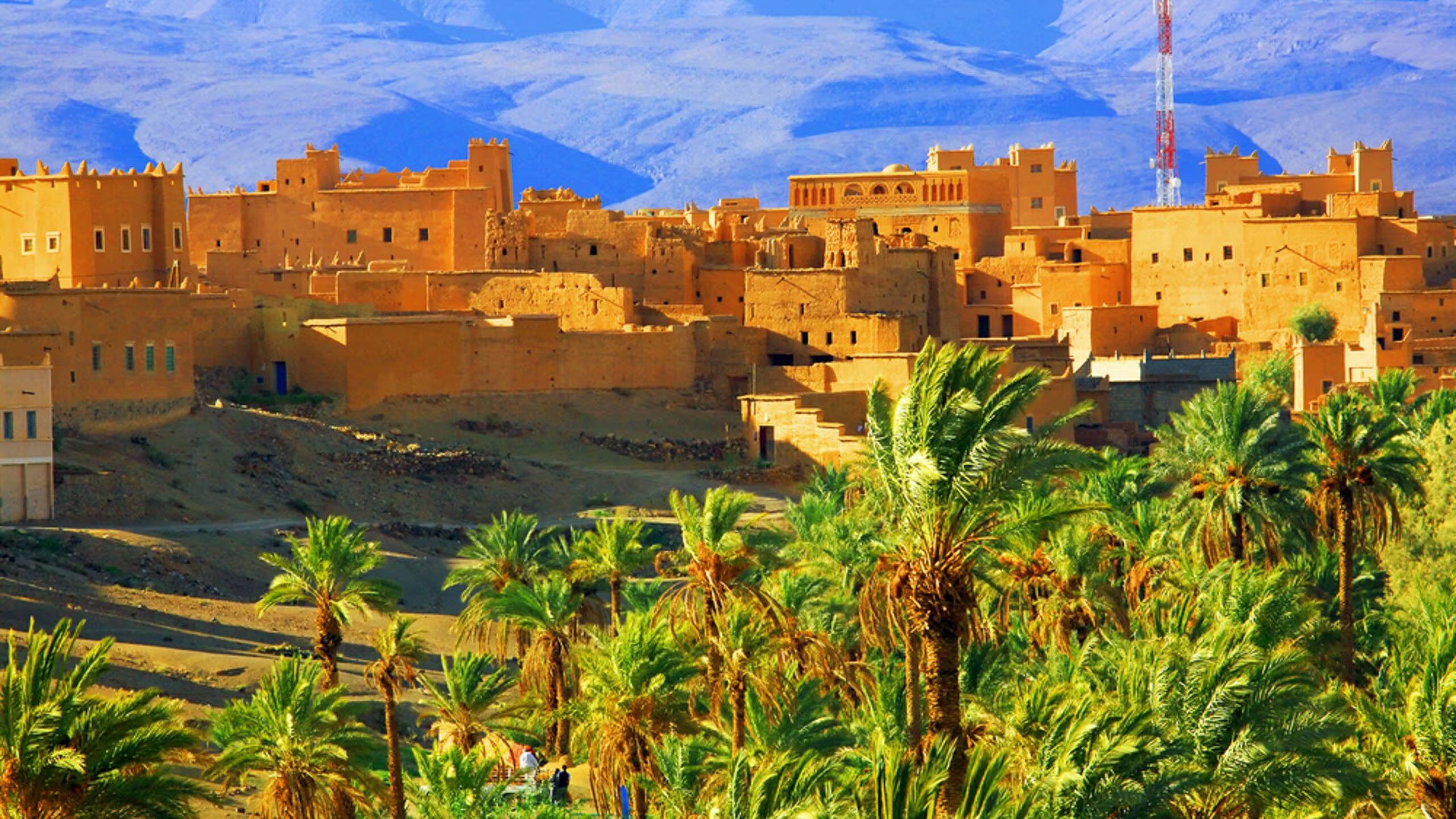
Morocco film incentives and Morocco filming permits run as two separate tracks at the Centre Cinématographique Marocain (CCM). The filming authorisation allows a foreign production to shoot; the production-support programme reimburses 30% of eligible Moroccan expenditure for qualifying projects. Receiving a filming permit does not establish rebate eligibility, and rebate approval does not replace the location, heritage, aerial, security or municipal permissions a shoot may also need.
The CCM scheme is a cash reimbursement of eligible expenditure, not an income-tax credit. This guide covers both tracks: the documents and published processing periods for the permit, the eligibility rules and claim sequence for the support, and the costs that sit outside the headline percentage. For crew, equipment, budgeting and shoot execution, see our Morocco production-support service.

Morocco Film Permits and Tax Incentives: How the Two Tracks Connect
The sequence below is how a foreign production typically orders the two CCM files so that neither blocks the other. A filming authorisation is required for a professional foreign shoot; the support application is optional and only relevant where the project meets the format and threshold tests.
- Confirm the format, the approved Moroccan company for the filming-authorisation file and the foreign production company responsible for the production-support request.
- Prepare the CCM filming-authorisation application for that format and submit it complete.
- Apply separately for production support before filming, where the project qualifies.
- Obtain the site-specific permissions the location list requires.
- Track qualifying expenditure and keep the audit records from the first Moroccan invoice.
- Submit the final support claim after filming, within the published window.

| Filming-authorisation track | Production-support track |
|---|---|
| Allows the approved production activity | Establishes conditional rebate eligibility |
| Documents depend on format | Requires threshold and format eligibility |
| Published processing periods begin with a complete file | Financial approval and claim follow separate stages |
| Does not guarantee individual locations | Does not replace filming permission |
The permit and rebate concern the same project and shooting schedule, but their applicants, documents and decisions remain separate.
Morocco Film Incentives: The 30% CCM Cash Rebate
The programme reimburses 30% of eligible expenditure incurred in Morocco for qualifying foreign productions, with no project cap for works after 28 March 2022; the rate was 20% with an MAD 18 million cap before that date. The Morocco film tax rebate is a Morocco cash rebate: support paid into the production company’s account against documented eligible spend, decided by a CCM support commission that meets twice a year and when required.
Eligible Formats
- feature films;
- television fiction series;
- television films;
- docu-fiction and documentary;
- fictional audiovisual works intended principally for internet exploitation.
Advertising, institutional films, music clips and television programmes are outside the programme, even though they need a CCM filming authorisation. In a Moroccan-foreign co-production the eligibility tests apply to the foreign co-producer’s share and to the budget repatriated and spent directly in Morocco by the foreign producer.
Minimum Spend and Shooting Requirement
The Morocco film rebate threshold is at least MAD 10 million of Morocco expenditure measured excluding taxes, together with at least 18 filming days in Morocco. The CCM counts qualifying set-construction days toward the 18-day requirement, which matters for studio-anchored features at Ouarzazate and Atlas Studios. Both tests are stated on the official CCM foreign-production support page, which also carries the eligibility checker, the specifications (cahier des charges) and the support application form.

Eligible Expenditure, Taxes and VAT Treatment
Three concepts are kept apart when the budget is modelled. The first is the expenditure that may qualify for the 30% support: the eligible cost categories are listed in the annex to the CCM specifications, eligible spend cannot be paid in cash, and eligible expenditure is capped at 90% of the film’s total expenditure under the CCM specifications. The second is the MAD 10 million threshold, which is measured excluding taxes. The third is the tax position of the production itself: VAT on Moroccan purchases, withholding on certain payments, payroll obligations for Moroccan and foreign crew, customs treatment of imported equipment and the corporate-tax position of the Moroccan entity, all of which are confirmed separately with the production’s advisers.
Although producers often search for a Morocco film tax incentive, the CCM mechanism is production support calculated against eligible local expenditure; VAT and other tax treatments remain separate project-specific questions.
Application, Bank Guarantee and Claim Sequence
The published procedure uses defined windows that should be built into the production schedule and cash-flow plan. The application is made to the CCM by the foreign production company before filming and states:
- the nature of the project and the nature of its distribution;
- the proposed Morocco filming period;
- the investment programme and the total amount to be invested;
- the estimated eligible expenditure and the amount of support requested.
Where funds are available, the CCM gives a preliminary agreement within 30 days of receipt and calls for a bank guarantee of 5% of the support requested, to be deposited within 30 days, renewable once. From the deposit, filming must start within six months, finish within twelve months of the first shooting day, and the expenditure file must be lodged within three months of the end of filming. The support is then paid in a single tranche within a maximum of 180 days after the commission’s decision on the complete payment file. The bank guarantee and delayed support payment must be carried in the production’s cash-flow plan until the claim is settled.

Morocco Filming Permits Through the CCM
The CCM is the central authority for filming authorisation in Morocco. For the foreign-production formats listed by CCM, the filming-authorisation request is submitted by the approved Moroccan executive-production or service company, signed and stamped by its manager, addressed to the Director of the CCM, and submitted with a complete file. The CCM states that incomplete applications cannot be processed, so the published period only starts once every required item is in.
Foreign Features, Series and Television Films
For a foreign feature film, docu-fiction feature, television film or television series, the published file includes:
- a filming-permit request signed and stamped by the manager of the approved Moroccan executive-production or service company;
- the CCM filming-permit application form, completed, signed and stamped;
- a copy of the script and a synopsis, in Arabic or French;
- a signed and stamped accreditation by the foreign company in favour of the Moroccan company;
- repatriation undertakings signed by both the Moroccan and the foreign company;
- a list of foreign technicians and of Moroccan technicians with their PIC (professional identity card) numbers, respecting the 25% Moroccan-technician quota under Law 20-99;
- the contracts with the Moroccan technical and artistic team, submitted with the application; other contracts before filming or within five days of signature;
- a Moroccan, PIC-holding production manager, plus one trainee for every eight PIC-holding technicians;
- the work schedule, with each day’s call sheet submitted to the CCM the evening before;
- evidence of the permit fee, and a bank attestation of the turnover achieved in Morocco before the end of the month following the last shooting day.
Television films and series also state the broadcasting channel. The approved company confirms the current Moroccan-technician quota against the crew list before filing.

Documentaries, Commercials and Short-Form Productions
The CCM publishes a separate document list for each format, and the differences matter. Advertising spots and institutional films file a brief, storyboard and concept rather than a script, and both carry a three-day published period. Music clips file the brief or dialogue and carry seven days. Medium-length, short and fiction-documentary projects file script and synopsis with a seven-day period. Documentaries and reports file a concept and the broadcaster’s name with a 21-day period, and television programmes file a concept, broadcaster name and work schedule, with the processing period confirmed with CCM. Filming permits in Morocco for these formats still route through the approved Moroccan company, and the technician, trainee and call-sheet obligations apply wherever the format list includes them.
Published CCM Processing Periods
| Format (foreign production) | Published period after a complete file |
|---|---|
| Feature film / docu-fiction feature | 15 days |
| Television film / television series | 15 days; 30 days where the series exceeds 120 minutes |
| Medium-length film / short film / fiction documentary | 7 days |
| Music clip / musical variety | 7 days |
| Advertising spot / institutional film | 3 days |
| Documentary / report | 21 days |
| Television programme | Confirm with CCM; the published foreign-production list does not state a processing period |
Each period is counted from the day after a complete application is submitted, and none of them includes the separate location, heritage, aerial or security approvals a shoot may also require. The current lists are on the official CCM filming-authorisation requirements page and change by circular, so the format list is re-read at the start of each project.
Permissions Beyond the CCM Filming Authorisation
Morocco filming permits from the CCM do not automatically grant access to every location. Depending on the location and activity, the following may require separate applications, consents or location agreements decided by the relevant authority, custodian or owner, and most are opened once the location list is stable. The CCM publishes format-specific processing periods for the national authorisation, set out above; site-specific permission requirements and timings must be confirmed with the authority responsible for each location.
Heritage Monuments and Protected Sites
Ksour, kasbahs, medinas, palaces and archaeological sites sit with heritage authorities and, at UNESCO-listed sites such as Aït Benhaddou or the Fes and Marrakech medinas, with the site management as well. These approvals address the specific activity: crowd size, equipment, set dressing, night work and any physical contact with the fabric of the site. They are filed with the CCM authorisation reference in hand but are decided separately.
Municipal Streets, Traffic and Public-Space Control
Street closures, traffic diversion, parking for unit vehicles and the use of squares and markets are coordinated with the relevant municipality and local authorities. Casablanca, Rabat, Marrakech and Tangier each run their own process, and busy commercial districts carry conditions on timing and duration that shape the schedule more than the paperwork does.

Private Property and Location Agreements
Riads, hotels, farms, private kasbahs and studio facilities are contracted directly with the owner or operator. The location agreement sets access, fees, insurance, damage liability and restoration, and its cost is a production expense that may be eligible for the rebate calculation where the supplier and payment method meet the programme’s rules.
Aerial Filming, Restricted Zones and Security-Sensitive Locations
Drone and aerial work, filming near military, port, border or government installations, and the temporary import of certain equipment involve security approvals that run through the relevant authorities rather than the CCM alone. Where military-commission review applies, the CCM tariff lists a separate fee, and the approved Moroccan company opens that track early because it has its own review cycle.
Desert, Mountain and Remote-Area Operating Permissions
Erg Chebbi, Erg Chigaga, the High Atlas and the far south involve provincial authorities, local caïds and, in places, protected-area management. Access roads, camps, water, fuel and medical cover are planned alongside the permissions rather than after them. The location registers themselves, from Marrakech to the Sahara, are covered on our Morocco filming locations page.

Budgeting Permits and the Rebate Together
Morocco film incentives are modelled against verified eligible expenditure rather than the headline rate alone. The following costs either require eligibility testing or must be funded before the support is received:
- CCM application and authorisation fees, charged per week or per day by format on the current CCM tariff page (effective 1 July 2015): for a foreign feature, television film, series episode, short or medium-length film, MAD 3,000 per week; advertising spots and institutional films MAD 2,500 per day; music clips MAD 500 per day;
- the military commission fee of MAD 2,500 per meeting, and equipment import or export handling of MAD 2,500 through Rabat or Casablanca and MAD 3,750 through other airports, where those files apply;
- location charges and private location agreements;
- heritage and municipal charges;
- security, traffic-control and road-closure requirements;
- aerial-filming costs and drone approvals;
- non-qualifying expenditure, including spend outside the eligible categories or above the applicable eligible-expenditure ceiling;
- audit, banking and guarantee costs.
Illustrative example only, not an eligibility opinion: a feature with MAD 40 million of Morocco expenditure excluding taxes, of which MAD 32 million falls within the eligible categories, would model support of MAD 9.6 million and a bank guarantee of MAD 480,000 against that request. A ten-week shoot would add MAD 30,000 in CCM permit fees. Eligibility and the final figure are decided by the CCM support commission on the actual file.

Morocco Film Permits and Incentives FAQs
What filming permit does a foreign production need in Morocco?
A CCM filming authorisation for the specific format, issued on a complete file submitted by a Moroccan company approved for executive production. Site-specific permissions are applied for separately.
Does a foreign production need an approved Moroccan production company?
For filming authorisation, yes. The application for a foreign shoot is submitted through the approved Moroccan executive-production or service company. The production-support request is a separate filing made to the CCM by the qualifying foreign production company.
How long does a Morocco filming permit take?
The CCM publishes periods by format, counted from the day after a complete file is submitted: 15 days for a feature, 15 or 30 days for television films and series, 7 days for shorts and clips, 3 days for advertising and institutional films, and 21 days for documentaries and reports. Morocco filming permits from the CCM do not include the separate location or specialist approvals.
Does Morocco offer a film tax credit or a cash rebate?
A cash rebate. Morocco film incentives take the form of CCM production support that reimburses 30% of eligible Moroccan expenditure as production support; it is not an income-tax credit or deduction.
What is the minimum spend for the 30% Morocco film rebate?
At least MAD 10 million of expenditure in Morocco, excluding taxes, together with at least 18 filming days.
Do set-construction days count toward the 18-day requirement?
Yes. The CCM counts qualifying set-construction days toward the 18 days of filming in Morocco.
Are documentaries and commercials eligible for the rebate?
Documentaries and docu-fiction are eligible formats. Advertising spots, institutional films, music clips and television programmes are not, although they still need a filming authorisation.
Does CCM authorisation include monument and drone permissions?
No. Heritage-site access, aerial and drone approvals, security-zone permissions and municipal controls are separate applications decided by the relevant authorities.
Is permit approval the same as rebate pre-approval?
No. The filming authorisation allows the shoot; the preliminary agreement on the support application establishes conditional eligibility for the rebate. Each is decided on its own file.
Are VAT and customs costs automatically eligible?
No. The eligible categories are defined in the annex to the CCM specifications, the threshold is measured excluding taxes, and VAT, customs and other tax treatments are confirmed separately for each production.
Morocco film permits and the 30% production-support application should be planned as separate but coordinated tracks. The production structure, format, complete CCM file, site permissions and eligible-spend model need to be confirmed before filming begins. For how the Moroccan system compares with neighbouring territories, see our MENA filming permits guide.
