

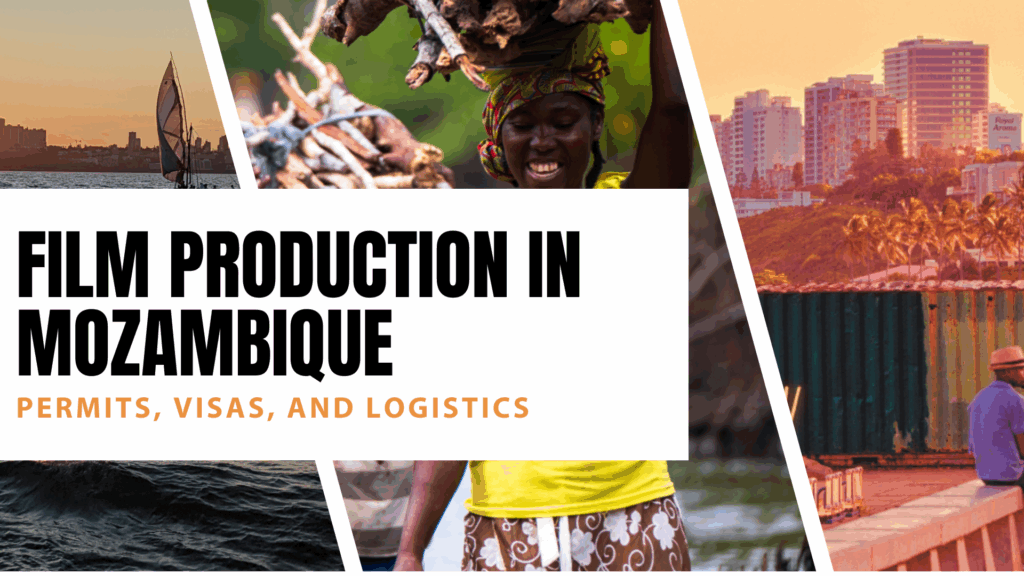
A line producer Mozambique team holds the budget, schedule and contracts and manages the INICC filing for an international shoot, while film fixers in Mozambique handle location access, local crew, equipment and daily logistics from Maputo and Bazaruto to Gorongosa and Ilha de Moçambique. Mozambique is a Lusophone production environment with a demanding permit and infrastructure market, and it sits within our line producer Africa coverage; Portugal provides a language, co-production and post-production connection when the project structure requires it.
Film Fixer in Mozambique: Recce, Access and Local Coordination
A film fixer in Mozambique turns the location brief into practical checks: who controls each site, what permissions are needed, where the unit can load and hold, which crew and equipment are available, and how people and kit will reach the location. The findings inform the production schedule and identify unresolved access or logistical requirements before commitments are made.
Local fixing support coordinates location contacts, recce arrangements, crew calls, transport and daily movements. Permit applications, crew work authorisation and temporary equipment import are coordinated with the relevant local production company, customs broker and authorities; the fixer does not issue approvals. Budget ownership, supplier commitments and overall schedule control remain within the agreed line-production scope.

Why Mozambique Works For International Productions
Mozambique sits across 2,500 kilometres of Indian Ocean coastline between Tanzania and South Africa. The country runs a Lusophone post-colonial inheritance, a tropical-archipelago band on the coast, and the Gorongosa National Park wildlife reserve. Crew, studio and equipment availability are checked against the brief and dates; any gaps are costed for regional or international sourcing. Those findings are weighed against the locations, the INICC licensing route and the Portuguese-language co-production link to Lisbon.
Lusophone co-production and the Portugal link
Mozambique is a Lusophone country, with Portuguese as the official language and a deep historical, cultural and industrial link to Portugal. For productions structured as Lusophone co-productions, Portuguese and Mozambican co-production frameworks may apply, subject to each project’s eligibility and confirmation with the relevant bodies. The Portugal connection also covers the post-production gap: colour, sound mix and final finish can route through Lisbon facilities where the Mozambican option does not exist.
For non-Lusophone productions, the path is more direct: the film fixers in Mozambique and the line producer in Mozambique, based in Maputo, handle the permit, location, crew and customs interface, with key crew imported through our line producer South Africa network, Portugal or further afield depending on the brief. The English-speaking subset of the Mozambican crew base is small, and department experience is confirmed against the brief. For productions extending the CPLP Lusophone corridor westwards from the Indian Ocean coast to the equatorial Atlantic, our film fixers in São Tomé and Príncipe team handles the parallel Lusophone island production with the Roça plantation circuit and the Príncipe UNESCO Biosphere as the main draw.
Constraints: incentives, crew sourcing and equipment entry
Do not include a production rebate in the budget unless a currently available programme and the project’s eligibility have been confirmed in writing. Filming licences are issued by the Instituto Nacional das Indústrias Culturais e Criativas (INICC), which absorbed the former Instituto Nacional de Audiovisual e Cinema (INAC), and the applicable licensing fee and current requirements are confirmed with INICC at briefing stage rather than inferred from historical figures.
Local directors, DPs, photographers and key technicians are available, with a working subset speaking English alongside Portuguese. Crew, studio and equipment availability for the specific departments the brief needs are checked against the dates, and any gaps are costed for sourcing from Johannesburg by the South Africa to Maputo route or from further afield.

Mozambique Filming Locations By Region
Mozambique’s filming geography splits across three regional bands: the South around Maputo and the Bazaruto archipelago, the central wildlife and lake band anchored by Gorongosa, and the North through Quirimbas, Ilha de Moçambique and Pemba. Maputo may serve as the production base, depending on locations, sourcing and the equipment-entry route, with units deploying to the regional location the script requires. Internal flights connect Maputo to Vilanculos (Bazaruto gateway), Beira (Central gateway), Pemba (North coast) and Nampula; frequencies are checked against the current schedule for the shoot dates.

Maputo and the South, colonial architecture and Indian Ocean port
Maputo is Mozambique’s capital and principal production centre. Filming locations of note include the CFM Maputo Railway Station, Baixa Municipal Market, Casa de Ferro, the Fortress of Maputo, Hotel Polana, Cathedral of Our Lady of the Immaculate Conception, Church of Santo António da Polana, City Hall in Praça da Independência, and the Maputo Bullring (Praça de Touros Monumental) that featured in Sydney Pollack’s The Interpreter (2005). The Museum of Natural History and the Samora Machel Statue at Praça da Independência add the contemporary-cultural detail. Ponta do Ouro at the South African border opens the surf and underwater-dolphin layer.
Bazaruto and Inhambane, tropical archipelago and coastal heritage
The Bazaruto Archipelago, off the Inhambane coast, runs Mozambique’s signature tropical-island band. Ilha de Benguerra, Ilha de Magaruque, Ilha de Bazaruto and Ilha de Santa Carolina supply palm-lined white sand beaches, turquoise lagoons, coral reefs and sand-dune environments. Water visibility can support underwater photography, confirmed for the season and dates, with resident manta rays, dugongs and seasonal whale sharks shaping the marine schedule.
Inhambane city, on the mainland, runs Portuguese colonial architecture with a historic cathedral and old-town fabric that contrasts the archipelago beach work. Tofo beach, near Inhambane, opens the laid-back beach and underwater band. June through October is generally the more workable window for marine work on this coast.

Quirimbas and Ilha de Moçambique, northern coast and UNESCO heritage
Quirimbas, Pemba and other northern locations require a separate live security, access and insurer review before they are included in a production schedule; current UK and Australian advisories warn against travel across much of Cabo Delgado and parts of the north. The Quirimbas Archipelago comprises 27 islands, eleven of which fall within Quirimbas National Park. Ibo Island holds the historical layer with its Portuguese-era forts, mosques, churches and the Fort of São João, while the surrounding waters offer underwater visibility suited to marine documentary and feature work. The Quirimbas combine heritage architectural detail with coral-reef and mangrove environments within the same regional production plan, subject to the applicable park, heritage and location approvals.
Ilha de Moçambique, further south on the Mozambique Channel, is a UNESCO World Heritage Site and a Portuguese colonial fortified island town. Fort São Sebastião, the Fortim Igreja de Santo António and the Chapel of Nossa Senhora de Baluarte sit alongside the original Portuguese town. Pemba, the Cabo Delgado capital, opens additional Portuguese colonial filming locations along with the palm-lined beach band. The Niassa Reserve inland adds wildlife coverage for productions extending beyond the coast.

Gorongosa and the central wildlife band
Gorongosa National Park, in the Central region, is Mozambique’s wildlife filming centre. The 4,000-square-kilometre park sits on the Rift Valley floor and supports lions, elephants, hippos, buffalos, zebras, wildebeests, waterbucks and a recovering population of large predators across savannah, woodland and floodplain habitats. The Gorongosa Restoration Project has driven a sustained conservation effort since the post-civil-war recovery, and the park is a working wildlife filming environment. Documentary teams have run extended schedules in the park.
Lake Cahora Bassa, created by the Cahora Bassa Dam on the Zambezi River, is a large reservoir on the Zambezi and supplies the inland-water filming environment for the Central band. Beira, the regional capital, runs the dilapidated Grande Hotel as a derelict film location and the Macuti Lighthouse. Monte Binga in the Chimanimani National Reserve is the country’s highest peak at 2,436 metres. The Marromeu National Park on the Zambezi River delta holds a large buffalo population and migratory waterbird seasons.
Filming Permits, Film Crew and Customs in Mozambique
Filming permits in Mozambique: the INICC application route
Securing filming permits in Mozambique runs through INICC. In practice, foreign productions commonly work through a registered production company in Mozambique that provides the production services the shoot needs. The application typically includes a synopsis, a Portuguese-language script or synopsis, the crew list, the shooting schedule and the equipment list; the exact documents, any insurance requirements, the local-representation structure, the fee and the lead time are confirmed against the current INICC licensing guidance for each project.
Standard INICC processing time is confirmed per project against current guidance. Productions filming politically sensitive subject matter, working in restricted security zones or covering Cabo Delgado in the north should plan for additional review time and supplementary clearances from provincial authorities. The fixer maintains the working relationship with INICC and the provincial offices, which helps keep the file complete and the follow-up consistent, though the authorities set the timeline.
Crew entry and work-authorisation planning
Entry status and permission to work are separate checks. Depending on nationality and travel purpose, crew may require an eTA, eVisa or consular visa, while any short-duration work notification or authorisation is confirmed through the local producer before travel. Timelines and fees are set after reviewing the crew list, roles, nationalities and contract structure.
Mozambique operates an official eVisa/eTA platform; its current guidance recommends applying for an eTA at least 48 hours ahead and allows roughly five business days for an eVisa, per the official FAQ. The Mozambican line producer and film fixer sequences entry and any work authorisation alongside the INICC filing so the crew arrival window stays within the cleared period.

Temporary equipment import and customs clearance
Professional equipment enters under a broker-confirmed temporary-import procedure. The local fixer prepares the itemised kit list, values, serial numbers and supporting production documents, then confirms the declaration, security or bond, tariff treatment and re-export conditions with Mozambican Customs before shipment. ATA Carnet acceptance should not be assumed.
Film Crew Mozambique: Local and Johannesburg Sourcing
Portuguese is the principal working language for film crews in Mozambique, with an English-speaking key-crew subset concentrated in Maputo. A film crew in Mozambique is built primarily from the Maputo base, which covers international-feature, documentary and commercial work, with key-position availability across cinematography, sound, art department and production design confirmed against the brief and coordinated on the ground by line producers in Mozambique. Casting runs through the Mozambican production unit and is briefed by language, community, age and performance requirements rather than by a fixed list of looks.
Specialised positions the local base does not deeply cover (stunts, certain DP categories, international-standard hair and makeup, high-end colour, and aerial or underwater units) are typically supplemented through our South African crew base in Johannesburg. Maputo connects to Johannesburg by direct flight or by road through the Ressano Garcia to Lebombo crossing. Other international crew follow the standard entry and work-authorisation route.
When To Film And The Seasonal Pattern
Filming in Mozambique runs against a tropical monsoon climate with two clear seasons. The hot, wet season runs November through May with cyclone risk on the central and northern coast and heavy rains that compress road access in inland regions. The warm, dry season runs June through October and is generally the more workable filming window, with drier weather, better underwater visibility on the coast and improved road conditions where routes remain operational, subject to current security and access checks.
June through August is generally favourable for underwater work in the Bazaruto and Quirimbas archipelagos. The surf season at Ponta do Ouro and Tofo also peaks in this window. Wildlife schedules at Gorongosa are usually planned for the dry months of August through October when animals concentrate around remaining water sources. Productions running multi-region schedules typically anchor the shoot between June and October to consolidate the coast, wildlife and heritage location work inside the same weather window.
Engaging Celluloid Pact For A Mozambique Shoot
Mozambique productions generally require a longer pre-production runway than shoots in more established regional production centres. The working schedule is set after the INICC filing route, crew-entry requirements, work authorisation, temporary equipment import and location access have been confirmed for the project.

Film Fixers in Mozambique: Pre-production and Feasibility
Send the script or treatment, the target shoot window, a rough crew size with nationality breakdown, and the locations the script implies; we work this through a registered production company in Mozambique. We review the brief and agree the scope and fee for any detailed feasibility, recce and budgeting work, covering permit requirements and likely review factors, entry and work-authorisation requirements by nationality and role, the broker-confirmed temporary equipment-import process, equipment sourcing, crew availability and location feasibility. Once the brief is locked, our Mozambique line production work coordinates the INICC filing, crew-entry planning, customs and multi-region scheduling, with northern locations subject to current security, access and insurer clearance.

Line Producer Mozambique: What to Include in the Brief
A useful Mozambique brief covers the production type and intended distribution, the target shoot window and total shoot days, the crew size with nationalities (so entry and work authorisation can be sequenced), the equipment list at the bulk level (so temporary import can be planned), and the locations the script implies including any Cabo Delgado or politically sensitive areas. Prepared briefs make it easier to align permits, crew, customs and regional access before costs and dates are committed. For eligible Lusophone co-productions, our film fixers in Portugal can also open a useful financing and post-production connection through Lisbon. For how Mozambique compares with other African bases on permits, crew and cost, see our filming in Africa guide.
