

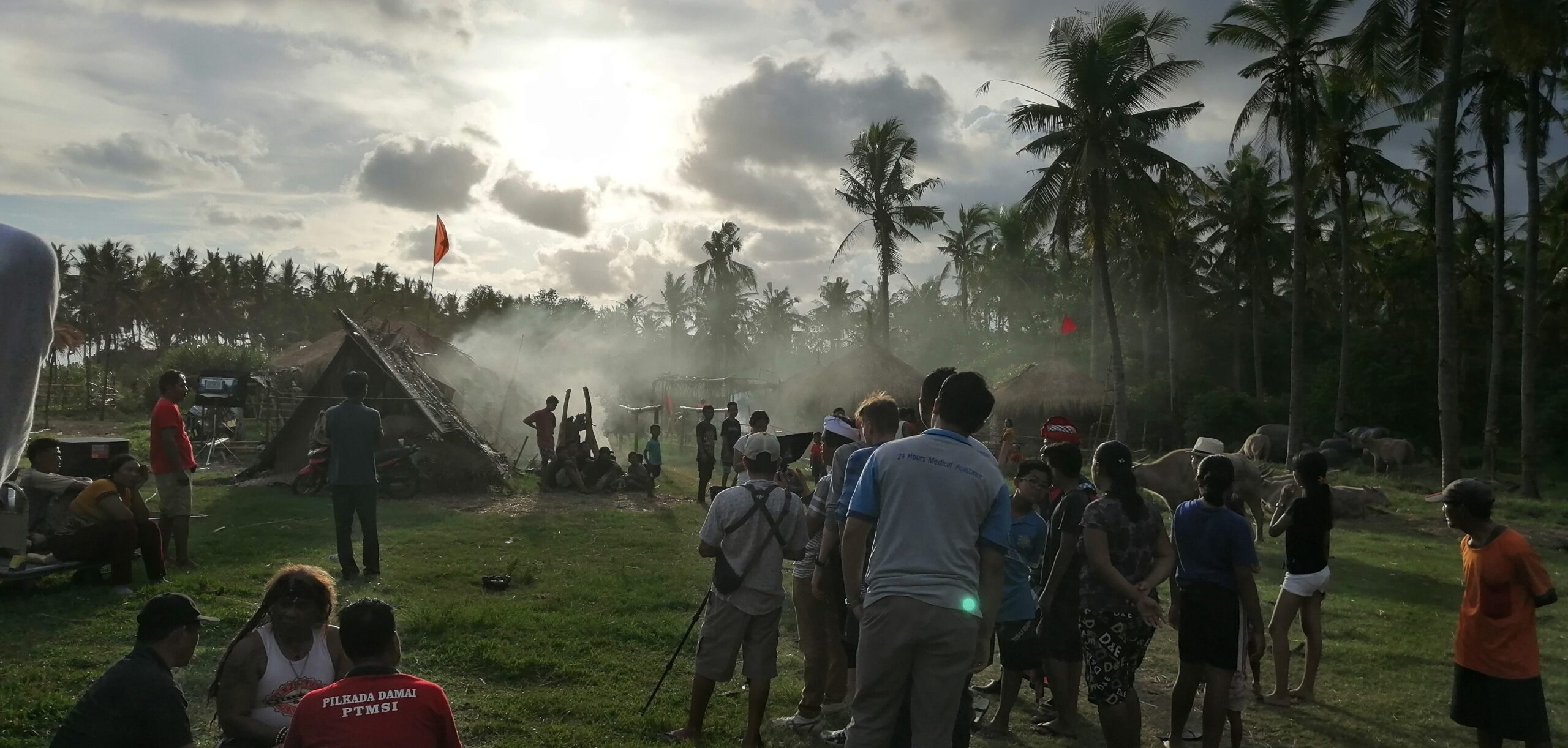
Indonesia is the largest country in Southeast Asia by population and one of its most geographically complex filming environments. Film fixers in Indonesia coordinate the national filing with the provincial, police, heritage, conservation and location-specific approvals triggered by the final schedule across the archipelago.
We work the country as a network: Jakarta for crews, equipment houses, sound stages and the C14 filming visa pipeline; Yogyakarta and Borobudur for the heritage register; Bali for the dedicated tropical-island base; and Lombok, Sumba, Komodo and Raja Ampat for alternative-tropical and conservation-zone shoots that the Bali corridor cannot legally supply inside its own permit stack. The line-by-line rate model (trimmed working budget, per-line USD amounts, permit lead-times and reproducible sub-total build) sits in the Indonesia film production rates reference.
Indonesia does not currently operate a nationwide percentage cash rebate comparable to Thailand, Malaysia or the Philippines. What it offers is a deep working crew base, a full kit market across Arri, Sony and RED, English-speaking ADs and gaffers trained to international standards, and a workable permit framework when the filing sequence and production-specific planning allowance are established early.
For Indian-buyer schedules the math has also shifted in the last twelve months: IndiGo runs a direct nonstop between Mumbai and Jakarta, and a daily Mumbai–Denpasar direct opened on 18 October 2025 (IndiGo), which removes the Singapore or Kuala Lumpur layover that used to anchor the carnet routing.

Why Indonesia works for international shoots
The geographic stack, Jakarta, Yogyakarta, Bali, Lombok, Komodo, Raja Ampat
The country’s production geography splits into four layers. Jakarta serves as Indonesia’s primary production hub and anchors the urban and futurist layer, the Sudirman corridor, MRT stations, Kota Tua’s colonial buildings, the kampung densities, and the equipment and post-production backbone. Yogyakarta and Borobudur cover the heritage layer: the Buddhist temple complex, the 9th-century Hindu complex at Prambanan, the sultanate kraton, and the Central Java craft economy. Bali carries the dedicated tropical-island base, Ubud, Uluwatu, Lovina, and the east coast around Mount Agung, covered in detail at our existing Bali cluster.
Beyond those three, the alternative-tropical and conservation layer opens up. Lombok sits three hours from Jakarta by air and gives a Bali-adjacent terrain without the village-level Banjar permit. Sumba carries the highland-village look that Eat Pray Love and several recent features used. Komodo National Park is the UNESCO dragon island. Raja Ampat in West Papua is one of the densest marine zones on the planet. Sumatra opens the rainforest and orangutan zone; Lake Toba opens the highland-caldera terrain; Bandung opens the volcanic-crater belt two hours from Jakarta. The IndiGo Mumbai–Jakarta and Mumbai–Denpasar direct flights anchor the Indian-buyer pipeline at both the equipment-hub end and the dedicated Bali base.
Visual character, what the archipelago uniquely supplies
Indonesia carries a visual character no single Southeast Asian neighbour matches. Volcanic terrain at Bromo, Ijen and the Bandung craters reads as alien-planet when shot wide, post-apocalyptic on a steam day, or simply pastoral pre-industrial countryside depending on lens choice and grade. The archipelago opens marine, dive, atoll and inter-island travel patterns that Thailand and Malaysia carry in parts but not all in one country. The Buddhist and Hindu heritage complexes at Borobudur and Prambanan supply the register most production buyers reach for Cambodia or Sri Lanka to find. The Jakarta skyline reads as functioning futurist Asian metropolis. Sumba villages, Bali rice terraces and Sumatran rainforest each add a distinct landscape band on top.
The honest constraint, no structured cash rebate yet
Indonesia does not currently operate a nationwide percentage cash rebate. Incentive support is currently available through selected co-production and government-backed programmes rather than a nationwide percentage cash rebate, with eligibility and funding availability set on a case-by-case basis. Regional competitors carry the formal rebate edge, Thailand 20–30%, Malaysia 30%, Philippines 20–25%, and any honest line-producer briefing for an Indonesia schedule has to make that math explicit before script lock.
The Indonesia cost advantage instead sits in its underlying rate base. Crew, equipment, sound stages and post-production can compare favourably with several regional production markets, depending on crew level, equipment specification and island logistics, and that gap is what carries an Indonesia schedule on paper. Indonesia’s production case currently rests on its crew, equipment, location range and underlying cost base rather than a guaranteed national cash rebate. Productions extending the brief into Vietnam can route through our Vietnam line production overview for the country-deep cost and permit detail.
What the Line Producer and Film Fixers in Indonesia Handle
On a multi-island production, the line producer holds the contract, budget, schedule and national filing. Film fixers in Indonesia handle location access, provincial coordination, heritage and conservation interfaces, local transport and daily field reporting. Jakarta can hold the master production plan while Bali, Yogyakarta and outer-island fixers work under the same schedule, budget and reporting structure.
National Film Permit, Local Sponsorship and Supporting Approvals
Foreign productions require the applicable national filming approval, an Indonesian production counterpart and any location-specific permissions attached to the final schedule. The responsible filing route and supporting authorities should be reconfirmed when the application is prepared, particularly because Indonesia’s ministerial structure has changed since the earlier foreign-filming regulations were issued (Ministry of Creative Economy). A film fixer in Indonesia handles location access, provincial coordination and local logistics beneath the national production plan. For the wider regional context, our film fixers in Southeast Asia map how Indonesia routes alongside the Vietnam, Thailand and Cambodia markets in the same production corridor.
The working national filing pack is operationally consistent: synopsis, locked script, crew list with passport scans, full location list with site permissions where applicable, day-by-day shooting schedule, full equipment list with serials, and a sponsor letter from the Indonesian production company. Once the pack is in, vetting runs through the responsible national authorities alongside the relevant provincial, police and, where the schedule touches military-adjacent infrastructure, military bodies. Conservation-zone locations (Borobudur surrounds, Komodo, Raja Ampat) add a separate authority interface on top.

C14 Filming Visa and Longer-Stay Planning
The C14 is Indonesia’s single-entry visit visa for film, music-video, documentary, television and similar productions using locations in the country. Immigration currently provides an initial stay of up to 60 days and states that the stay may be extended or converted with the same sponsor. Confirm the current documentary requirements, fees, filing sequence and appropriate stay plan before submission.
ATA Carnet via KADIN, equipment in and out
KADIN administers ATA Carnet services in Indonesia and lists film crews among eligible users. Before dispatch, confirm the equipment general list, port of entry, customs broker, inspection arrangements and re-export procedure. Productions not using a carnet should model the applicable temporary-admission or customs-security route with their broker.
Crew, equipment, sound stages and post in Jakarta
Film production in Jakarta concentrates the country’s equipment and post backbone. Full camera kit across Arri, Sony and RED runs through Jakarta rental houses, alongside all major lighting and grip brands. Sound stages are available in Jakarta. Aerial, underwater, jib, crane, dolly and specialty rigs: many commonly requested systems can be sourced locally, subject to availability and specification checks.
The crew tier is one of Indonesia’s strongest advantages. Indonesian ADs, gaffers, art-department leads, prop masters and wardrobe heads work to international standards, speak working English, and have been part of cross-Asia and US-studio crews on multiple recent productions. Post, colour, sound mix, Dolby Atmos finish, also sits in Jakarta, which keeps the country’s full production stack inside one city when the budget calls for it.

Regional shoot patterns and stand-in geography
Jakarta, urban density and the futurist layer
Film production in Jakarta covers four distinct urban modes. The Sudirman Central Business District and the new MRT line run the futurist Asian-metropolis look, glass towers, MRT stations, elevated thoroughfares. Kota Tua carries the colonial-era Dutch-East-Indies look with brick warehouses, the Fatahillah Square, and the old harbour. The kampung densities, the unplanned settlements that ring the formal city, supply the rustic-urban and informal-economy band. And the corporate-residential band in Menteng and Kebayoran Baru runs the upper-middle-class Asian-city look that recent regional dramas have leaned on.
Yogyakarta and Borobudur, heritage with conservation supervision
Film production Yogyakarta is the country’s heritage layer. The sultanate city carries the royal kraton complex, the Taman Sari water palace, and the surrounding art-and-craft economy. Forty kilometres north, Borobudur is the world’s largest Buddhist temple complex and a UNESCO World Heritage site. Prambanan is the 9th-century Hindu temple complex on the other side of the city. The Yogyakarta zone is where Central Java’s pre-Islamic and royal heritage anchors.
Borobudur access must be confirmed against the current site-operator and heritage-conservation requirements. Lead time, supervision, permitted equipment and restricted areas vary with the proposed activity and unit size. Based on recent production enquiries, site-level filming fees have been quoted at approximately IDR 2.5 million to IDR 5 million or more, depending on the proposed activity and unit size. These are Celluloid Pact planning figures, not a universal published tariff; obtain a current site quotation before budgeting. Confirm separately whether the surrounding conservation area requires an additional approval.

Bali, the dedicated tropical-island base
Bali operates as its own production geography inside Indonesia and is covered in detail at our Bali film fixers team. The Bali cluster post covers the national filming approval, provincial and local permissions, village-level Banjar coordination, the Mumbai–Denpasar flight and Bali’s cost position against Goa and Kerala.
For an Indonesia-wide schedule that touches Bali alongside other islands (see our Bali line producer team), Bali productions typically require additional provincial and local approvals alongside the national filming approval: provincial Bali and the village-level Banjar tier are separate authority interfaces. Film production Bali sits inside the Indonesia umbrella for operational purposes but its permit stack runs its own track.

Lombok, Sumba, Komodo and Raja Ampat, alternative-tropical and conservation zones
Lombok is the immediate Bali alternative: three hours by air from Jakarta, two-band geographic spread between south-coast beaches and central highlands, and notably without Bali’s Banjar village-level permit step. The Gili Islands off the northwest coast form their own dive layer. Sumba sits further east and carries the highland-village architecture and ikat-weaving culture that several recent features have used as a stand-in for un-mapped tropical geographies.
Komodo and Raja Ampat sit within different protected-area and marine-management systems. The required conservation, park, marine, local-government and aerial approvals must therefore be confirmed against the exact islands, activities and equipment in the final location schedule.
Raja Ampat budgets should include the current marine-park and visitor charges applicable to each crew member. Additional conservation or BKSDA approval depends on the exact protected area, activity and equipment involved. These requirements run separately from the national filing and must be confirmed against the final location schedule.
Engaging Celluloid Pact for an Indonesia shoot
Credits and the on-the-ground record
Our Indonesia credit slate runs through the country’s domestic feature ecosystem. Buya Hamka Volume 1 and Volume 2, the two-part Indonesian biopic on the Minangkabau writer-scholar Haji Abdul Malik Karim Amrullah, was produced on the ground with Indonesian directors, crew and cast. Titik Nol, Keluarga Slamet and Haji Backpacker round out the slate. Manav Paul co-produced Titik Nol directly on the Indonesia floor. The unit ran with director Herwin Novianto and male lead Denny Sumargo; the same shoot brought Manav onto set with Daniella Sya. The operational depth on Indonesia comes from having actually run shoots there, not from a brochure description of what the country could theoretically supply.

Continuity for an incoming brief
What this means for an incoming brief: the local production-unit pairing is already in place, the permit documentation packs are prepared against current filing requirements, the carnet routing through KADIN is mapped, and the Bali, Jakarta and Yogyakarta filing routes reflect recent filing experience and local coordination. A new Indonesia schedule starts from operational continuity, not from cold local hire.

Lead times, budget bands and how a brief becomes a schedule
Celluloid Pact’s planning allowance for a complete foreign-production filing is commonly four to eight weeks, with additional time for heritage or conservation locations. This is an operational estimate based on production experience, not a published authority service standard, and should be reset against the locked script, crew nationalities and final location list.
Conservation-zone schedules add lead time that varies by location: Borobudur’s site permit, Komodo and Raja Ampat’s protected-area approval cycles, and any BKSDA-covered zones all run separately. A serious multi-island brief that touches Jakarta, Yogyakarta, Bali and one conservation location is realistically a ten-to-twelve-week pre-production cycle from first feasibility call to camera turning over. Building the filing sequence early, with current documentation knowledge, is what keeps that cycle predictable.
Budget bands and production type
Budget bands move with the production type. A scripted feature with international cast and full kit runs materially above an Indonesian-language domestic feature on the same locations, because the C14 line item adds per-head, the carnet adds shipping, and the conservation-zone escort adds line-items the local production does not carry. A branded commercial runs faster but trips the same permit cycle if any of the conservation zones are involved. Documentary budgets can be lower because their units and equipment packages are often smaller, but the immigration route must still match the crew’s planned activities and current policy.
For the full operational scope, our filming in Indonesia covers the National Film Permit, C14 and longer-stay immigration coordination, KADIN carnet routing, SIMAKSI conservation clearance, multi-island crew movement, equipment rental, sound stage booking in Jakarta, and post-production through to colour and Atmos mix. Send the script lock, the location wish-list and the rough schedule, we come back with a feasibility brief that names the permit lead-times, the carnet routing and the budget band before any commitment is made.
A recent working example of how a compact period brief lands in Jakarta (the art discipline, camera and sound sizing decisions, and Jakarta versus Bali cost delta) is set out in our Majapahit Jakarta production case study.
Film production services in Indonesia: how full-service companies structure the engagement
International producers approaching Indonesia usually arrive with one of two procurement shapes in mind: an individual line producer engagement, or a full-service film production services contract with an Indonesian production company. Both work. The choice depends on how much of the pre-production, on-set and wrap infrastructure the international company wants to hold in-house versus outsource. Understanding the distinction before signing anything is how producers avoid buying more service than they need, or, more commonly on complex Indonesian shoots, less than the schedule actually requires.

What full film production services in Indonesia typically include
Film production services in Indonesia, when contracted on a full-service basis, typically bundle location scouting, National Film Permit coordination and BPI facilitation, C14 and longer-stay immigration coordination, crew and vendor booking across Jakarta and Bali, equipment rental sourcing, transport and cargo, accommodation booking, per diems management, on-set production supervision, cultural liaison for conservation zones and heritage sites, and post-production wrap including ATA Carnet re-exit through KADIN. The full-service scope means the international production company hands off the on-ground execution layer to the Indonesian company and retains creative direction, casting and cost sign-off. This shape works well for advertising and mid-budget feature engagements where the international team is small and needs deep in-country infrastructure to execute at pace.
Line-producer-only engagements are narrower. The Indonesian line producer holds fiduciary and scheduling accountability but the international company retains more of the vendor management, casting, and crew booking layer. This shape works well when the international production company already knows the Indonesian market, has repeat vendor relationships, or is running a lean-crew unit that can absorb management overhead in-house. For first-time productions in Indonesia, or for productions running Jakarta + Bali multi-location schedules, the full-service film production services route is typically the right call.

Line producers in Indonesia versus film production companies: the procurement distinction
Line producers in Indonesia (the plural form matters here because most Indonesian production companies employ several line producers across concurrent international projects) are individuals with fiduciary responsibility for a specific engagement. Film production companies in Indonesia are the corporate entities that employ these line producers, coordinators, production managers and fixers as a team, and that maintain vendor networks, equipment relationships, cast databases and permit-authority contacts as institutional assets. When an international producer contacts a well-established Indonesian production company, they typically get assigned a line producer for the specific project, with the company’s wider infrastructure supporting that line producer’s work.
The practical implication for procurement: engaging a line producer independently of a production company usually means the international company assumes more of the vendor coordination and permit-track management themselves. Engaging a production company means the company’s existing vendor knowledge and permit-filing experience support the project. For multi-region Indonesian shoots covering Jakarta + Bali + a regional territory like Sumba or Raja Ampat, the production-company route consolidates the coordination overhead in a way that saves both budget and time versus running three parallel line-producer relationships.

Cost and vendor consolidation across Jakarta, Bali and regional operations
Film production services costs in Indonesia are typically quoted as a package rate combining line-producer day rate, coordinator and PA support, permit filing fees, per-diem overhead management, and a modest production-service margin. Jakarta-based full-service rates cover Java shoots and central-region infrastructure. Bali-based production services are structured differently, reflecting the island’s specific Banjar community protocol requirements and the local location-approval requirements that Jakarta-only companies do not always carry. For productions splitting time between Java and Bali, the practical choice is either engaging a company that maintains both offices or partnering a Jakarta line producer with Bali fixers on the ground.
Regional Indonesian territories (Sumba, Lombok, Komodo, Raja Ampat, Sulawesi) add an operational layer that neither Jakarta nor Bali covers by default. Production services for these regions require local fixers paired with either a Jakarta or Bali line producer holding master schedule. International producers evaluating full-service film production services in Indonesia should confirm that the company’s scope covers the specific regional territories the schedule requires; if it does not, the line producer needs to explicitly build the regional fixers engagement into the pre-production budget rather than discovering it as a mid-shoot expansion.
