

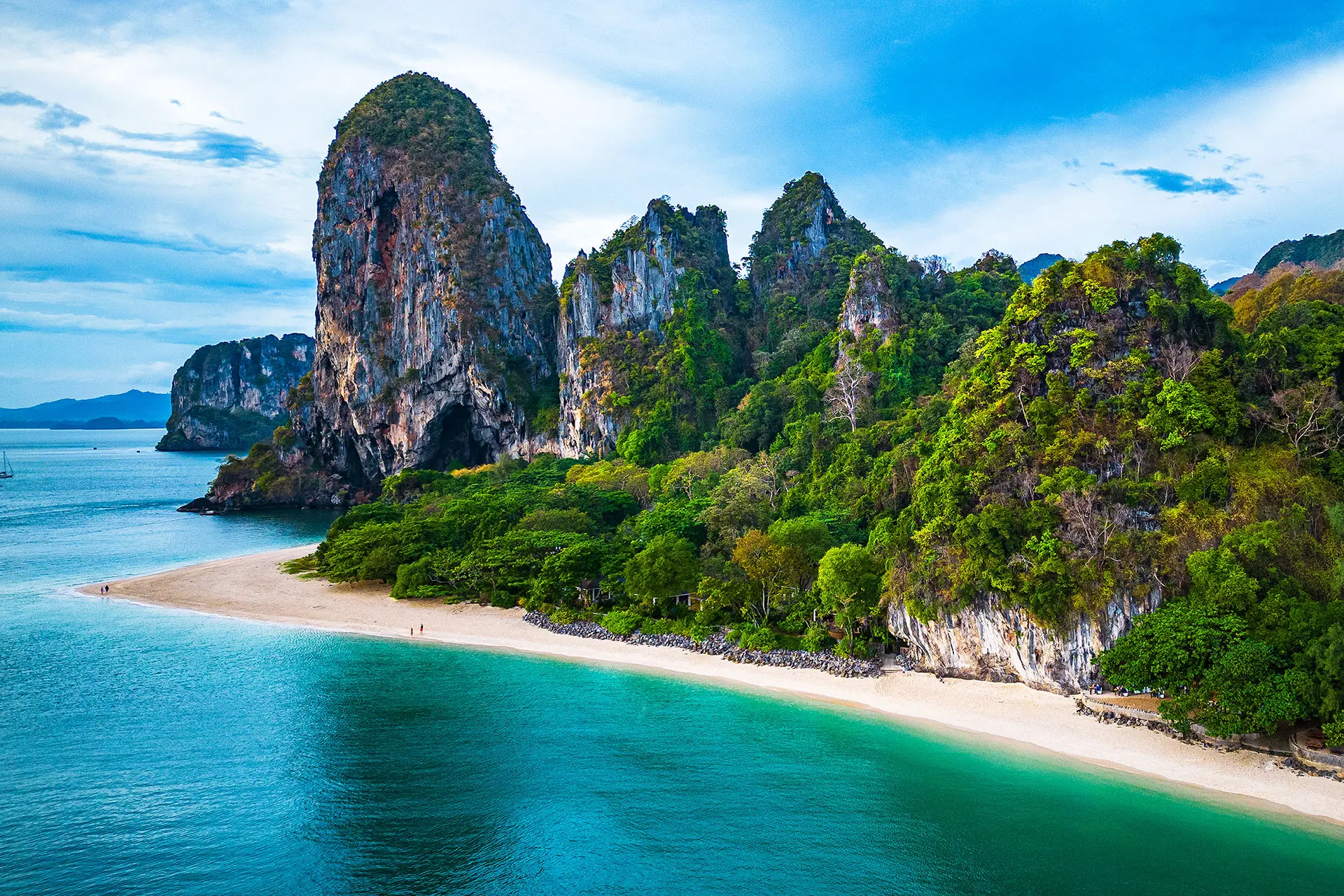
Southeast Asia has emerged as one of the leading service-production regions. Netflix, Apple TV+, Disney+ and Amazon route a meaningful share of their Asia-region service production through Vietnam, Thailand, Cambodia and Indonesia, drawn by the combination of competitive rates, English-capable production layers, and four distinct geographic registers that, between them, cover almost every location brief outside the Himalayan and Arctic extremes. The Mekong corridor binds three of these territories operationally; Indonesia sits as the maritime peer to the south.
Full Vietnam-side day-rate benchmarks, equipment pricing and post-production cost bands sit in the Vietnam film production rates handbook.
Our film fixers in Southeast Asia operation runs across the four territories as one coordinated production layer, with a single point of contact for foreign and Indian producers running cross-border briefs. The line producer Southeast Asia remit covers Ho Chi Minh City to Bangkok to Phnom Penh to Jakarta, with permits, crew and customs running in parallel rather than sequentially across territories. Our existing line producer Indonesia and film fixer Bali coverage feeds the maritime SEA segment of the cluster, with dedicated Vietnam, Thailand and Cambodia production-services support available for territory-level execution.
Recent feature, streamer and brand-spot work has clarified the four-territory model. Vietnam now receives substantial international streamer and documentary service work; Thailand continues to anchor Hollywood-scale features (the Jurassic franchise, multiple Bond productions, the Hunger Games sequence) and pan-Asian commercials; Cambodia handles UNESCO-tier heritage briefs through APSARA Authority permits; Indonesia and Bali carry coastal, hospitality and adventure registers. The cluster is now substantial enough that brief-routing decisions are made by line, not by country.
Detailed Cambodia crew rates, CFCC and APSARA permit process, equipment rental economics and cost comparison against Vietnam and Thailand are set out at Cambodia film production crew rates and permits.
| Territory | Best For | Main Permit Authority |
|---|---|---|
| Vietnam | Urban, heritage, coast, caves, Halong Bay | Department of Cinema |
| Thailand | Studios, cash rebate, crew depth, coastal | Thailand Film Office |
| Cambodia | Angkor heritage, temple circuits, remote | APSARA Authority, Ministry of Culture |
| Indonesia | Bali, islands, coastal, hospitality, heritage | Ministry of Tourism & Creative Economy |
Which Southeast Asia country fits your production?
Producer-facing decision tree based on brief register, budget position and schedule constraints. Single-country and multi-country routes both clear from the same line-producer interface.
- Choose Vietnam if: the brief is documentary or mid-budget feature, the cost stack is the primary driver, or the location register needs French colonial, central highlands, Mekong delta or Halong Bay marine work.
- Choose Thailand if: the production needs studio infrastructure, international-grade post-production, the cash rebate position is decisive, or the brief covers iconic limestone karst, beach or urban-megacity register.
- Choose Cambodia if: the script anchors on Angkor or temple-heritage location, the production can absorb the APSARA permit lead time, or the cost stack needs to come below Thailand on heritage-feature work.
- Choose Indonesia if: the brief needs island, tropical-coastal, Ubud cultural or Borobudur-tier heritage register, or the production requires English-capable maritime SEA crew depth.
- Choose multiple countries if: the location requirements span more than one register that no single SEA territory can supply, the rebate-stacking position across two or more territories beats the single-country incentive, or specific iconic locations across the cluster drive script-level requirements.
Why Southeast Asia is a leading service-production region
Three structural shifts in the last eighteen months have moved SEA from “one-off shoot destination” to “standing production hub” for international briefs. For a producer-facing breakdown of cost benchmarks, permit frameworks per country and territory-selection logic across the region, see our filming in Southeast Asia overview. Production services in Southeast Asia and filming in Southeast Asia have evolved into structured cluster categories rather than country-by-country negotiations. International streamers including Netflix, Disney and Apple continue to increase production activity across Southeast Asia, contributing to sustained demand for regional production services. Production-cost arbitrage versus China and East Asia line producer corridor has held even as wage inflation has hit both. And the Mekong corridor has, almost by accident, become a single production geography where crew, equipment and permits flow across three territories on a single brief.
The pivot is partly a function of where international productions are no longer routing. China feature service-shoot volumes peaked in the mid-2010s and have not recovered to the levels of the Wolf Warrior / Mission Impossible era; Korea has held but at a price point that has made it a destination for premium feature work rather than a regional service-shoot default. Productions that would historically have routed through Beijing or Seoul now look first at SEA. The cluster has expanded as a destination for regional-Asia service-shoot work that previously routed through those two markets at scale.
What pushes briefs toward Southeast Asia now
Three considerations push briefs toward SEA over the historical Asia-shoot defaults. The first is regulatory predictability: each of the four territories runs a documented, English-accessible permit framework where lead times are known rather than negotiated case-by-case. The second is crew capability: the depth of English-capable DPs, gaffers, sound recordists and art-department leads in Bangkok and Ho Chi Minh City matches what international productions need without the language and cultural-translation overhead that pushed productions away from China in the late 2010s. The third is the geographic compression: a five-country Asia brief routed through Tokyo or Mumbai needs ten weeks of internal travel; routed through SEA, the same brief closes in six.

The Mekong corridor as a single production geography
Vietnam, Cambodia and Thailand share more than a river. They share an integrated freight network, overlapping equipment vendors, similar permit clearance windows, and a crew pool that rotates across the three borders on multi-country briefs. A unit basing in Ho Chi Minh City can have a Phnom Penh-side crew on standby within twenty-four hours, with equipment moving by truck under Carnet pre-clearance. The same brief can then push west into Bangkok for studio-tier post-production and any high-permit-load locations the Mekong corridor cannot service. A commercial can scout in Bangkok, shoot heritage scenes at Angkor, capture coastal footage in Bali and complete post-production in Bangkok while operating under a coordinated production-services structure. The line producer interface holds the customs, permit and crew rotation layers under one contract.
Tax incentives and rebate frameworks across the four territories
Thailand offers a cash rebate on qualifying production spend, with the Thailand Film Office holding the central permit and rebate authority and specific percentages, caps and qualifying-spend definitions reviewed by the Office of Contemporary Art and Culture. Vietnam runs a developing incentive framework with location-specific support from the Department of Cinema; specific terms shift by province and brief. Cambodia does not yet operate a national rebate, but APSARA Authority permits and Ministry of Culture clearances are predictable and well-documented. Indonesia has a service production incentive scheme through the Ministry of Tourism and Creative Economy, applicable to qualifying foreign productions with national production-company partnership. We model these against the schedule at scoping stage so the brief routes through the territory or combination that captures the optimal incentive position.
Production-cost benchmarks versus North Asia and Europe
Indicative SEA crew and equipment costs run at a meaningful discount to Tokyo, Seoul and most Western European production capitals on equivalent crew specifications. The differential narrows on specialist VFX-supervision and post-production work that productions still route through London, Mumbai or Bangkok-tier facilities, but on principal-photography line items the SEA cluster carries a clean cost advantage. Carnet and customs handling adds friction that varies by territory: Thailand and Indonesia run the cleanest, Vietnam has improved sharply through 2024-2025, Cambodia requires more lead time but is predictable. Our line-producer interface models these costs against the brief at scoping stage rather than at locked-budget stage so the producer knows the true line-item delta before script-lock.
Vietnam: Ho Chi Minh City, Hanoi, Da Nang, Halong
Vietnam carries more international service production than its public profile suggests. International streamer and documentary productions route portions of their Mekong-region service work through Ho Chi Minh City; our dedicated Line Producer Vietnam coverage handles territory-level execution detail. For a country-deep breakdown of cost benchmarks, Department of Cinema permits and the four-zone production model, see our filming in Vietnam overview. Production-cost differential versus Bangkok and Singapore is meaningful, particularly on documentary and mid-budget feature work. The four-zone model — Ho Chi Minh, Hanoi, Da Nang/central coast, Halong/north — covers most location-brief categories without leaving the country.

Ho Chi Minh City: the southern production base
HCMC is the operational headquarters for most international productions landing in Vietnam. The line producer Vietnam interface, equipment houses, post-production facilities and the foreign-crew accommodation layer are all concentrated here. Crew pool depth is sufficient for feature-scale unit work; DPs, gaffers, art department and grip teams are experienced with English-language briefs. Permit clearance through the Department of Cinema runs cleanly when applications are filed through a registered production-service company; we hold that registration year-round.
The HCMC location register covers French colonial architecture (the Central Post Office, the Notre-Dame Basilica, the colonial-era civic core around Le Loi and Dong Khoi), the District 1 commercial-modern skyline, the riverfront and Saigon River corridor, and the District 5 Cho Lon Chinatown for the South-East-Asian-urban-density register that international productions often need. Cu Chi Tunnels and the Mekong Delta southwest of the city anchor the war-history and rural-Vietnam-river registers when the brief calls for them.
Hanoi, the central highlands, and the Da Nang coast
Hanoi anchors the northern production base — French colonial architecture, the Old Quarter, and the central highlands extending west into Sapa and Ha Giang for high-altitude and ethnic-minority brief registers. Da Nang and the central coast (Hoi An, Nha Trang) carry the coastal feature and commercial work, with the Marble Mountains and Bana Hills as supplementary heritage and resort registers. A foreign unit can run a multi-zone Vietnam schedule on a single line-producer contract; the equipment and crew rotation across HCMC-Hanoi-Da Nang is operationally clean given the daily Vietnam Airlines and VietJet rotations.
Hoi An on the central coast holds a distinct UNESCO-listed historic-trading-port register that productions targeting period or heritage Asia briefs route to. The city is permit-friendly within the heritage-zone boundary and crew can stage out of Da Nang twenty-five minutes north. Phong Nha-Ke Bang National Park (further north toward the Lao border) holds the cave-system register that anchored the Vietnam segments of Kong: Skull Island and continues to receive international natural-environment briefs.

Halong Bay and the northern marine corridor
Halong Bay sits as the iconic Vietnamese location for international audiences — limestone karsts, junk-boat-era heritage register, and the kind of UNESCO-tier permit handling that requires advance Department of Cinema clearance. Productions targeting Halong should brief at script-lock stage; the marine permit chain is slower than the urban land-permit chain by four to six weeks. Cat Ba island and the Bai Tu Long Bay extension northward absorb productions that need Halong-tier registers with shorter permit lead times.
Vietnam permits and customs
The Department of Cinema runs Vietnam’s national permit framework with provincial People’s Committees adding local clearance layers in Hanoi, Ho Chi Minh City, Da Nang and the Halong-side provinces. Standard urban briefs clear inside three to four weeks; UNESCO and protected-zone work (Halong Bay, Hoi An, Phong Nha-Ke Bang) requires six to eight weeks. ATA Carnet equipment lodgements clear through Noi Bai (Hanoi) and Tan Son Nhat (HCMC) with broker partners pre-cleared so the customs interface is known-filer rather than cold-start on shoot day. Drone work needs Civil Aviation Authority of Vietnam clearance plus the People’s Committee permission per location; the Ministry of Defence is involved in border-province briefs. Crew work visas route through Vietnamese embassies of origin with a four-to-six-week processing window on first-time filings. Our film fixers in Vietnam handle these permit, customs and location clearances on the ground.
Thailand: Bangkok, Chiang Mai, Phuket, Krabi
Thailand has been the regional service-shoot anchor for two decades; the dedicated film fixer Thailand page handles territory-level execution and the Thailand Film Office interface. The infrastructure depth (studios, crew, equipment, post), the cash rebate scheme through the Thailand Film Office, the cluster of major productions that have shot here (Jurassic World, multiple Bond features, The Beach, the Hunger Games sequence), and the English-capable production layer have made Thailand the default fall-back territory whenever a brief cannot be cleanly routed through a single other SEA country. The four-zone Bangkok-Chiang Mai-Phuket-Krabi model covers urban, mountain, coastal and resort registers.
Bangkok: studios, crew, equipment, post
Bangkok holds production infrastructure that no other SEA city matches at scale. Studio facilities (Kantana, GMM Grammy, multiple smaller stages), feature-grade equipment rental, English-fluent crew pool depth, and post-production facilities that handle international-grade colour and finishing work. The Bangkok Film Office runs a one-window permit clearance for most city locations; the Thailand Film Office handles the national-level rebate registration. Productions running Bangkok-only briefs (commercials, brand spots, urban features) close cleanly inside three-week shoot windows.
The Bangkok location register splits into temple, palace and royal-heritage circuits (Wat Pho, Wat Arun, the Grand Palace — the last carries the heaviest permit constraints), the canal and waterfront register along the Chao Phraya and the Khlong network, the contemporary commercial register through Sukhumvit and Silom, and the Chinatown-Yaowarat density register for Asian-megacity-night work. Studio-set work for stylised period or sci-fi briefs typically runs through Kantana or the secondary stages around Nonthaburi.

Phuket, Krabi, and the southern coastal circuit
The Phuket-Krabi southern coast runs limestone karsts, beach registers, and the marine-environment work that has anchored films from The Beach to multiple Bond features. Phang Nga Bay (James Bond Island) and Maya Bay (The Beach) are both still active filming locations, though permit constraints have tightened post-2018. Krabi mainland and the Railay peninsula handle climbing, jungle and remote-environment briefs. Our line-producer Thailand interface runs the Marine Department permits in parallel with the Thailand Film Office rebate registration so the brief is not gated by sequential filings.
Koh Samui and the Gulf of Thailand islands on the east coast hold the alternative beach-and-island register when the Andaman side runs into seasonal monsoon constraints or permit competition. Koh Tao and Koh Pha-ngan extend the marine and underwater-environment work northward from Samui. Crew typically stages out of Bangkok with a Phuket or Surat Thani-side production base depending on which coast the brief requires; both transitions are inside one operational schedule.
Chiang Mai and the northern Thai register
The Chiang Mai north — Chiang Rai, Mae Hong Son, the Doi Suthep highlands — holds the mountain, hill-tribe, Buddhist-temple-circuit and trekking-environment registers that the southern coast cannot supply. Productions running multi-register Thailand schedules typically anchor Bangkok for infrastructure, push south for coastal work, and route north for the mountain and heritage register. The internal flights (AirAsia, Bangkok Airways) and overnight train option to Chiang Mai keep multi-zone Thai schedules within sensible logistics windows.
Thailand crew and post-production landscape
Thai crew depth on principal photography sits among the strongest in Asia outside Tokyo and Mumbai. DPs and gaffers regularly cycle through international productions and carry experience on red-camera, ARRI Alexa and high-frame-rate setups. The English-language working level is sufficient that international DPs typically work without translator layers. Post-production through Bangkok facilities handles colour, sound mix and VFX-supervision work at international-grade standards; many regional productions that shoot elsewhere in SEA still route their finishing through Bangkok. Equipment rental and grip-electric depth runs through several major houses, with feature-scale unit requirements (multi-camera setups, large gimbal rigs, technocrane work) handled without import.
Cambodia: Phnom Penh, Siem Reap, Angkor
Cambodia carries the UNESCO-tier heritage register that no other SEA country matches at scale, with our dedicated Line Producer Cambodia coverage handling the APSARA Authority interface end-to-end. Angkor Archaeological Park, the temple complex outside Siem Reap, has anchored productions from Tomb Raider through Two Brothers and continues to absorb international heritage-feature work. The APSARA Authority handles the temple permit chain, which is more complex than other SEA permit frameworks but predictable when filed through a registered Cambodian production-service entity. Outside Angkor, Phnom Penh, Koh Kong (south-west coast) and the Bokor National Park (southern highlands) supply urban, coastal and remote-environment registers.

Phnom Penh: production base and urban register
Phnom Penh anchors the Cambodian production infrastructure — equipment houses, the line producer Cambodia interface, ATA Carnet customs clearance through the Sihanouk port and Phnom Penh airport, and the foreign-crew accommodation layer. The city also carries French colonial, Khmer-era and contemporary South-Asian-urban registers for productions needing those visual bands. Permits for Phnom Penh city locations route through the Ministry of Culture and Fine Arts and the local municipality; clearance windows run four to six weeks on standard urban briefs.
The French colonial-era architecture in Phnom Penh — the National Library, the central post office, the colonial-era civic core around Wat Phnom and the Royal Palace exterior — supplies a register that productions targeting French Indochina or interwar Asia briefs find difficult to source elsewhere. Hoi An (Vietnam) carries a thinner version of this register; Phnom Penh holds the period-density-plus-decay aesthetic at scale. Permits clear through the Ministry of Culture and Fine Arts with municipal authorities adding a local-clearance layer.
Angkor, APSARA Authority, and the temple permit framework
The Angkor permit chain is the most regulated filming framework in Southeast Asia after the Cambodian government brought the APSARA Authority into a one-window position. Permits for Angkor Wat, Bayon, Ta Prohm, Banteay Srei and the satellite temple sites all clear through APSARA, with fees scaled by production type (commercial, documentary, feature) and shoot day count. The standard lead time runs six to eight weeks; we file in parallel with the Ministry of Culture cultural-heritage clearance so the two tracks run together rather than sequentially. Drone work inside the Angkor Archaeological Park requires separate Civil Aviation and APSARA clearances.
Productions that combine Angkor temple work with secondary heritage circuits (Banteay Chhmar to the north, Preah Vihear on the Thai border, the Sambor Prei Kuk pre-Angkor temple group east of Phnom Penh) route through a single APSARA-adjacent permit window where the relevant authorities (Ministry of Culture, local provinces, Border Areas Authority where applicable) clear in parallel. The combined heritage-circuit schedule keeps the crew rotation operationally clean and absorbs the cost-per-day of Cambodian shoot days across more location days.

Siem Reap, Koh Kong and Bokor: location range outside Angkor
Cambodia is broader than Angkor. Siem Reap itself holds the heritage-town register and supplies most of the crew, equipment and accommodation for Angkor-anchored productions. Koh Kong on the south-west coast carries mangrove, marine and remote-environment registers; the Cardamom Mountains extending inland from Koh Kong supply jungle and conservation-zone briefs. Bokor National Park on the Kampot side, with its French colonial-era ruins on the highland plateau, holds a distinct cool-climate, ruined-architecture register that productions seeking decay or post-apocalyptic environment registers route to.


Indonesia and Bali: the maritime SEA peers within the cluster
Indonesia anchors the maritime southern edge of the SEA cluster. Jakarta carries the urban and corporate register; Yogyakarta and central Java hold the Borobudur-tier heritage register; Bali sits as a category of its own — coastal, temple-circuit, Ubud cultural register and the established international film-and-creative production base. The cluster routes briefs that need the maritime-SEA register through our existing line producer Indonesia coverage, where film fixers in Indonesia handle the on-ground permit and location layer; Bali-specific shoots run through the dedicated film fixer Bali page.

Jakarta, Yogyakarta and the Java industrial-heritage axis
Jakarta supplies the urban, corporate and contemporary South-Asian-megacity register for productions that need Mumbai-tier scale in an English-capable SEA setting. The crew pool is deep on commercials and feature drama work. Yogyakarta to the south anchors the Buddhist heritage register — Borobudur and Prambanan are both active filming locations with Ministry of Tourism and Creative Economy permit handling. The Java schedule typically routes Jakarta-Yogyakarta as a single rotation, with the inter-city flight and rail options making multi-zone schedules clean.

Indonesia incentives and permits
The Ministry of Tourism and Creative Economy administers Indonesia’s service-production incentive scheme, applicable to qualifying foreign productions in partnership with a registered Indonesian production-services company. Specific scheme parameters (qualifying-spend thresholds, eligible cost categories, application timing) shift through policy cycles and we model the current rebate position against the brief at scoping stage. Permits clear through the Ministry of Tourism plus the relevant provincial authority (Jakarta, Yogyakarta, Bali) with archaeology-zone work (Borobudur, Prambanan) adding a Cultural Heritage Conservation Centre layer. ATA Carnet customs handling runs through Jakarta and Bali international gateways; Bali permits typically clear faster than Jakarta city-zone work on standard briefs.
Bali: coastal, temple-circuit and cultural register
Bali sits as a category of its own within the SEA cluster. The coastal register (Uluwatu, Canggu, Seminyak beaches), the temple circuit (Tanah Lot, Ulun Danu, Besakih), and the Ubud cultural heartland together hold the visual range that most international briefs targeting “tropical Asia” actually want. The local production layer is mature, the permit framework runs through both the Ministry of Tourism and Creative Economy and Bali provincial authorities, and the English-capable crew and equipment depth is the strongest of any SEA island. Our dedicated film fixers in Bali handle brief execution at the island level; cross-Java-Bali briefs route through the Jakarta-based line producer Indonesia team.
Engaging a line producer for cross-border Southeast Asia shoots
Single point of contact across the four territories for the foreign or Indian producer running a multi-country SEA brief. Location scouting Southeast Asia and Southeast Asia production fixer services run as integrated work streams under the same line-producer engagement. The Vietnam-Cambodia-Thailand Mekong corridor routes through one operational layer with sibling-team coordination at each city base; Indonesia and Bali run through the maritime SEA segment of the same network. The line producer Southeast Asia interface holds permit chains, crew rotation, ATA Carnet customs lodgements and the foreign-producer-facing contract layer end-to-end, so the production signs one entity rather than negotiating four country-level vendors independently.
Multi-country permit stack and crew rotation
Cross-border SEA shoots absorb four distinct permit frameworks — Vietnam Department of Cinema, Thailand Film Office, Cambodian APSARA Authority and Ministry of Culture, Indonesian Ministry of Tourism and Creative Economy — plus city- and province-level layers underneath each. Filed in parallel rather than sequentially, the cumulative lead time compresses from four months to six to eight weeks for most multi-country briefs. We pre-clear ATA Carnet equipment lodgements with broker partners in each gateway airport (HCMC, Bangkok, Phnom Penh, Jakarta) so the customs interface is known-filer rather than cold-start on shoot day.
Crew rotation across the SEA cluster runs cleanly because of the short flight network between the four production bases. HCMC to Bangkok is a one-hour-twenty-five rotation; Bangkok to Phnom Penh is fifty minutes; Phnom Penh to HCMC is fifty minutes; Jakarta to Bangkok or Singapore connection one-flight-one-night turnaround. The same line-producer team can carry the production across all four legs with city-base sub-teams handling local fixer execution, equipment movement and accommodation. The four territories function as one operational footprint for a foreign-producer brief.
When the SEA cluster makes more sense than a single-country shoot
The multi-country route earns its complexity when at least two of the following apply: the brief needs visual register variety the single country cannot supply within reasonable internal travel; cost arbitrage across territories materially reduces the budget; specific iconic locations (Angkor, Halong, Maya Bay, Borobudur) drive script-level requirements; or the rebate position across two or more territories beats the single-country incentive. Most international productions running an Asia-region brief now route at least two SEA territories on a single contract.
Scoping a Southeast Asia brief at script-lock stage
The earliest stage at which we can meaningfully cost-model a SEA brief is script-lock — the point at which location requirements are fixed by scene rather than by direction. Earlier than that, the territory-selection and rebate-position decisions are sensitive to changes in location list; later than that, the rebate-window registration and permit-application timelines start to compromise. Our feasibility assessment at script-lock stage covers the routing decision (single-country vs cluster), the rebate-position modelling, the permit-window timeline (running parallel rather than sequential), the crew-rotation plan across territory bases, and the customs and equipment movement schedule. Productions that brief at script-lock typically close shoot dates within the originally-modelled six-to-eight-week clearance window.
What our Southeast Asia production-services team handles
Single point of contact across the operational stack for the shoot. The local fixer interface, the line-production execution, the customs and visa coordination, and the cross-border substitution mechanics all sit under one entity so the foreign producer signs one contract rather than negotiating four country-level vendors.
- Permit applications across Vietnam Department of Cinema, Thailand Film Office, Cambodian APSARA Authority and Ministry of Culture, Indonesian Ministry of Tourism and Creative Economy
- Thailand cash rebate registration and disbursement tracking through Thailand Film Office
- Angkor heritage permits and APSARA Authority cultural-clearance coordination
- Halong Bay UNESCO marine permits via Vietnam Department of Cinema
- ATA Carnet customs coordination via HCMC, Bangkok, Phnom Penh and Jakarta gateways
- Drone clearance via Civil Aviation and territory-specific authorities
- Crew work permits via embassy-of-origin routes per territory
- Local crew sourcing across HCMC, Bangkok, Phnom Penh, Jakarta and Bali production circuits
- Transport, accommodation, unit-base and security across all SEA shoot bands
- Cross-border Mekong-corridor crew rotation and equipment movement logistics
Request a Southeast Asia production feasibility assessment
To engage our Southeast Asia production-services team for a specific shoot brief — whether single-territory Vietnam, Thailand or Cambodia, or a cross-border Mekong-and-maritime schedule covering Indonesia and Bali — reach out via the contact form on the site with shoot dates, location bands, expected crew size, and the brief register. We respond within twenty-four working hours with a feasibility assessment covering: Productions covering SE Asian river-delta or tropical coastal briefs that prefer the India routing alternative evaluate Kerala’s backwater register — see our filming in India stand-in registers coverage for the Kerala stand-in case and the broader cross-corridor routing math.
For international productions comparing procurement shapes across the Southeast Asian corridor, our production services shapes for international shoots coverage sets out the fixer, line-producer-only and full-service engagement models against brief-in criteria.
- Location routing across the four territories
- Permit strategy per country authority
- Incentive and rebate eligibility, Thailand Film Office and Indonesia Ministry of Tourism schemes
- Crew plan and English-capable production layer per city
- Customs and ATA Carnet requirements per gateway
- Estimated budget range and cross-territory cost stack
