

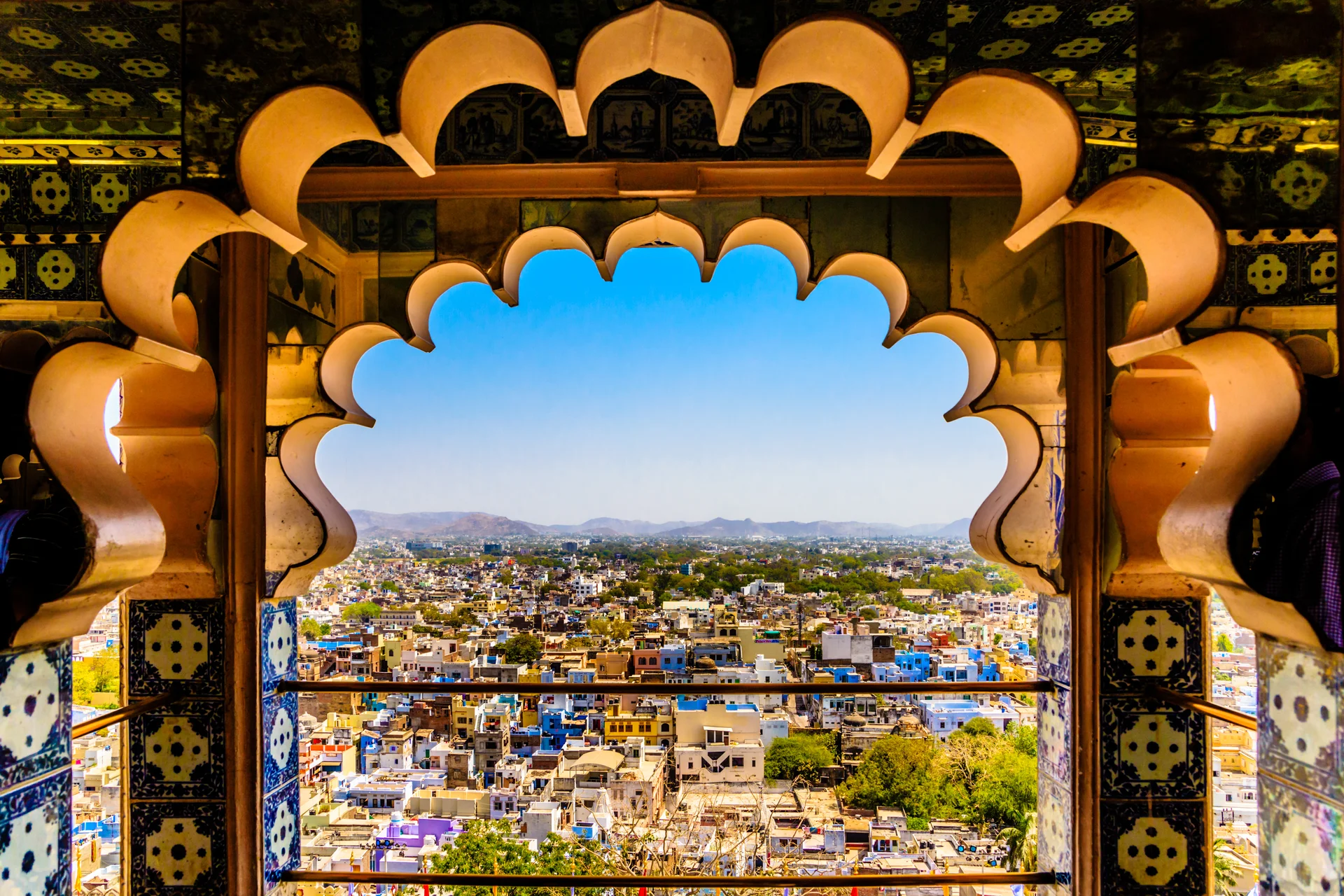
A line producer Rajasthan team holds the budget, schedule, contracts and reporting across Jaipur, Jodhpur, Udaipur and Jaisalmer, while film fixers in Rajasthan coordinate palace, fort and desert access, local authorities, regional crew and daily movement between these production bases.
Celluloid Pact supports features, OTT productions, documentaries and commercials across the state. The operating plan separates Tourism Department coordination from ASI, private-palace, forest, aviation and border-sensitive approvals, while RFTPP eligibility is assessed separately for qualifying formats.
Line Producer Rajasthan and Film Fixers: How the Statewide Production Layer Works
Rajasthan’s draw is the density of usable heritage geography compressed inside one state. Within roughly nine hours of driving you reach pink-sandstone fort cities, Mughal palace complexes, blue old-town quarters, Thar desert dunes, sacred lake systems, and the ornate Marwar architecture at a concentration that few other Indian states match. The Rajasthan Film Tourism Promotion Policy 2025 adds time-bound single-window coordination and tiered subsidies for eligible formats. The applicable rate and cap depend on production type, Rajasthan expenditure, shooting days or screen time; detailed eligibility is covered below.
What film fixers and line producers in Rajasthan actually do
A film fixer Rajasthan brief begins with the location list, controlling authorities, access conditions, local crew requirements and daily logistics. The role of film fixers in Rajasthan covers a defined sequence: scouting and presenting locations against the script’s needs across the four-city corridor, securing the right permits through the relevant Municipal Corporation and the ASI for monument access, coordinating with the state Film Facilitation Cell, assembling a regional crew at the right scale (often pulling between Jaipur, Mumbai, and the local city), handling cash flow and ATA-carnet customs at Jaipur’s airport (JAI) or Delhi’s IGI airport, and managing day-to-day liaison between the visiting team and the city Municipal Corporations, palace trusts, and tourism authorities. Rajasthan-based fixers tend to specialise by city. The Jaipur crew base is not the same as the Jaisalmer crew base; productions often combine city-specific local crews with travelling department heads.
Fixer vs line producer vs production service company
The Rajasthan fixer typically operates as a single point of contact with a four-city network. The line producer takes financial responsibility for the production budget and signs vendor contracts. The eligible film producer or production company submits the RFTPP application and post-release subsidy claim, while the line producer maintains the Rajasthan cost records, schedules, invoices and supporting production documentation. Tax and audit responsibilities follow the confirmed applicant structure. A line production company in Rajasthan may coordinate these functions on a smaller shoot, while larger productions can separate production management, local fixing, accounting and incentive-claim responsibilities.

Rajasthan’s four production cities, Jaipur, Jodhpur, Udaipur, Jaisalmer
Rajasthan’s filming geography clusters around four cities, each with its own architectural register, crew base, and seasonal window. The driving route from Jaipur to Jodhpur is roughly six hours, Jodhpur to Jaisalmer another five, Jaisalmer back to Udaipur a long ten-hour day, so multi-city schedules need careful sequencing. The Tourism Department’s Film Facilitation Cell anchors all four through a single application track since 2025.

Jaipur, the Pink City and the commercial-ad hub
A film fixer in Jaipur handles the day-to-day permit-and-property interface for Amber Fort, City Palace, Hawa Mahal, Nahargarh and Jal Mahal, along with the ad-film production companies clustered around Bani Park and C-Scheme. A line producer in Jaipur carries the schedule, RFTPP rebate documentation, crew contracting and cross-city routing when the shoot extends to Jodhpur, Udaipur or Jaisalmer. Our film fixer in Jaipur desk manages the daily approvals with the Jaipur Municipal Corporation, the district administration, and the Rajasthan Film Facilitation Cell that all sit on the same permit table.
Jaipur is the state capital and a principal Rajasthan production base. Most of the state’s commercial and ad-film work routes through here, and most of the regional crew bench lives in or near the city. The architectural register is the pink sandstone of the old quarter, the Amer Fort on the northern hill, the City Palace complex in the centre, Hawa Mahal as the iconic facade, Jal Mahal as the floating-palace shot, and Jaigarh and Nahargarh forts on the surrounding ridges. Albert Hall Museum and the Jantar Mantar observatory add modernist-Mughal contrast. Film fixers in Jaipur handle a large share of the state’s commercial volume. Jaipur is an authorised ATA Carnet customs location, but the production should confirm the exact airport or cargo facility and operating hours before arrival. Most Rajasthan line-production schedules anchor out of Jaipur even when shoots extend to Jodhpur, Udaipur, or Jaisalmer.

Jodhpur, Mehrangarh, the Blue City, international features
Jodhpur carries an extensive international filming record. Mehrangarh Fort doubled for Bane’s prison in The Dark Knight Rises and has hosted Padmaavat, Bajirao Mastani, and a long tail of period features. The Blue City old quarter wrapping the fort base is a widely filmed urban register, a maze of indigo-painted havelis and stepped lanes that work for both period coverage and contemporary stand-in. Umaid Bhawan Palace serves as the luxury-hotel set for residential and ceremonial sequences. Jaswant Thada delivers the white-marble cenotaph shot. Jodhpur Airport (JDH) handles regional connections; international productions usually route through Delhi or Jaipur and drive in. The Jodhpur production-services layer handles the Mehrangarh access committee, the Blue City lane permits, and the Umaid Bhawan trust separately. Three parallel tracks that need synchronised lead times.

Udaipur, palace heritage, OTT period, Octopussy lineage
Udaipur is the lake-and-palace city of the state and a frequent choice for international productions. The City Palace complex on Lake Pichola is the central register. Lake Palace (Taj Lake Palace) and Jag Mandir handle the floating-palace shots that James Bond’s Octopussy made iconic. Saheliyon Ki Bari and the Sajjangarh Monsoon Palace add formal-garden and hilltop-fort coverage. Recent productions including The Best Exotic Marigold Hotel routed through here. Udaipur-based production teams tend to coordinate three committees in parallel: the City Palace trust, the Mewar royal family administration (separate from state monument authorities for several locations), and the Tourism Department’s monument-access desk. A line producer Udaipur engagement maps those three tracks before scouting.

Jaisalmer, Thar desert and the Golden Fort
Jaisalmer sits on the western edge of Rajasthan, in the Thar desert. The Golden Fort, Jaisalmer Fort, is a living fort still inhabited inside the walls. Patwon Ki Haveli, Salim Singh Ki Haveli, and Nathmal Ki Haveli deliver the carved-sandstone-haveli register. Sam Sand Dunes, 40 kilometres west, provides the open desert sequences: camels, tented camps, sunrise dune crests. Jaisalmer Airport (JSA) handles limited regional flights; many productions route in by road, roughly 3 hours from Jodhpur or 10 from Jaipur as office planning estimates subject to route, traffic and weather. Film fixers in Jaisalmer coordinate the Sam Dunes ecology committee (the dunes sit inside the Desert National Park boundary), the Fort residents’ committee for any in-fort filming, and the local district administration for desert access. The shoot window is October through early March. By April the desert exceeds 40°C, so working hours and heat-safety planning govern late-season work.

Ajmer and Pushkar, Indonesian–Indian production work, Falcon Pictures lineage
Ajmer sits roughly 130 kilometres west of Jaipur on the road to Jodhpur, and the pilgrimage town of Pushkar is 15 kilometres further north, and together they form a working filming sub-region that has hosted some of the most operationally interesting Indonesian–Indian production work on our books. Haji Backpacker, the 2014 Falcon Pictures Indonesian feature, filmed Ajmer sequences with our line production support, threading the production through the city’s Dargah quarter, the lakefront, and the road corridor up to Pushkar. The cultural protocol around the Ajmer Sharif Dargah and the Pushkar Brahma temple complex requires specific community coordination above the standard municipal permit layer. A local Ajmer production-services engagement that maps those layers cleanly is what keeps the shoot moving.
The clip above is from the Titik Nol shoot, another Falcon Pictures production we line-produced through the Pushkar bus stand. Staging a controlled scene in a working pilgrimage town requires the local police coordination, the bus operators’ cooperation, crowd management, and a rapid setup-strike rhythm that the Indonesian crew expected and the Rajasthan team delivered. The Indonesian–Indian production bridge between Falcon Pictures and our Rajasthan operation is the closest current example of a sustained cross-border line production partnership routed through this region.
Permits, the Film Facilitation Cell, and monument access
Rajasthan’s permitting architecture moved from multi-department parallel applications to a single-window system in 2025 with the rollout of the Rajasthan Film Tourism Promotion Policy. The Tourism Department’s Film Facilitation Cell now anchors clearance coordination across the four cities, but the actual permit-issuing bodies remain distributed: municipal corporations for city locations, ASI for centrally-protected monuments, the state archaeological department for state-protected sites, the royal-family trusts for several Udaipur and Jodhpur locations, and the Desert National Park authority for Jaisalmer’s Sam Dunes. The single-window streamlines submission and tracking; it does not collapse the authority structure underneath.
RFTPP 2025, the single-window and the rebate
The Rajasthan Film Tourism Promotion Policy 2025 (RFTPP) is the current framework. It provides tiered subsidies for eligible feature films, web series, television serials and documentaries: the applicable rate can be 10%, 20% or 30%, depending on the format, Rajasthan expenditure, shooting days or Rajasthan screen time, with caps by production type (₹3 crore for feature films, ₹2 crore for web series and documentaries, ₹1.5 crore for TV serials). An additional 5% may apply when the complete production is filmed in Rajasthan, subject to the relevant cap. Advertising films and videos are ineligible.
Productions approved for subsidy may claim reimbursement of eligible fees paid at qualifying government-controlled locations for up to five days per location, subject to the overall policy ceiling. Applications route through the Film Facilitation Cell at the Rajasthan Tourism Department; the single-window turnaround commitment applies to the state single-window rather than automatically to ASI, private-palace, aviation or security approvals. The official policy confirms the tiered structure, exclusions and caps (see the Rajasthan Film Tourism Promotion Policy 2025).
ASI clearances and monument-committee layer
Centrally protected monuments require the applicable ASI (Archaeological Survey of India) process, with advance written application typically four to eight weeks ahead as an office planning estimate rather than a published timeline, and permit fees that scale by production scale. State-controlled monuments, private palace properties, living forts and royal trusts retain their respective authority and commercial-access routes, negotiated separately from the ASI process. Restrictions on drones, lighting rigs and any action that could damage or appear to damage a structure are common across protected sites. Several heritage locations carry parallel committees: the City Palace at Udaipur sits under the Maharana of Mewar Charitable Foundation, the Umaid Bhawan trust at Jodhpur is privately administered, and the in-fort residents at Jaisalmer have community consultation rights. Mapping all the access layers, and confirming which authority controls each location, is the longest lead-time item in pre-production.
ATA carnets, drones, weapons, and customs
ATA carnets clear through Jaipur (JAI) and Delhi (DEL) for productions arriving via international entry, with drive-in transfers to the western cities. Current Indian guidance lists Jaipur, but not Udaipur, among authorised ATA Carnet customs offices, so equipment routes through Jaipur or Delhi (CBIC/FICCI ATA Carnet guidance). The Directorate General of Civil Aviation (DGCA) handles drone authorisation. Most heritage zones in Rajasthan are restricted airspace requiring advance clearance, and Desert National Park around Sam Dunes carries its own no-fly considerations. Weapons (practical firearms for period sequences) need Ministry of Home Affairs coordination and a Rajasthan-registered armourer of record. Sensitive content (religious, royal-family-adjacent, or politically sensitive) routes through additional review at the Tourism Department and the Ministry of I&B.
Drone filming requires compliance with DGCA Digital Sky and the applicable airspace classification. Separate permission may also be required from the monument, property, conservation or local authority controlling the location. Border-adjacent work in Barmer, Jaisalmer and Bikaner requires project-specific airspace and security confirmation. We normally carry additional planning time and a ground-based coverage alternative for sensitive locations.

Rate ranges for Rajasthan productions
These are Celluloid Pact’s indicative planning ranges based on production experience, not published tariffs. Actual quotations depend on dates, scale, access conditions and vendor availability. Rates fluctuate with peak-season demand (October through March), senior-tier availability and the specific vendor relationships a production carries, so treat the bands as a working baseline for budgeting rather than fixed prices. Rajasthan generally runs below Mumbai for crew and equipment, comparable to Delhi on mid-tier bands, and above the Hyderabad-Bengaluru corridor for palace and monument work where local specialists carry a premium.
Crew day rates by role
Indicative Rajasthan day rates for a mid-tier feature or OTT shoot with Jaipur-based crew: a working line producer runs roughly ₹18,000–55,000 per day depending on tier and credits; a DOP ₹22,000–1,00,000; a gaffer ₹3,500–7,000; a focus puller ₹4,000–9,000; an art director ₹12,000–40,000. International-tier crew flown in from Mumbai or overseas run two to four times these bands with corresponding per diem and accommodation riders. Local location fixers with palace-committee relationships carry a premium of 20–30% above general fixer rates given the specialised access layer they hold.
Equipment hire and cross-city logistics
Most equipment for Rajasthan shoots comes out of Mumbai (Alexa, Sony Venice, Red packages) or Delhi (Noida Film City lighting and grip inventory). Camera package day rates: ARRI Alexa Mini LF body around ₹35,000–55,000 plus lens and support; Red Komodo around ₹22,000–32,000. Cross-city equipment transport between Jaipur, Jodhpur, Udaipur and Jaisalmer adds fuel, per diem and load-out crew costs to the equipment line; typical unit-move logistics run ₹40,000–80,000 per shoot day for the transport-and-load-in overhead.
Palace access, accommodation and production office
Heritage-location fees vary by controlling authority. Centrally protected ASI sites follow the applicable ASI terms, while state-controlled monuments, private palaces, living forts and hotel properties set their own access conditions and commercial rates. The figures below are Celluloid Pact planning allowances, not authority tariffs. Principal heritage sites (Amber, City Palace, Mehrangarh) run ₹50,000–3,00,000 per shoot day depending on activity, closure requirements and commercial vs editorial classification. Private palace properties (Umaid Bhawan, Jag Mandir, boutique havelis) carry premium rates negotiated with palace-family owners. Accommodation across the four cities: budget hotels ₹3,000–7,000 per room-night, mid-tier heritage properties ₹8,000–18,000, luxury palace-hotels (Umaid Bhawan, Taj Lake Palace, Rambagh) ₹35,000–1,50,000+. Per diem allowances for domestic crew run ₹1,500–3,500 per shoot day depending on tier.
Why international studios choose Rajasthan
International studios routing productions through Rajasthan draw on a commercial infrastructure that few global heritage-shoot markets can match. The RFTPP (Rajasthan Film Tourism Promotion Policy) 2025 provides tiered subsidies of 10%, 20% or 30% on eligible Rajasthan expenditure depending on the format and qualifying conditions, with an additional 5% where the complete production is filmed in the state and reimbursement of eligible fees at qualifying government-controlled locations for up to five days per location, a rebate position that competes with Morocco’s Ouarzazate corridor and Jordan’s Wadi Rum on international rebate-comparison decisions. Our tax incentive and rebate consulting coverage walks through the RFTPP application; central and Rajasthan incentive eligibility should be modelled separately, with qualifying expenditure and any non-duplication conditions confirmed before either benefit enters the finance plan.
Palace and monument inventory
Rajasthan carries an extensive working palace and monument inventory: Amber Fort, City Palace Jaipur, Hawa Mahal, Mehrangarh, Umaid Bhawan Palace, Jaswant Thada, City Palace Udaipur, Jag Mandir, Jaisalmer Fort, the desert havelis. Most of these properties operate on established filming-permit registers with the ASI Jaipur office and state monument committees, with senior-tier location fixers experienced in working through the property-management and approval process for private-property clearances. This access depth is why productions like The Best Exotic Marigold Hotel, The Dark Knight Rises, Octopussy, Padmaavat and Bajirao Mastani have used Rajasthan locations at feature scale.
Multi-city corridor routing
Rajasthan is not a single-city shoot in most international briefs. A typical international schedule routes through Jaipur (Amber Fort and City Palace), Jodhpur (Mehrangarh and Umaid Bhawan), Udaipur (City Palace and Lake Pichola), and Jaisalmer (Fort and Sam desert) as one continuous unit-move. Delhi as the corridor entry, with federal permits, IGI customs for equipment carnets, and the road-and-rail infrastructure into Jaipur, sits inside our Film Fixers In Delhi operational layer. Many international productions base prep out of Mumbai and rail equipment overnight to the Rajasthan floor; our Line Producer Mumbai desk carries that cross-state operational layer.
Location diversity: desert, palace, lake, forest
The visual inventory Rajasthan offers spans four distinct location registers: Thar Desert dunes and camel-caravan textures around Jaisalmer and Bikaner (Central Asian, Arabian, generic desert-warrior stand-ins), palace-heritage interiors and courtyards across all four cities (Mughal, Rajput, Islamic and colonial-period plates), lake-and-water complexes at Udaipur (romantic-period, wedding sequences, arty exterior), and the Ranthambore–Sariska forest belt (tiger-country wilderness). That range of location registers sits inside a single-state administrative unit with a single-window permit interface. International producers weighing India options frequently compare Rajasthan against Kerala’s backwater-and-hillstation register; our Line Producer Kerala desk covers that alternative brief when the shoot needs tropical-coastal or Western Ghats textures instead of desert-and-palace.

Desert logistics: water tankers, sand ingress, unit tents
Thar Desert shoots around Jaisalmer, Sam, Khuri and Barmer carry a specific operational load that inland productions rarely encounter. Water tankers are mandatory infrastructure; as an office planning estimate a single unit day in the deep desert consumes roughly 8,000–15,000 litres for crew hydration, wardrobe rinse, base-camp catering and equipment cleaning, and standing water-supply contracts with Jaisalmer city vendors book weeks ahead of the shoot. Sand ingress protection on cameras, lenses, sound gear and lighting fixtures requires dedicated cleaner-and-cover kits, silica-gel drying at base camp, and a rotating standby-lens protocol so a compromised lens doesn’t halt the shoot.
Generator fuel logistics run heavy; desert base camps carry redundant genset capacity with roughly 500–1,000 litres of diesel per shoot day as an office planning estimate, sourced through Bikaner or Jodhpur fuel depots with morning delivery to base. Unit tents for base camp, catering and talent green rooms are standard in the desert; most productions engage local Jaisalmer tent operators who understand the sand-anchor and shade requirements. Camel coordination for talent transport, tracking shots and background action runs through the Jaisalmer camel-owners association with dedicated liaison for foreign productions. Vehicle recovery (4×4 tow, Gypsy retrieval, sand-plate deployment) is a standing service that experienced desert line producers pre-position rather than call for reactively.
Crew, the RFTPP rebate scheduling, and engaging a line producer in Rajasthan
Most Rajasthan line-production schedules structure around Jaipur as the primary logistics base. The crew bench is anchored here with regional benches at Jodhpur and Udaipur and a smaller specialised crew layer at Jaisalmer for desert work. International productions typically build the unit around Mumbai-based HODs (DP, gaffer, key grip, production designer, costume designer) with Rajasthan-based regional crew, art department, costume making, transport, location managers, and the city-level fixer layer. English-fluency is the operational norm in the Jaipur and Udaipur metropolitan layers; rural and desert shoots run more in Hindi and Marwari with English-fluent leads.
Crew depth, equipment, and the multi-city schedule
Equipment rental (Arri Alexa packages, Sony Venice, Red lines, grip and lighting) routes through Mumbai-based houses with trucking transfers to Rajasthan. Jaipur has a smaller working rental base for medium-scale shoots. Specialist crew (underwater, helicopter, large-scale SFX rigging) fly in from Mumbai or Delhi. The four-city multi-stop schedule typically structures around a Jaipur base with 3-5 day shoot blocks at Jodhpur, Udaipur, and Jaisalmer, with full transfer days built in. Productions covering all four cities run 30-50 day schedules typically.
Seasonal scheduling, October through March
Rajasthan’s prime production window runs October through March, with daylight temperatures sitting comfortably in the 15-25°C range, palace courtyards open and accessible, desert nights cool but workable. April through June pushes the deserts above 40°C and even the cities into the mid-30s; outdoor work is scheduled around working hours and heat-safety planning. The monsoon block from July to September brings short windows of dramatic palace-lake reflection at Udaipur but unpredictable continuity for any sequence running multi-day. International productions routing through Rajasthan should plan for an October-to-March principal photography block; pre-production scouts can run in the off-season.
Rajasthan weather imposes operational costs beyond the calendar itself. Summer months push generator cooling schedules to the limit and heat-haze affects long-lens sharpness on desert exteriors, and dust contamination on lenses and glass matte-boxes is a year-round concern in Thar Desert locations around Jaisalmer and Bikaner. Sand-ingress protection kits become part of every camera department’s standard load-out. Winter fog on the eastern belt around Bharatpur and Alwar delays outdoor starts, and wardrobe departments carry backup rain shells for the pre-monsoon squalls that occasionally hit Udaipur in early May. Monsoon (June through September) is generally avoided for outdoor shoots; most productions use this window for interiors, VFX capture and post-production work.
Engaging a Line Producer in Rajasthan
Most Rajasthan schedules become workable or unworkable at the briefing stage. We typically start with the script, the four-city sequence the script implies, an estimated crew size, the equipment profile, and the RFTPP rebate path. By the time the feasibility note is back, the city committees’ lead times, the RFTPP application track, and the multi-city schedule logic should already be visible alongside the regional crew bench available for the dates.
The Indian production architecture mapped at the network level sits across the broader corridor we cover. Central and Rajasthan incentive eligibility should be modelled separately, with qualifying expenditure and any non-duplication conditions confirmed before either benefit enters the finance plan. Rajasthan-specific work routes through the four-city plus Ajmer-Pushkar route described above. The credits behind this operation sit in our film production portfolio alongside the broader Indian and cross-border work.
Line production in Rajasthan centres on synchronising city authorities, ASI clearances, multi-city movement, RFTPP documentation and the crew plan before principal photography begins. Rajasthan sits inside our wider line producer India network, which holds the national structure for multi-state schedules.

Frequently asked questions
How much does a line producer cost in Rajasthan?
Line producer day rates in Rajasthan typically run between INR 18,000 and INR 55,000 per shooting day depending on credits, project scale and shoot complexity. Senior line producers with palace-committee relationships and RFTPP rebate experience engage at a premium. Feature and international productions usually engage on a project-fee basis covering prep, shoot, wrap and rebate-documentation phases; OTT and ad-film work typically runs on day-rate contracts.
How does the RFTPP rebate work?
The Rajasthan Film Tourism Promotion Policy 2025 (RFTPP) provides tiered subsidies of 10%, 20% or 30% on qualifying Rajasthan expenditure, depending on the format, spend, shooting days or Rajasthan screen time, with caps by production type (₹3 crore for feature films, ₹2 crore for web series and documentaries, ₹1.5 crore for TV serials). An additional 5% may apply when the project is shot entirely within the state, and eligible fees at qualifying government-controlled locations may be reimbursed for up to five days per location, subject to the policy ceiling. Advertising films and videos are ineligible.
Applications route through the Rajasthan Film Facilitation Cell single-window. The applicant submits the subsidy claim within six months of the film’s release, together with the required release evidence, audited Rajasthan cost statement, bills, call sheets and supporting production material, as set out in the official RFTPP policy and guidelines. The eligible film producer or production company submits the application, while the line producer maintains the Rajasthan cost records and supporting documentation.
Can foreign crews film in Rajasthan?
Foreign crews shooting commercial content in India generally require central Ministry of Information and Broadcasting (MIB) permission, with the exact route depending on format, nationality and crew role. Requirements such as PIB accreditation or FWICE clearance apply to specific formats and to the use of Indian union crew rather than to every foreign commercial shoot, and documentary work often follows a separate MEA (Ministry of External Affairs) track. A line producer in Rajasthan confirms the applicable central permission, visa and local-labour route for the specific unit and runs it in parallel with state permits and monument-committee clearances so foreign crew arrivals line up with permit-in-hand shoot dates.
How long do heritage monument permits take?
The following windows are Celluloid Pact office planning estimates, not published processing times. ASI clearances for Rajasthan heritage monuments (Amber Fort, City Palace Jaipur, Mehrangarh, Umaid Bhawan, Jaisalmer Fort) typically run 4 to 6 weeks. Private palace-family properties (Rambagh, Devi Garh, Taj Lake Palace) run on separate negotiation timelines depending on the owner’s discretionary calendar and can range from 2 to 8 weeks. State Film Facilitation Cell single-window permits for general locations clear in 2 to 3 weeks; sensitive-zone approvals for border districts (Barmer, Jaisalmer, Bikaner) can extend to 6 to 8 weeks with defence-ministry involvement.
Can you film at private palace properties?
Yes. Most working palace properties (Umaid Bhawan Jodhpur, Taj Lake Palace Udaipur, Rambagh Jaipur, Devi Garh, Jag Mandir) accept film shoots on negotiated terms with palace-family owners. Rates vary significantly with production activity, closure requirements, whether the property is operating as a hotel during the shoot, and commercial vs editorial classification. Access is generally facilitated through senior location fixers experienced in working through the property-management and approval process; this is a specialised access layer that runs above general location-fixer work.
Can Rajasthan double for other locations?
Yes, extensively. The Thar Desert around Jaisalmer stands in for Central Asian, Arabian and generic desert-warrior landscapes. Palace interiors across Jaipur, Udaipur and Jodhpur stand in for Mughal, Ottoman, Persian and colonial-period settings. The eastern Ranthambore forest belt stands in for generic tiger-country wilderness. Rajasthan’s diversity is why productions like The Dark Knight Rises (Mehrangarh as Bane’s prison), Octopussy (Udaipur as a fictional locale), and international ad shoots for global brands regularly select Rajasthan over Morocco, Jordan or the Central Asian steppe.
When is the best season to film in Rajasthan?
October through March is the prime window: cool temperatures across all four cities, comfortable shoot conditions, cleanest light. December and January carry occasional early-morning fog on the eastern belt (Bharatpur, Alwar). April through May turns hot with desert temperatures approaching 45°C in Jaisalmer and Barmer, which limits outdoor windows to before nine and after five. Monsoon (June–September) is generally avoided for outdoor shoots; most productions use this window for interiors, VFX capture and post work.
Is Delhi the best corridor entry for Rajasthan shoots?
Delhi is a common corridor entry, with federal permits, IGI cargo customs for equipment carnets, and the Delhi–Jaipur expressway that runs Delhi to Jaipur in roughly four and a half hours off-peak. Most international productions consolidate customs, PIB accreditation and pre-production in Delhi, then road down to Jaipur to begin the Rajasthan schedule. Mumbai is the secondary corridor for productions basing prep out of Bollywood’s crew and equipment market and railing equipment overnight to the Rajasthan floor.
