

This guide is part of our Film Fixers In Middle East production work.
Jordan film permits are facilitated through the Royal Film Commission, which lists three working days for its facilitation letter for public streets and squares. Petra, drone filming and Public Security Directorate requirements have published RFC periods. Wadi Rum and airport locations follow separate site and operator conditions that must be confirmed for the brief.
The country sits at the centre of the MENA permit corridor: Petra and Wadi Rum anchor the heritage and desert terrain that drive foreign production interest, three airports shape crew arrival, charter access and equipment routing with Queen Alia as the principal international customs gateway, and the RFC liaises with the Petra authorities, ASEZA and its Wadi Rum administration, the security and aviation bodies and Jordan Customs. Our work alongside film fixers in Jordan covers the full RFC submission cycle, sub-authority coordination, customs preparation and multi-region scheduling.
Jordan sits inside the Middle East network alongside Morocco, Tunisia, Egypt, Saudi Arabia and the Gulf, and the briefing decision for any MENA permit-heavy shoot frequently turns on which framework actually fits the script. Jordan’s draw sits in Petra’s heritage frames and Wadi Rum’s red-desert register under a single RFC facilitation route. Where the brief leans toward Atlas Studios Ouarzazate, Tatooine-coded Tunisian heritage, or Cairo studio-based EMPC work, the alternatives may serve the production better. This piece covers the Jordan side in detail and the MENA alternatives where they apply.
What follows is the working reality of Jordan film permits, the RFC framework, Petra’s archaeological-zone permit stack, the Wadi Rum site conditions under ASEZA, the three gateway airports and temporary equipment admission, and the briefing-stage decision on when Morocco, Tunisia or Egypt might fit the brief instead.

Jordan film permits framework, the Royal Film Commission
The Royal Film Commission Jordan is the primary facilitation body for foreign productions. The RFC was established by Royal Decree and provides the primary facilitation route for foreign productions and coordinates with the authorities responsible for each requested location or activity. All foreign productions must partner with a local production-services company or fixer. The RFC does not facilitate a foreign project without an in-country partner. The official RFC contact runs through filminjordan@film.jo.

RFC facilitation and the three-working-day letter for public streets and squares
Jordan film permits are facilitated through the Royal Film Commission. For a complete foreign-production application filed through a local production company or fixer, the RFC lists three working days for its facilitation letter covering public streets and squares. Petra, drone filming and Public Security Directorate requirements have published RFC periods. Wadi Rum and airport locations follow separate site and operator conditions that must be confirmed for the brief.
Incomplete dossiers reset the clock. The RFC requires the production company details, the local production partner details, the project synopsis with content sensitivity notes, the shoot schedule, the location list, the crew manifest with passport scans, the equipment list, and the proposed shoot windows. Anything missing at submission lengthens the cycle until the file is complete.
Local production partner requirement
Foreign productions must appoint a Jordanian production-services company or fixer. The local partner prepares and submits the file and remains the operational contact throughout the approval process. On a Jordan brief we place the foreign-side line producer alongside the Jordanian partner from the start of pre-production, because the partnership is the route into the RFC submission itself.
Temporary Equipment Admission: Gearlist and Customs Clearance
Jordan is absent from the ICC ATA Carnet country directory, while Morocco and Tunisia are listed. Film equipment therefore enters Jordan as a temporary admission under the Jordan Customs temporary-admission provisions rather than on a carnet. The foreign team works through a local shipping and clearance company using a detailed equipment list with serial numbers, declared values and a re-export plan, supported by commercial invoices or ownership declarations as the broker requires.
The temporary-admission period is three months, subject to Jordan Customs conditions and guarantees; any extension is applied for under those conditions rather than assumed. Clearance time depends on the completeness of the file and on Jordan Customs processing. The RFC supports the customs preparation through the facilitation letter but does not handle the customs process; the local production partner manages the broker relationship and the airport-side clearance. Productions arriving with a carnet and expecting it to be accepted discover the gap at the wrong moment, so the equipment list is built into the pre-production timeline from the start.
Public Security Directorate requirements, 14 working days listed
Shoots involving Jordanian military or law-enforcement coordination, desert convoy sequences, restricted-area access or action staging with police participation may fall under the Public Security Directorate requirements filed through the RFC. The RFC currently lists 14 working days for this category; that is a published administrative window, not a guaranteed approval, and it runs separately from the facilitation-letter period. Productions building these elements into the schedule file the request at the start of pre-production.
Drone filming, security-sensitive content and review
Can you fly drones in Jordan? Commercial drone filming requires RFC facilitation together with Civil Aviation Regulatory Commission (CARC) and security approvals. The RFC lists five working days for its facilitation category but currently advises applying for the operational approvals 15 to 30 working days in advance, per the current RFC filming procedure. Confirm the current requirement with the RFC and CARC before travel.
The operational application goes through the Ministry of Interior with Royal Jordanian Air Force and CARC coordination, using the CARC application form. The approved operating area, altitude, dates and security conditions are set for the specific application.
Military, border, security-sensitive and restricted-site content should be disclosed when the brief is prepared. The RFC can then identify the additional authority, documentation and approval route required for the specific location and activity.
Each of these approvals runs on its own administrative track alongside the facilitation letter, so early disclosure keeps the applications running in parallel rather than in sequence.
Petra filming permits, PDTRA and Petra Archaeological Park
Petra sits at the centre of Jordan’s heritage filming activity, and the archaeological zone is a UNESCO World Heritage Site. The Petra Development and Tourism Region Authority (PDTRA) oversees the region, and Petra Archaeological Park (PAP) directly manages the site under PDTRA oversight. The RFC facilitates the production’s application and liaises with the Petra authorities on its behalf, with the Department of Antiquities involved where heritage clearance is required.

Petra archaeological zone application
The Petra file sits on top of the standard RFC facilitation letter and covers the requested locations within the archaeological zone, the crew and equipment footprint, the requested windows and any heritage considerations. The RFC currently lists five working days for Petra applications submitted with a complete file. Final filming conditions, public-access windows, equipment restrictions and any additional heritage requirements must be confirmed with the Petra authorities for the requested activity.
Petra Treasury and Siq, public-access windows
The Treasury, known locally as Al-Khazneh, is the best-known Petra frame. The Siq, the narrow canyon approach that opens onto the Treasury, carries comparable visitor density during opening hours. Windows outside public hours can be requested where the activity needs cleared frames; the time windows, the crew and equipment footprint and any access restrictions are set by the Petra authorities in the filming conditions for that application.
Filming during public hours works around visitor flow, and the footage includes visitors by default. Productions wanting cleared frames request early-morning, after-closing or restricted-access windows through the Petra authorities, each of which carries its own conditions.
Petra Production History: Indiana Jones and Transformers

Indiana Jones and the Last Crusade in 1989 used the Treasury as the exterior of the Grail temple in the climactic sequence, an early reference point for Petra heritage filming. Transformers: Revenge of the Fallen filmed at Petra in 2009. Both remain reference points for productions briefing Petra, though current filming conditions are set by the Petra authorities for each application rather than by earlier productions.
Wadi Rum filming permits, ASEZA and local community coordination
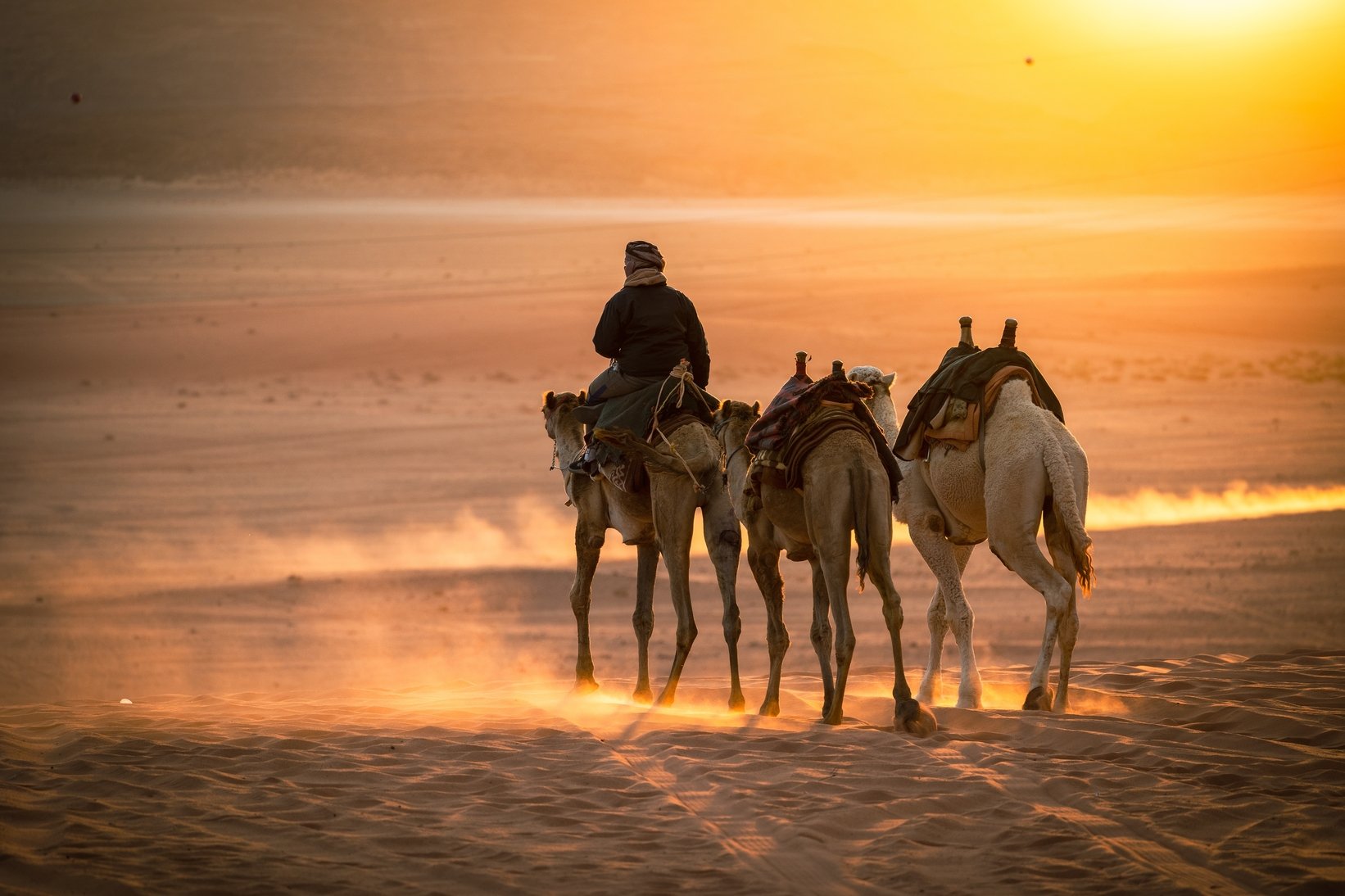
Wadi Rum carries a different structure from Petra. The southern desert is a UNESCO World Heritage Site, the Wadi Rum Protected Area, and it falls under the Aqaba Special Economic Zone Authority (ASEZA), whose Wadi Rum regional administration is the formal authority layer for the site. The RFC facilitation letter covers the production application, and ASEZA’s Wadi Rum administration sets the site conditions. Local community coordination matters for guides, camps, transport and location knowledge, but it is not a separate legal permit.

ASEZA’s Wadi Rum administration and site access
ASEZA’s Wadi Rum administration manages conservation zoning across the Protected Area. Vehicle access, the zones and routes available to the unit, and any escorted access for off-route or sensitive areas are set in the site conditions issued for the application; the production works to the route map and access window it is given.

Local community coordination on the ground
Wadi Rum’s Bedouin communities run much of the on-ground service base, and local coordination covers guide arrangements, camp setup, transport, water access and location knowledge for specific formations. It sits alongside the formal ASEZA and RFC framework as practical production support rather than as a separate permit, and it is arranged through the local production partner.
Wadi Rum production history, Dune, Martian, Star Wars, Lawrence of Arabia

Lawrence of Arabia in 1962 established Wadi Rum as an international filming location for desert epic work. The red sandstone walls and dune corridors anchored the historical Arabian narrative. The Martian in 2015 used Wadi Rum as the Martian surface. Dune Part One in 2021 and Dune Part Two in 2024 filmed Arrakis exterior sequences across the protected area. Star Wars: The Rise of Skywalker in 2019 used Wadi Rum as Pasaana. The 2019 Aladdin live-action filmed multiple Agrabah-context sequences in the protected area. Each worked within the Protected Area framework of its time; current site conditions are set by ASEZA’s Wadi Rum administration for each application.
Jordan airports, equipment customs, crew arrival and onward routing
Three airports carry the Jordanian production logistics. Queen Alia International serves Amman as the primary international gateway and the usual international equipment entry point. Marka Airport in Amman may support charter and private-aviation operations, subject to confirmation. Aqaba in the south provides direct access to Wadi Rum and Petra for productions skipping the Amman corridor. The airport selection drives the customs routing, the crew arrival cycle and the temporary-import and gearlist preparation.

Queen Alia International (QAIA / AMM), usual international equipment entry point
Queen Alia International Airport, IATA code AMM, is the principal international gateway for Amman and the usual entry point for film equipment. Airline routes, flight availability and cargo capability are confirmed with the carriers for the shoot dates. Temporary admission at QAIA runs through the local clearance company on the equipment list described above, and the time it takes depends on the completeness of the file and Jordan Customs processing rather than a fixed period. Crew arrival and equipment intake usually anchor here before onward dispatch to Wadi Rum or Petra unless the brief routes through Aqaba.
Queen Alia also functions as a filming location in its own right. Productions requiring modern airport environments, busy terminals, active passenger flow, contemporary architectural design, treat QAIA filming permission as a separate item confirmed with the airport operator through the RFC. Shoot windows work around live operations, and access is limited to the terminal areas approved for the application.

Marka Airport (ADJ), Amman secondary, charter operations
Marka Civil Airport, IATA code ADJ, is Amman’s secondary aviation facility and may support charter and private-aviation operations and aerial-unit origination, subject to confirmation. Productions running helicopter aerial work or chartered crew arrivals may route through Marka; whether a given charter, cargo movement or temporary admission can be handled there is confirmed with the operator and Jordan Customs for the shoot dates. Scheduled-flight equipment intake is normally routed through QAIA.
Aqaba (AQJ), southern direct access to Wadi Rum and Petra

King Hussein International at Aqaba, IATA code AQJ, sits at the southern end of Jordan on the Red Sea coast. The airport handles limited international connections and serves productions routing directly to the southern locations by road. Aqaba falls within the Aqaba Special Economic Zone, so customs processing operates within ASEZ arrangements and the applicable Jordan Customs requirements. Flight availability, cargo capability, airport filming permission and temporary admission at AQJ are separate items confirmed with the operator and the relevant authorities for the shoot dates. For briefs that live entirely in the south, AQJ arrival avoids the Amman-to-south transit, subject to those confirmations.
Engaging a film fixer and MENA permit alternatives
The briefing call on a Jordan-heavy MENA shoot resolves into two interlocked decisions. The first is which authorities the schedule actually touches, Petra alone, Wadi Rum alone, both in sequence, plus or minus Amman urban and Aqaba coastal. The second is whether Jordan is the right country at all for this specific script. The alternatives across the MENA corridor, Morocco, Tunisia, Egypt, each carry their own permit framework, rebate structure and visual register, and the right call sometimes routes the shoot elsewhere.

RFC plus multi-authority Jordan coordination
A Jordan permit-heavy brief routes through the RFC as the spine: facilitation letter, sub-authority liaison and customs preparation. The film fixer plus line producer pairing then coordinates with PDTRA and Petra Archaeological Park for Petra, ASEZA’s Wadi Rum administration for the southern desert, ASEZA for any Aqaba-coastal work, the airport operator for airport filming, CARC through the Ministry of Interior for drones and Jordan Customs through the clearance company for equipment. The preparation timetable is built from that authority list.

When Morocco, Tunisia or Egypt fit the brief instead
Morocco offers a national cash rebate, with current thresholds on the Morocco pages. Atlas Studios in Ouarzazate provides the Sahara and Berber registers, Marrakech and Casablanca the medina and urban frames, and Morocco is listed in the current ICC ATA Carnet directory. Where the desert work fits Sahara dunes rather than red sandstone, or the budget clears the rebate thresholds, film fixers in Morocco are the alternative to check against the current quote and incentive eligibility.
Tunisia has no national cash rebate; any project support is confirmed per project. Tunisia’s Ministry of Cultural Affairs lists 7 to 15 days for a complete filming authorisation, which heritage, security, aerial and location approvals can extend; Tunisia is also listed in the current ICC ATA Carnet directory. The Tatooine heritage at Matmata, Tozeur, Tataouine and Chott el-Jerid anchors the desert science-fiction register. Where the register or the current quote favours Tunisia, our Film Fixers In Tunisia framework covers the corridor work.
Egypt runs the Egypt Film Commission and Egyptian Media Production City framework with a cashback incentive whose current terms are on the Egypt pages. It fits in-studio drama and period series on EMPC standing sets, while the Pyramids, Karnak and Luxor coordinate through the Antiquities Ministry alongside the EFC, with temporary-import rules on the same pages. Where the script anchors on EMPC infrastructure or Egyptian heritage sites, Egypt is the alternative to compare. The choice follows the script, the current quote, incentive eligibility and each authority’s requirements.
Multi-region Jordan scheduling, north to south
A multi-region Jordan brief routes from Amman in the north through Petra in the centre to Wadi Rum in the south, with Aqaba as the optional coastal endpoint. Amman provides the urban shoot tier and QAIA equipment intake. Petra is approximately three hours by road from Amman. Wadi Rum is approximately 90 minutes to two hours from Petra, and Aqaba is around one hour from Wadi Rum. These are indicative routing times and should be checked against the final vehicle plan, road conditions and access windows. Shoot days per region follow the script and the site conditions issued for each location.
Build the preparation timetable from the final location and activity list. RFC facilitation, Petra and Wadi Rum site conditions, public-security requirements, drone approval, temporary equipment admission and airport access run on separate administrative tracks. The coordination across those tracks is what the local production partner and the film fixer pairing do.
