

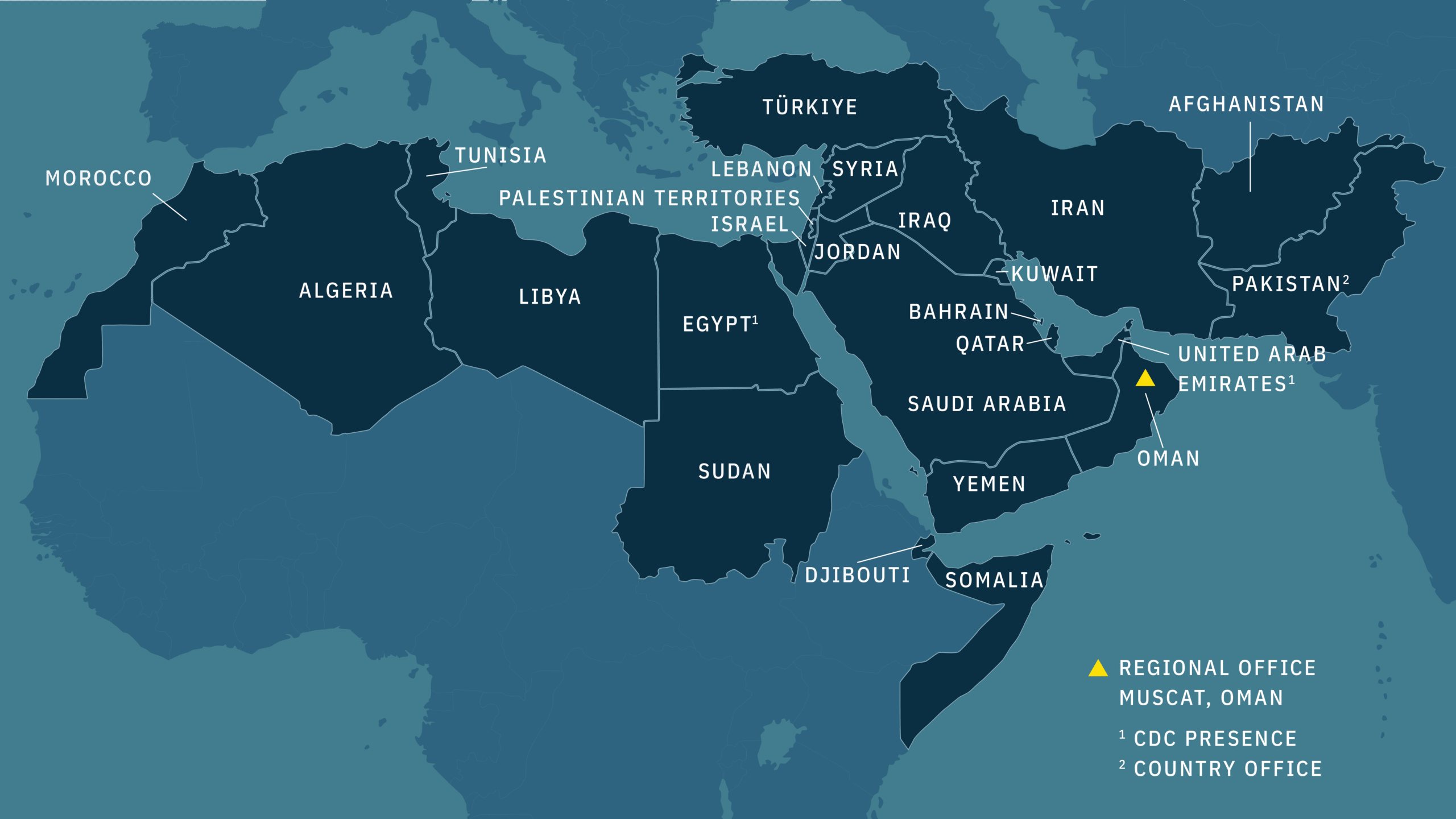
MENA filming permits follow separate national and site-specific procedures in each territory. The UAE, Saudi Arabia, Jordan, Egypt, Morocco, Tunisia and Türkiye each run a principal facilitation body for foreign productions, and behind each of those bodies sit the heritage, security, aviation, municipal and customs approvals that attach to a specific location or activity. There is no regional permit, no shared application format and no common timetable.
This guide is the comparison layer for that map. It sets out which body a foreign production applies through in each territory, which approvals run separately, how film equipment enters each country and what has to be confirmed before a schedule is committed. Current incentive terms, rate cards and country-level operating detail sit on the dedicated production and incentive guides, and the strategic question of whether the region fits a brief sits with our Middle East line producer network. Published administrative periods are quoted where an authority publishes one; where it does not, the timing is confirmed for the project.

How MENA filming permits work
Each territory has a public-facing film body that receives the foreign production’s application: the Dubai Film and TV Commission and Abu Dhabi Film Commission in the UAE, the Saudi Film Commission with Film AlUla for AlUla county, the Royal Film Commission in Jordan, the Egypt Film Commission affiliated with the Egyptian Media Production City, the Centre Cinématographique Marocain in Morocco, the Ministry of Cultural Affairs single-window procedure in Tunisia and the Ministry of Culture and Tourism’s Directorate General of Cinema in Türkiye. That body facilitates or issues the general filming authorisation and, in most cases, coordinates with the other authorities the request touches.
The separate approvals are where the planning work sits. Archaeological sites and protected areas answer to heritage or site authorities, drones to civil aviation and security bodies, restricted areas to interior or security ministries, city streets to municipalities, airports and ports to their operators, and equipment to customs. Some are handled inside the film body’s facilitation; others are applied for directly, usually through the local partner.
Principal route and separate approvals by territory
| Territory | Principal facilitation route | Important separate approvals | Country owner page |
|---|---|---|---|
| UAE | Dubai Film and TV Commission (Dubai); Abu Dhabi Film Commission and twofour54 (Abu Dhabi); other emirates through their own authorities | Site owners, municipal and police permissions, aviation approval for drones, customs | film fixers in Dubai |
| Saudi Arabia | Saudi Film Commission (national); Film AlUla for AlUla county | Heritage-site approvals, Riyadh municipal permissions, aviation, customs | line producer Saudi Arabia |
| Jordan | Royal Film Commission facilitation with a required Jordanian partner | Petra authorities, ASEZA for Wadi Rum and Aqaba, Public Security Directorate, CARC for drones, airport operators, Jordan Customs | Jordan film permits |
| Egypt | Egypt Film Commission, affiliated with EMPC | Ministry of Tourism and Antiquities for heritage sites, security approvals, Sinai coordination, customs | film fixers in Egypt |
| Morocco | Centre Cinématographique Marocain filming authorisation | Heritage-site approvals, local authorities and municipalities, aviation, customs | line producer Morocco |
| Tunisia | Ministry of Cultural Affairs single-window filming authorisation | Heritage-site approvals, security and aerial approvals, location-specific permissions, customs | film fixers in Tunisia |
| Türkiye | Ministry of Culture and Tourism, Directorate General of Cinema | Municipal (belediye) permissions, heritage and museum authorities, aviation, customs | line producer Turkey |
Country-by-country MENA filming permits
UAE: emirate-level permits
The UAE has no single national film permit. Dubai Film and TV Commission issues location permits within Dubai emirate through a UAE-licensed production company after script approval; Abu Dhabi Film Commission and twofour54 run the separate Abu Dhabi structure; Sharjah, Ras Al Khaimah and the other emirates coordinate locally. Site-owner consent, municipal and police permissions and civil-aviation approval for drones branch off from either route. Emirate-level permits, locations and execution sit on film fixers in Dubai.
Saudi Arabia: Saudi Film Commission and Film AlUla
The Saudi Film Commission is the national route for foreign productions, with Film AlUla coordinating AlUla county, including Hegra, Old Town AlUla, Dadan and Jabal Ikmah, where heritage-site conditions apply on top of the national authorisation. Riyadh urban work adds municipal permission; script review and content approval run early; NEOM operates under its own arrangements. The application sequence, crew and on-the-ground detail sit on line producer Saudi Arabia.
Jordan: Royal Film Commission facilitation
The Royal Film Commission provides the facilitation route, and the foreign production must appoint a Jordanian production-services company or fixer to prepare and submit the file. The RFC publishes three working days for its facilitation letter for public streets and squares and five for Petra applications. PDTRA and Petra Archaeological Park set Petra conditions, ASEZA’s Wadi Rum administration sets conditions in the Protected Area, and airport filming is confirmed with the operator. The full procedure is on Jordan film permits.
Egypt: Egypt Film Commission
The Egypt Film Commission, affiliated with the Egyptian Media Production City, is the entry point for the general authorisation for foreign filming, coordinating approvals through the central route on a published 10 to 30 day target. Heritage sites such as Giza, Saqqara, Luxor and Aswan carry separate Ministry of Tourism and Antiquities conditions, and security approvals and Sinai coordination attach by location. Antiquities filings, drones, customs and crew entry sit on film fixers in Egypt.
Morocco: Centre Cinématographique Marocain
The Centre Cinématographique Marocain issues the filming authorisation for foreign productions, filed through a Moroccan company approved for executive production, with published processing periods by format once the file is complete. Heritage-site approvals, local authorities and municipalities in Casablanca, Rabat, Marrakesh and the Ouarzazate corridor, and aviation approval for aerial work run separately. The CCM file, site permissions and execution sit on line producer Morocco; the incentive scheme is covered on the Morocco incentive owner.
Tunisia: Ministry of Cultural Affairs single window
Filming authorisation in Tunisia runs through the Ministry of Cultural Affairs single-window procedure, which lists 7 to 15 days for a complete application. Heritage-site conditions at sites such as El Djem, Dougga and Carthage, security and aerial approvals, and location-specific permissions for Sahara work at Tozeur, Matmata and Tataouine can extend that timetable. The single-window file, governorate coordination and on-the-ground detail sit on film fixers in Tunisia.
Türkiye: Directorate General of Cinema
The national foreign-production authorisation runs through the Ministry of Culture and Tourism’s Directorate General of Cinema. There is no single Istanbul film commission: municipal (belediye) permissions, heritage and museum authorities, and site operators at locations such as Cappadocia, Aspendos and Mount Nemrut approve separately, and drones go through civil aviation. The authorisation sequence, municipal chain and crew detail sit on line producer Turkey.
Heritage and protected-site approvals across MENA
| Site | National facilitation body | Site or heritage authority | What the site authority sets |
|---|---|---|---|
| Petra and Wadi Rum (Jordan) | Royal Film Commission | PDTRA and Petra Archaeological Park; ASEZA Wadi Rum administration | Filming windows, access routes, crew and equipment footprint, public-access arrangements |
| Giza, Saqqara, Luxor and Aswan (Egypt) | Egypt Film Commission | Ministry of Tourism and Antiquities; security approvals | Site access, equipment restrictions, escorted areas, content conditions |
| Hegra and AlUla (Saudi Arabia) | Saudi Film Commission | Film AlUla within the Royal Commission for AlUla | Access to the archaeological sites, conservation conditions, scheduling |
| Aït Benhaddou and the ksour band (Morocco) | Centre Cinématographique Marocain | National heritage authorities | Conditions for filming at listed sites and structures |
| Ephesus, Pamukkale and Cappadocia (Türkiye) | Directorate General of Cinema | Directorate General of Cultural Heritage and Museums; site directorates | Museum and site permissions, fees, restricted areas |
| El Djem, Carthage and Dougga (Tunisia) | Ministry of Cultural Affairs | Institut National du Patrimoine | Site access and conservation conditions for the requested activity |
Filing heritage-site requests
Every territory in the comparison has heritage or protected-site authorities operating alongside the national film body, and their conditions are what a production works to on the day. This comparison does not assign a general lead time to the six site authorities. Timing is confirmed with the relevant authority for the requested activity. Jordan’s RFC separately publishes a five-working-day category for Petra, while the final filming conditions remain with the Petra authorities.
The practical consequence is that heritage-site requests are filed as early as the location list allows, with the crew list, equipment list, requested dates and activity description complete, because incomplete files are the usual reason a site approval slips. Where a standing set or stand-in can serve the brief, such as Ouarzazate for Saharan or Roman work, that option is weighed against the site request on creative and operational grounds.
Temporary equipment admission and ATA Carnet across MENA
The ICC ATA Carnet country directory currently lists the UAE, Saudi Arabia, Morocco, Tunisia and Türkiye. Jordan and Egypt are not listed. In the listed territories, professional film equipment can travel on a carnet issued in the country of origin, presented to customs on entry and exit; in Jordan and Egypt, equipment enters as a temporary admission under the national customs law, arranged through a local shipping and clearance company on a detailed equipment list with serial numbers, values and a re-export plan, subject to the customs conditions and guarantees that apply.
Clearance time in every territory depends on the completeness of the file, the customs office and the cargo route, and no fixed clearance period is quoted here. Multi-territory schedules sometimes route equipment through Dubai and ship onward, which is weighed against direct shipment from origin for Morocco and Tunisia, where the European route is shorter. The line-production team maps the carnet or temporary-admission route against the schedule before the equipment list is locked, since the equipment list itself is a required document in several of the permit applications.
Entry and work status for crew across MENA
Every territory in the comparison runs its own immigration scheme, and entry and work status for a film crew depend on the crew member’s nationality, whether the role is paid, the duration of the engagement and the immigration rules in force at the time of travel. Visa-free entry, visa on arrival, e-visa and advance-visa routes all exist within the region, but which one applies is a question per passport and per role, not per territory, and short-stay entry does not by itself authorise paid work.
Work authorisation may be integrated with the production process or require a separate immigration or labour filing, depending on the territory, nationality, role and duration. The local partner confirms the applicable route before flights are booked, with the crew list run against the current immigration rules of each territory on the schedule. Head-of-department rotation across territories inside a short schedule is where entry-status problems can surface.
Choosing between MENA territories for a brief
| Production brief | Routing options | What decides it |
|---|---|---|
| Nabataean heritage, Hijaz, AlUla architecture | Saudi Arabia (AlUla and Hegra) | Film AlUla site conditions and the national and AlUla incentive terms for the project |
| Roman period, ancient Mediterranean | Tunisia (El Djem, Dougga), Jordan (Jerash), Türkiye (Aspendos, Perge) | Site authority conditions at the chosen ruins and the current quote |
| Petra-style rock-cut architecture | Jordan (Petra) | Petra filming conditions set by PDTRA and Petra Archaeological Park |
| Pharaonic and pyramid-zone | Egypt | Ministry of Tourism and Antiquities conditions and security approvals for the sites |
| Saharan desert and Maghreb stand-in | Morocco (Ouarzazate), Tunisia (Douz, Chott el Jerid) | Standing-set needs, desert register and the current quote |
| Modern Gulf urban | UAE (Dubai or Abu Dhabi) | Site-owner permissions, emirate choice and the Abu Dhabi rebate eligibility |
| Cappadocian volcanic, Anatolian heritage | Türkiye | Municipal and heritage permissions and the Foreign Film Production Support eligibility |
| Multi-territory schedule | Any combination | Separate permit, equipment, entry and incentive tracks per territory, modelled on the spend split |
Routing decisions are made on the visual register the script needs, the site conditions the relevant authority will set, the operational base the schedule can support and the incentive eligibility of the project in each territory. Where two territories can serve the same brief, the current quote and the authority requirements decide it, not a general ranking of the region.
Engaging a line producer for MENA filming permits

MENA filming permits are easier to manage when the line-production layer engages at script breakdown, because the separate approvals described above attach to specific locations and activities, and the location list is what determines which authorities a production has to reach. A line producer working from the breakdown maps the national route, the site and heritage authorities, the aviation and security bodies, the customs route and the entry status per crew member for each territory, and sequences the applications with published periods first and confirms the authorised or eligible local filer for each.
For multi-territory schedules the same team carries the cross-border equipment routing and the entry-status checks across the crew rotation; for a single-territory shoot the work concentrates on the in-country approvals that attach to the locations.
