

A line producer in Nepal holds the budget, schedule, contracts and reporting for international features, series, documentaries and commercials, while film fixers in Nepal coordinate locations, local crew, equipment and daily logistics. The operating plan sequences the MoCIT foreign-filming licence with separate heritage, conservation, restricted-area, aviation and site-specific requirements across Kathmandu, Pokhara and the Himalayan regions.
Nepal offers features, OTT episodic, documentary and commercial productions a landscape range from the tropical Terai to the high Himalaya, and a land border with India; foreign cast and crew confirm the immigration and work-authorisation route for their nationality, role and duration before travel, and production equipment moves under customs and temporary-import procedures. Kathmandu is the usual coordination base and the Himalaya sets the schedule. On smaller shoots one operator carries both roles; on features and long high-altitude blocks they sit with separate parties. Day rates, permit fees and a line-by-line worked example sit on the Nepal film production rates page rather than here.

Line Producer in Nepal and Film Fixers: What the Local Team Handles
An inbound Nepal shoot runs through one coordinated plan that starts long before the crew lands. The first task is script breakdown and feasibility: reading the treatment against Nepal’s real access, altitude and weather constraints, and telling the producer early which sequences are straightforward, which need restricted-area permits, and which carry genuine schedule risk. From there the film fixer Nepal side of the work moves through location research and access, permit sequencing across the national and sub-zone authorities, crew and equipment sourcing, and vendor contracting with hotels, transport operators, helicopter companies and porter networks.
Budget, logistics and on-set control
On the financial side the line producer builds and holds the production budget, manages cash flow and local payments through the schedule, and reconciles the accounts after wrap. The logistics side covers transport, accommodation and the remote-unit movement any high-altitude block depends on, getting crew, cameras and support to Lukla, Jomsom or the eastern hills and back. On set the same team runs day-to-day control, manages schedule changes and weather contingencies, holds the call sheet against the weather, and closes the shoot out at wrap, returning gear, settling vendors and squaring the accounts.
How the fixer and line producer divide the work
The film fixer in Nepal sits closest to the ground layer of locations, permits and access, while the line producer holds the commercial and scheduling chain; the two functions are complementary rather than competing, and a production can engage them through one supplier or as separate specialists depending on scale. The film fixers in Nepal on the shoot file the permits and sequence them against the schedule, assess which locations are workable within the access and negotiation time available, and advise on which weather windows the unit should plan around. Where a shoot needs a Nepal-registered vehicle to hold contracts, tax and vendor liability, that structure is a line production company in Nepal, with the fixer and line producer operating through it.

Filming permits in Nepal and local coordination
Securing filming permits in Nepal begins with the foreign-film production licence issued by the Ministry of Communication and Information Technology (MoCIT). The Film Development Board publishes the procedure and facilitates foreign productions, while a Nepali coordinator prepares the application, authorisation letter, script or treatment, crew details, equipment manifest, schedule and relevant immigration documentation. The Film Development Board procedure states that the ministry application can be completed within two working days; that period does not cover the separate location, heritage, conservation, aerial or security consents.
Heritage, conservation, restricted-zone and aerial requirements run through their respective authorities and can extend the overall schedule. These tracks should be opened once the final location list is sufficiently stable, but they do not share one guaranteed timeline. The national licence itself follows the current MoCIT foreign-film service.
Heritage and religious sites
Heritage and religious locations in the Kathmandu Valley can require approval from the Department of Archaeology, the relevant monument or site manager, municipal authorities or religious trusts, depending on the property. Active religious sites such as Pashupatinath and Boudhanath also require coordination with their respective management bodies. Open the national and site-specific tracks together once the location list is confirmed.
Restricted zones, Mustang and drone clearance
Upper Mustang, Upper Dolpa and other restricted areas named in the official procedure require additional approval beyond the national licence. Sagarmatha National Park permissions run through the relevant national-park authority, while the Annapurna Conservation Area is coordinated through the National Trust for Nature Conservation and ACAP. Foreign nationals operating drones in Nepal require temporary drone registration through CAAN, including an in-person visit and inspection of the aircraft. Additional operating, Home Affairs, security and location permissions depend on the proposed airspace and controlling authority. Flag aerial requirements during feasibility because they can materially affect the shoot date.

Kathmandu, Pokhara and Himalayan production coverage
Nepal compresses three production environments into a country slightly larger than England: the Kathmandu Valley heritage core, the Pokhara lake-and-Annapurna register, and the high Himalaya from Everest through Annapurna to Mustang and Langtang. Travel times belong in the schedule. As office planning estimates subject to current flights, roads and weather, Kathmandu to Pokhara is around 25 minutes by air or six to seven hours by road, and Lukla, the gateway to Everest, is around a 35-minute flight from Kathmandu with weather-cancellation risk. Coverage planning is about access, crew bases and company moves more than location description.
Kathmandu Valley and Pokhara
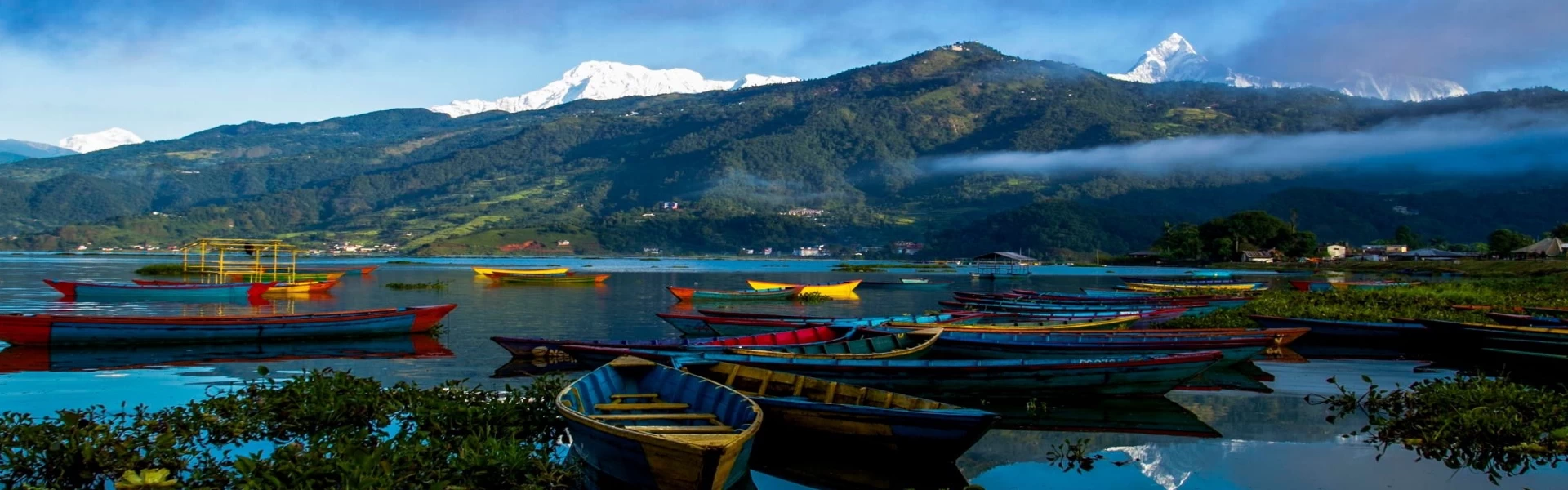
The Kathmandu Valley anchors the bulk of heritage filming: Kathmandu Durbar Square’s royal-palace ensemble, Patan’s Newari pagoda architecture, and Bhaktapur, a frequent choice for period and cultural work. Thamel is used for contemporary backpacker settings, Boudhanath serves Tibetan-Buddhist pilgrimage scenes, and Pashupatinath anchors the Hindu register. Pokhara, at the base of the Annapurna massif, is the country’s second gateway, Phewa Lake with the Machapuchare reflection, Sarangkot for sunrise aerials, and the road-and-trekking base for Annapurna Base Camp, Poon Hill and the Mustang corridor. Both bases carry local crew.

Everest, Khumbu, Mustang and the Himalayan stand-in
The Khumbu, reached via the short STOL flight to Lukla, opens the Everest Base Camp trail, Tengboche Monastery, Ama Dablam and the Sherpa villages of Namche, Pheriche and Dingboche, permit-heavy and crew-welfare-heavy terrain reserved for content that genuinely needs the altitude. Upper Mustang and Lo Manthang give a trans-Himalayan plateau that reads as Tibet on screen, which is why productions covering Tibetan period or pilgrimage material route through Mustang when the source location is closed; productions that need direct Tibet access instead work through direct Tibet filming permits under the China co-production framework.
Langtang provides high-altitude visuals without the Lukla flight dependency; Bandipur and the eastern Ilam and Sandakpur hills add lower-altitude heritage and demanding hill-climb terrain for motor-vehicle work; and Chitwan and the wider Terai supply the subtropical grassland, riverine and forest register for anything that needs a lowland environment rather than mountains. Nepal stays a South Asian and Himalayan territory even when it stands in for Tibet, Myanmar or Bhutan, and film fixers in Nepal hold the locations, crew and permits on the Nepal side for those stand-in shoots. For shoots that need actual Bhutan, our Film Fixers In Bhutan team handles the Druk Yul permit framework, Paro entry and the Thimphu-Paro-Punakha coordination.

Crew, equipment and the India-Nepal corridor
Kathmandu holds the bulk of Nepal’s crew depth, with Pokhara supplying an Annapurna and high-Himalaya gateway bench. The film production services in Nepal that support inbound shoots concentrate in these two hubs. English-speaking key positions are available in Kathmandu and are confirmed crew by crew at booking; productions commonly bring their own DOP and production designer on the script’s specific demands. Local capacity is concentrated in documentary, television and mid-tier cinema camera, lighting, grip and sound; specialist crew and cinema packages travel up from India when a brief outruns the local bench, drawing on our line producer India network in Delhi and Mumbai. The practical shape is a lean international core, DOP, director and key creative heads, built out with a Nepali crew who know the terrain, the altitude and the vendors.

Customs, temporary import and equipment movement
Nepal is not currently listed in the ICC ATA Carnet directory, so foreign equipment is expected to clear through temporary admission, subject to confirmation with Nepal Customs and the appointed broker. Temporary admission is planned against a detailed serialised equipment list with declared values, a deposit or security requirement where applicable, and a re-export schedule; the exact documents, deposit terms and the role of the national filming licence in the clearance are confirmed with Nepal Customs and the appointed broker before dispatch. Equipment moves either by air into Tribhuvan International Airport or by road for Indian-registered cargo via the Sunauli and Birgunj crossings, and a local customs broker coordinates the clearance at the point of entry.
The Delhi and Mumbai gateway
The Kathmandu production team holds the Nepal budget, permits, vendors and daily execution. Where a brief requires specialist Indian crew or equipment, the line producer Nepal team integrates packages routed from Delhi or Mumbai under the relevant customs and temporary-import procedures. The India-Nepal corridor supports combined Nepali and Indian crews and specialist-equipment movement, but production cargo remains subject to customs, inventory, security and re-export requirements at the chosen entry point. Cross-border scheduling is planned around those requirements. The corridor runs as one coordinated production structure across both sides, so the producer is not managing two disconnected teams. The corridor draws on the crew, equipment and permit depth on the Indian side while Nepal remains a South Asian and Himalayan production territory in its own right.
High-altitude production logistics
Altitude planning is project-specific. The acclimatisation schedule, the staging of crew moves and the buffer days for weather and flight cancellations at Lukla and across the Khumbu are set against the unit’s medical risk assessment, the altitudes on the final location list and the advice of the production’s medical adviser, rather than a single fixed threshold. Porter and trek-support coordination moves equipment beyond road access and into terrain where helicopter payload, weather or landing conditions make airlift impractical. A fixer who regularly runs altitude blocks builds these buffers into the first schedule draft.
Power and equipment protection matter as much as the shot: batteries drain fast in the cold, and the unit plans for charging, insulation and condensation management at altitude. Depending on the altitude, medical risk assessment and unit profile, planning may include supplementary oxygen, an acute-mountain-sickness protocol, evacuation arrangements and insurance that expressly covers the intended altitude. Remote-unit discipline keeps the footprint small: the higher and more remote the location, the leaner the crew, because every additional person is another body to acclimatise, feed, shelter and evacuate. Evacuation planning is worked out before the unit moves up, the nearest helicopter-capable landing, the weather thresholds that ground a flight, and the fallback if the primary window closes, so a medical call is a plan already in place rather than a decision made under pressure at altitude.

Helicopter operators and high-altitude aviation
Helicopter access to the high Khumbu, Annapurna and Mustang corridors runs through Kathmandu-based operators, moving cameras, crew and payload to locations that road and trekking cannot reach inside the schedule window. Helicopter planning requires a currently licensed operator, suitable aircraft and payload calculations, pilot experience for the intended altitude, insurance confirmation, CAAN-compliant documentation and weather-day buffers. Operator and aircraft availability should be reconfirmed against the final dates and location plan, because a single weather day can cascade through an entire high-altitude block.
Line Production in Nepal: Budget Control and Production Planning
Beyond permits and logistics, the core value of a line producer Nepal engagement is financial control. That means building and holding the production budget, issuing purchase orders on agreed vendor terms, managing cash flow and local payments through the schedule, and giving the producer daily cost reporting so nothing drifts unseen. It also means managing schedule changes, overtime and weather contingencies, and reconciling the accounts against the budget after wrap. This page stays focused on how the budget is controlled rather than reproducing the numbers.

What to send for a first feasibility response
A useful first feasibility response needs the script or treatment, location references or a mood board, the intended crew size, the equipment requirements, the shoot dates or window, and a clear note on any altitude and drone requirements, since those two drive both the permit track and the schedule risk. With that in hand the Kathmandu team can return a structured production assessment, feasibility, permit path, indicative budget band and a workable schedule, rather than a generic quote. The more precise the location and altitude detail at this stage, the more accurate the first assessment, and the fewer surprises once the unit is committed and on the ground.
For an Indian or international production planning a Nepal shoot, the working pattern is to brief the Kathmandu production team on the creative, location bands and shoot window, drawing specialist crew or equipment from Delhi or Mumbai only where the brief requires it. The shoot, permits, crew, logistics and budget are then carried by one production team. Reach out via the contact form with your shoot dates, location bands and the broad scope, and the team will come back with a structured execution brief.
